
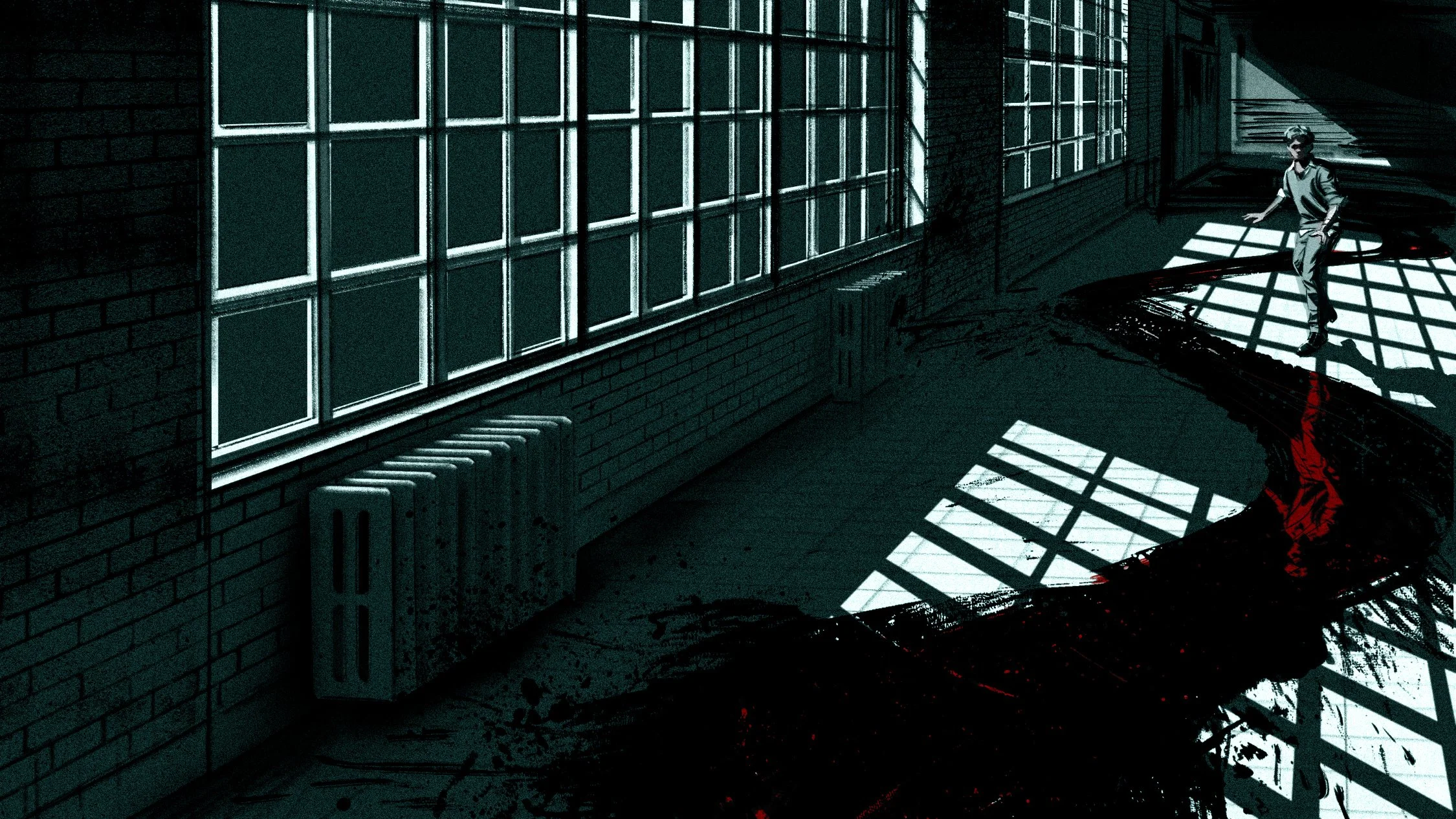
There’s a moment when a frame just clicks. You feel the rhythm of it before you even know why. The balance of light, movement, and negative space suddenly tells the story in a single glance. That’s composition. It is control in its purest form.
In film, every frame has a job. It directs the viewer’s eye, builds emotion, and shapes the story long before the dialogue starts. As a storyboard artist, my job is to help directors take control of that visual language before the camera ever rolls. The best compositions aren’t just beautiful. They are deliberate. Every shape, line, and gesture contributes to what the audience feels.
The Geometry of Storytelling
Classical painters understood that geometry could guide emotion. You can trace the same principles of balance and rhythm from Da Vinci’s “The Last Supper” straight into the opening sequence of “Raiders of the Lost Ark.” Triangular compositions pull attention to a central idea. Diagonal lines create movement. Symmetry conveys control, while imbalance creates tension. These visual rules are the scaffolding beneath any cinematic story.
When I block out a frame, I’m thinking about energy flow. Where does the eye travel first? What lingers in the periphery? How do shadow and light compete or cooperate within the same space? The viewer may not consciously notice these things, but they feel them. And in film, feeling is everything.
This is where composition meets control. The artist’s control of the audience’s attention is what gives storyboards their power. You’re not just drawing. You’re designing where the story happens, and how it unfolds.
Visual Development and Intent
Studios like ILM and Framestore describe visual development as “world-building through design.” That phrase captures it perfectly. It’s not just about the frame itself, but the emotional ecosystem that supports it. In pre-production, everything from color palettes to camera angles is designed to support the director’s vision.
The goal isn’t realism. It’s believability. Environments, lighting, and composition all exist to reinforce tone and story intent. For example, if a scene is about isolation, you can communicate that with negative space, low contrast, and distant framing. If it’s about chaos, you fill the frame with converging diagonals and broken symmetry. These are visual equivalents of punctuation in writing. They shape how the viewer reads the image.
Great composition doesn’t happen by accident. It’s an act of storytelling discipline.
Classical Control, Cinematic Application
One of the biggest influences on modern visual storytelling comes from classical painting. Artists like Caravaggio and Vermeer didn’t just paint figures. They directed them. Every shadow and gesture led the viewer toward the heart of the story. That same principle applies in film design.
When I work on a storyboard, I’m often thinking like a cinematographer. Where should the emotional weight sit? What is the lens doing to the story? I might use a strong chiaroscuro effect to create drama, or a shallow depth of field to isolate emotion. These are painter’s tools, applied through the lens of cinema.
This connection between painting and film is what gives storyboards their cinematic realism. It’s not enough to make a drawing look good. It has to feel like a shot that belongs in motion.
The Language of the Frame
Composition is not only about what’s inside the frame. It’s about what’s implied beyond it. The audience’s imagination fills in what they don’t see. A strong storyboard artist controls that implication.
One of the best ways to do that is through visual hierarchy. Think of it as volume control for storytelling. The foreground can whisper or shout. Mid-ground shapes can build tension. The background can reveal or conceal key context. Managing those layers creates emotional rhythm.
I often think of the frame as a stage. Every element has to justify its position. If a prop or character doesn’t serve the story, it distracts. The best compositions are not just full of information. They are full of intention.
That’s one of the reasons visual development teams at studios like Framestore talk so much about “shape language.” The silhouette of an environment, or even the curve of a prop, carries emotional tone. Sharp, angular shapes often signal danger or conflict. Rounded, organic shapes suggest safety or warmth. Composition is where all of those design choices come together to form cinematic meaning.
Controlling the Emotional Flow
Filmmaking is emotional architecture. Composition is what builds the hallways the audience travels through. A good frame guides the viewer without them realizing it. The camera’s placement, the lighting, and the density of detail all shape the emotional flow of a scene.
I think of this process like conducting. You can use rhythm in composition the way a musician uses tempo. Wide shots slow the pace. Tight shots quicken it. Diagonal framing speeds up the energy. Center framing brings calm. It’s a subtle dance between control and chaos.
A lot of storyboard work is about finding that emotional tempo. If a director wants tension, I might stack the frame vertically, using oppressive shapes and low light. If they want relief, I’ll open it horizontally, allowing air and movement. These decisions translate directly into how the audience experiences time and feeling.
The Cinematic Mindset
Composition isn’t something you add later. It’s baked into the DNA of every story choice. A well-composed storyboard can define how a sequence is shot, how it’s edited, and even how it’s scored.
This is why visual development artists often collaborate closely with directors and production designers. The frame is the first conversation between story and image. Once that language is established, everything else flows from it.
When I study a film like “Blade Runner 2049” or “The Revenant,” I’m looking at how every element inside the frame earns its place. Nothing is random. Even in chaos, there is control. That’s the hallmark of cinematic thinking.
The Subtle Art of Restraint
Sometimes, control is about knowing when to stop. Too much information weakens a frame. Too much contrast confuses it. Composition thrives on restraint.
One of my favorite exercises when teaching storyboarding is to remove one element at a time from a frame. If the story still reads clearly, then the composition is strong. If it falls apart, you know which piece carried the weight. This helps train the eye to think like a filmmaker instead of a draftsman.
The goal is not to show everything. It’s to show what matters most.
Designing for Movement
The best compositions are not static. They anticipate motion. Storyboards are snapshots of a moving idea. The direction of a character’s gaze, the tilt of a camera, or the placement of a horizon can all suggest momentum.
Visual development teams often use “flow lines” to track how a viewer’s eye moves through a shot. These invisible pathways guide attention, connect story beats, and maintain visual clarity. When done right, the audience feels carried through the frame without realizing they’re being directed.
This is where drawing and filmmaking meet in perfect balance. The still image becomes kinetic.
Control as a Form of Trust
Ultimately, composition and control come down to trust. The director has to trust the storyboard artist to translate emotion into image. The audience has to trust that what they’re seeing is intentional.
Good composition builds that trust. It feels inevitable, like the story could not exist any other way. That’s the power of visual discipline.
When I sit down to draw a frame, I’m not just thinking about angles or balance. I’m thinking about how to make the viewer feel something specific. Every frame is a decision. Every line carries responsibility. That’s what makes cinematic storytelling such an addictive craft.
The Takeaway
Composition is not decoration. It is story structure in visual form. Whether you’re painting, designing, or boarding a film, control is the thread that ties every creative choice together.
When you see a great frame, you feel it immediately. The geometry is invisible, but the emotion is undeniable. That’s when you know composition is doing its job.
The science behind a great frame isn’t about rules. It’s about awareness. It’s about shaping emotion through light, form, and rhythm. Once you understand that, you stop drawing pictures and start directing feelings.
📩 Reach out: paul@paultemplestudios.com
🎨 Explore more: www.paultemplestudios.com
Want more blog posts on this topic?
1.Storyboards and Cinematography: Speaking the Same Language
2. Building the Perfect Reveal in Storyboards
3. Setting the Emotional Tempo: How Storyboards Shape the Audience’s Experience