
Filmmakers tend to spend a lot of time alone with their ideas. I understand why. When you are responsible for the story, the tone, and the final result, it feels safer to hold everything close and work it out internally. But in my experience, the strongest ideas rarely come from spending more time alone. They come from getting the idea out of your head and into a conversation with someone who can challenge it, shape it, and help you see it more clearly.
This is not just about collaboration (buzzword alert). It is about having a real story partner. Someone who brings their own experiences, instincts, and perspective into the process. Someone who is not just agreeing with you, but actively engaging with the idea and helping it evolve.
Some of the Best Story Decisions Happen Out Loud
A great example of this comes from the development of Indiana Jones and the Last Crusade. During the story conferences, Steven Spielberg, George Lucas, Harrison Ford, and later Sean Connery spent a surprising amount of time talking about their own fathers. They talked about authority, distance, humor, admiration, frustration, and the strange ways fathers and sons misunderstand each other. Those conversations shaped the character of Henry Jones Sr. in a way that no amount of outlining alone could have done. The character works because he is rooted in shared, lived experience, not because he was designed to serve a plot function.
That kind of character does not come from one person working in isolation. It comes from multiple people bringing different parts of themselves into the room and letting those ideas interact. It is unpredictable and sometimes uncomfortable, but it produces work that feels human and specific.
I see this same dynamic play out with directors all the time. A director comes in with a strong concept, but it is still living entirely in their head. They can explain it verbally, and they know how it is supposed to feel, but once we start talking through specific moments, things begin to shift. A gesture that felt right in theory suddenly feels wrong when you try to show it. A camera move turns out to be unnecessary once the emotional beat is clearer. These are not problems. They are signs that the idea is finally becoming tangible.
Letting Someone In Is the Scary Part. That’s Also the Good Part.
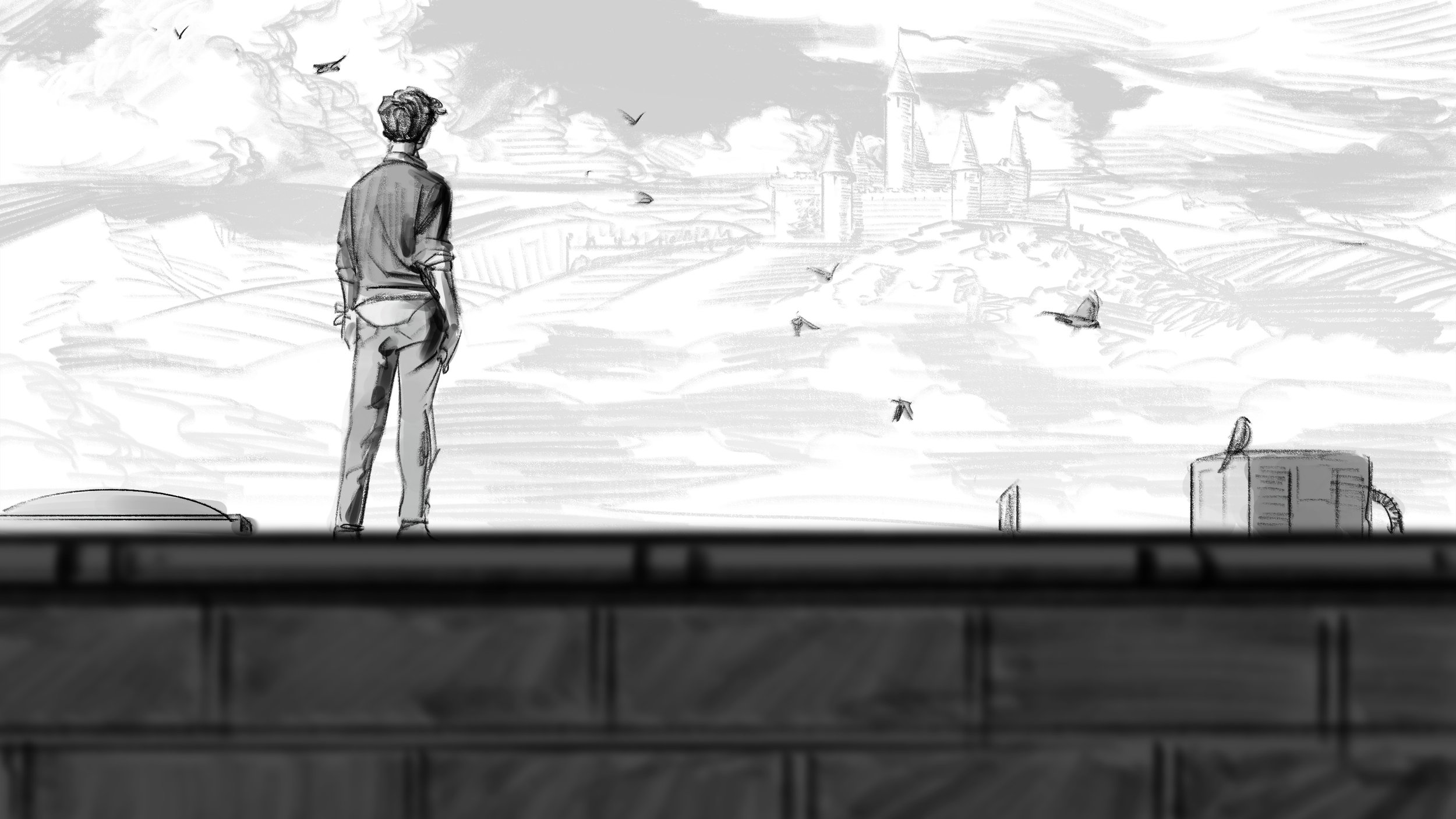
Visual collaboration changes the conversation. Once you start sketching and staging a scene, you are forced to make decisions. You have to decide where the camera is, what the audience sees first, and what information actually matters in that moment. Vague ideas do not survive contact with a frame, and that is a good thing. It pushes the story toward clarity.
As a storyboard artist, my role is not to decorate an idea or make it look impressive. My role is to help directors think through the story visually and make confident, purposeful decisions early. I ask questions about intent, motivation, and emotion. I help remove unnecessary detail so the core of the scene comes through cleanly. In many cases, scenes that felt stuck for weeks start to resolve quickly once they are on paper and open to discussion.
There is always some risk involved in this process. Letting someone else into your story means accepting that it may change. You might discover that a moment works better than you expected, or that something you were attached to needs to go. That loss of control can feel uncomfortable, especially when an idea still feels fragile. But that risk is also what allows the work to grow. Ideas that are protected too tightly tend to stagnate. Ideas that are shared with the right partner tend to gain momentum.
A Story Partner, Not Just an Artist
One of the biggest shifts I see in directors is the moment they realize they do not have to carry the entire story alone. Once the idea is externalized and shaped through conversation and visuals, it becomes easier to work with. The story starts moving forward instead of looping. Decisions get simpler. The process feels lighter.
When people talk about collaboration, they often frame it as compromise. I see it differently. The best collaborations are not about meeting in the middle. They are about combining different experiences, tastes, and ways of seeing into something neither person could have created alone. That is how stories gain texture and specificity.
This is the role I play for directors. I am not there to take control of your story or override your vision. I am there to sit alongside you, help you work through ideas visually, and bring clarity to moments that feel uncertain. Think of it as having a story friend who speaks the language of cinema fluently and knows how to turn abstract thoughts into concrete decisions.
If you are developing a project and find yourself circling the same ideas, or if you sense that the story has more potential than what is currently on the page, that is often a sign that it is time to involve someone else. Taking that step can feel risky, but it is usually the moment where the work starts to come alive.
If you want to talk through a project and see how visual collaboration might help, I offer a no-obligation initial call. Tell me about what you are working on, and we can start the conversation.
📩 Reach out: paul@paultemplestudios.com
🎨 Explore more: www.paultemplestudios.com
Want more blog posts on this topic?
1. Hiring a Storyboard and VisDev Artist: A Step by Step Guide
2. Storyboards and Cinematography: Speaking the Same Language
3. The Grammar of Storyboards: Thinking Like a Story Consultant