• Home
  • Film
  • Advertising
  • Super Bowl LVII
  • Clients
  • Blog
  • Contact
Menu

Paul Temple Studios

  • Home
  • Film
  • Advertising
  • Super Bowl LVII
  • Clients
  • Blog
  • Contact
×

Behind the Boards: A Blog by Artist, Paul Temple

Welcome to the blog! Here you'll find insights into the art of storyboarding, concept development, shooting boards, and visual storytelling for film, television, and advertising. From camera planning techniques to the emotional impact of character design, this is where I’ll share my expertise honed over a decade of working with directors and top brands. Whether you're a creative director, filmmaker, or agency looking to elevate your pitch, this blog reveals how powerful visuals drive unforgettable stories.

Questions? Email me at paul@paultemplestudios.com

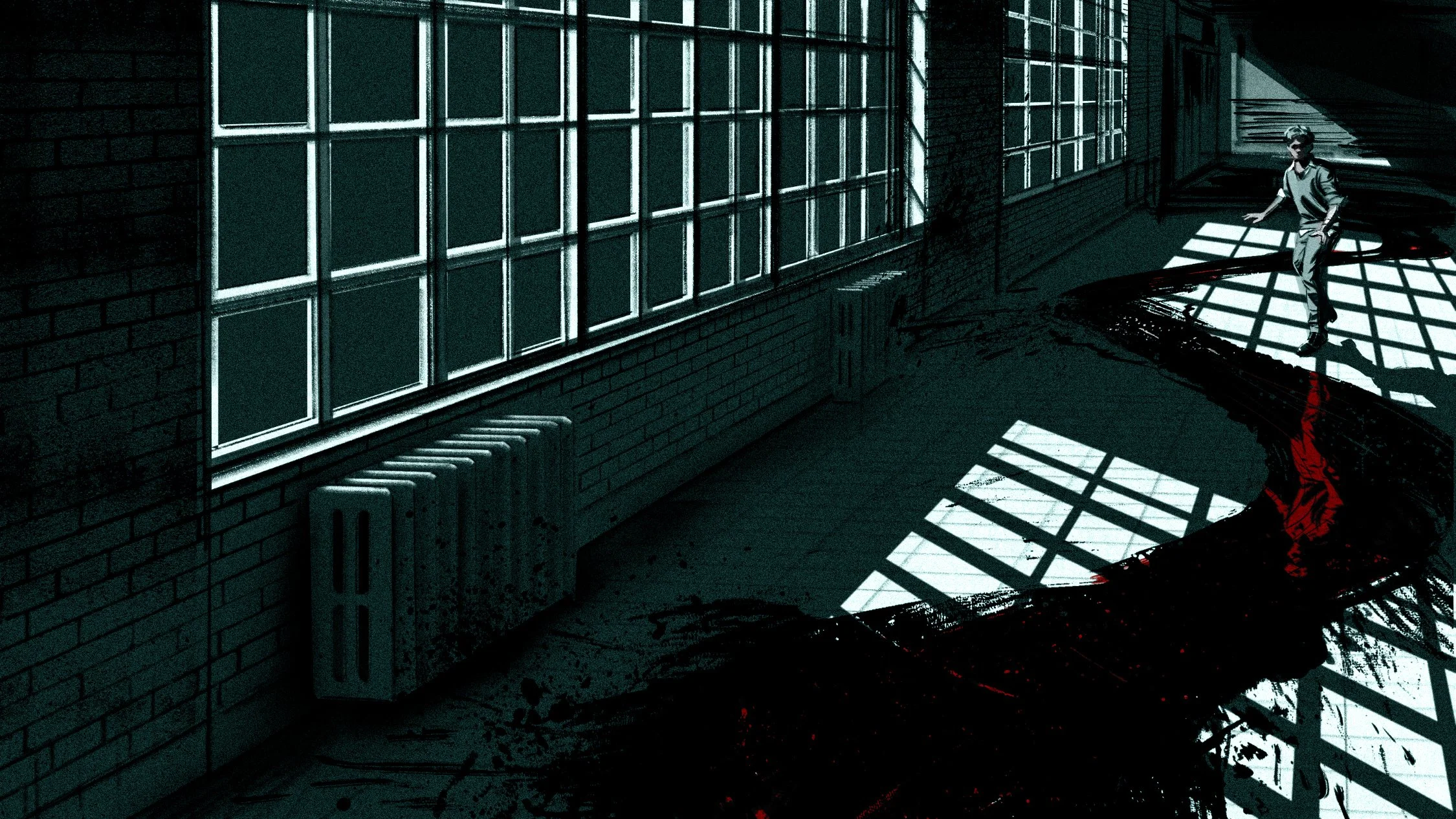
Concept art for an unannounced horror film project. Art by Paul Temple.

Composition and Control: The Cinematic Science Behind a Great Frame

Paul Temple November 3, 2025

There’s a moment when a frame just clicks. You feel the rhythm of it before you even know why. The balance of light, movement, and negative space suddenly tells the story in a single glance. That’s composition. It is control in its purest form.

In film, every frame has a job. It directs the viewer’s eye, builds emotion, and shapes the story long before the dialogue starts. As a storyboard artist, my job is to help directors take control of that visual language before the camera ever rolls. The best compositions aren’t just beautiful. They are deliberate. Every shape, line, and gesture contributes to what the audience feels.

The Geometry of Storytelling

Classical painters understood that geometry could guide emotion. You can trace the same principles of balance and rhythm from Da Vinci’s “The Last Supper” straight into the opening sequence of “Raiders of the Lost Ark.” Triangular compositions pull attention to a central idea. Diagonal lines create movement. Symmetry conveys control, while imbalance creates tension. These visual rules are the scaffolding beneath any cinematic story.

When I block out a frame, I’m thinking about energy flow. Where does the eye travel first? What lingers in the periphery? How do shadow and light compete or cooperate within the same space? The viewer may not consciously notice these things, but they feel them. And in film, feeling is everything.

This is where composition meets control. The artist’s control of the audience’s attention is what gives storyboards their power. You’re not just drawing. You’re designing where the story happens, and how it unfolds.

Visual Development and Intent

Studios like ILM and Framestore describe visual development as “world-building through design.” That phrase captures it perfectly. It’s not just about the frame itself, but the emotional ecosystem that supports it. In pre-production, everything from color palettes to camera angles is designed to support the director’s vision.

The goal isn’t realism. It’s believability. Environments, lighting, and composition all exist to reinforce tone and story intent. For example, if a scene is about isolation, you can communicate that with negative space, low contrast, and distant framing. If it’s about chaos, you fill the frame with converging diagonals and broken symmetry. These are visual equivalents of punctuation in writing. They shape how the viewer reads the image.

Great composition doesn’t happen by accident. It’s an act of storytelling discipline.

Classical Control, Cinematic Application

One of the biggest influences on modern visual storytelling comes from classical painting. Artists like Caravaggio and Vermeer didn’t just paint figures. They directed them. Every shadow and gesture led the viewer toward the heart of the story. That same principle applies in film design.

When I work on a storyboard, I’m often thinking like a cinematographer. Where should the emotional weight sit? What is the lens doing to the story? I might use a strong chiaroscuro effect to create drama, or a shallow depth of field to isolate emotion. These are painter’s tools, applied through the lens of cinema.

This connection between painting and film is what gives storyboards their cinematic realism. It’s not enough to make a drawing look good. It has to feel like a shot that belongs in motion.

The Language of the Frame

Composition is not only about what’s inside the frame. It’s about what’s implied beyond it. The audience’s imagination fills in what they don’t see. A strong storyboard artist controls that implication.

One of the best ways to do that is through visual hierarchy. Think of it as volume control for storytelling. The foreground can whisper or shout. Mid-ground shapes can build tension. The background can reveal or conceal key context. Managing those layers creates emotional rhythm.

I often think of the frame as a stage. Every element has to justify its position. If a prop or character doesn’t serve the story, it distracts. The best compositions are not just full of information. They are full of intention.

That’s one of the reasons visual development teams at studios like Framestore talk so much about “shape language.” The silhouette of an environment, or even the curve of a prop, carries emotional tone. Sharp, angular shapes often signal danger or conflict. Rounded, organic shapes suggest safety or warmth. Composition is where all of those design choices come together to form cinematic meaning.

Controlling the Emotional Flow

Filmmaking is emotional architecture. Composition is what builds the hallways the audience travels through. A good frame guides the viewer without them realizing it. The camera’s placement, the lighting, and the density of detail all shape the emotional flow of a scene.

I think of this process like conducting. You can use rhythm in composition the way a musician uses tempo. Wide shots slow the pace. Tight shots quicken it. Diagonal framing speeds up the energy. Center framing brings calm. It’s a subtle dance between control and chaos.

A lot of storyboard work is about finding that emotional tempo. If a director wants tension, I might stack the frame vertically, using oppressive shapes and low light. If they want relief, I’ll open it horizontally, allowing air and movement. These decisions translate directly into how the audience experiences time and feeling.

The Cinematic Mindset

Composition isn’t something you add later. It’s baked into the DNA of every story choice. A well-composed storyboard can define how a sequence is shot, how it’s edited, and even how it’s scored.

This is why visual development artists often collaborate closely with directors and production designers. The frame is the first conversation between story and image. Once that language is established, everything else flows from it.

When I study a film like “Blade Runner 2049” or “The Revenant,” I’m looking at how every element inside the frame earns its place. Nothing is random. Even in chaos, there is control. That’s the hallmark of cinematic thinking.

The Subtle Art of Restraint

Sometimes, control is about knowing when to stop. Too much information weakens a frame. Too much contrast confuses it. Composition thrives on restraint.

One of my favorite exercises when teaching storyboarding is to remove one element at a time from a frame. If the story still reads clearly, then the composition is strong. If it falls apart, you know which piece carried the weight. This helps train the eye to think like a filmmaker instead of a draftsman.

The goal is not to show everything. It’s to show what matters most.

Designing for Movement

The best compositions are not static. They anticipate motion. Storyboards are snapshots of a moving idea. The direction of a character’s gaze, the tilt of a camera, or the placement of a horizon can all suggest momentum.

Visual development teams often use “flow lines” to track how a viewer’s eye moves through a shot. These invisible pathways guide attention, connect story beats, and maintain visual clarity. When done right, the audience feels carried through the frame without realizing they’re being directed.

This is where drawing and filmmaking meet in perfect balance. The still image becomes kinetic.

Control as a Form of Trust

Ultimately, composition and control come down to trust. The director has to trust the storyboard artist to translate emotion into image. The audience has to trust that what they’re seeing is intentional.

Good composition builds that trust. It feels inevitable, like the story could not exist any other way. That’s the power of visual discipline.

When I sit down to draw a frame, I’m not just thinking about angles or balance. I’m thinking about how to make the viewer feel something specific. Every frame is a decision. Every line carries responsibility. That’s what makes cinematic storytelling such an addictive craft.

The Takeaway

Composition is not decoration. It is story structure in visual form. Whether you’re painting, designing, or boarding a film, control is the thread that ties every creative choice together.

When you see a great frame, you feel it immediately. The geometry is invisible, but the emotion is undeniable. That’s when you know composition is doing its job.

The science behind a great frame isn’t about rules. It’s about awareness. It’s about shaping emotion through light, form, and rhythm. Once you understand that, you stop drawing pictures and start directing feelings.

📩 Reach out: paul@paultemplestudios.com
🎨 Explore more: www.paultemplestudios.com

Want more blog posts on this topic?
1.Storyboards and Cinematography: Speaking the Same Language
2.
Building the Perfect Reveal in Storyboards
3.
Setting the Emotional Tempo: How Storyboards Shape the Audience’s Experience

In Film, Storyboards
Comment

Shooting boards for an action scene in the “Traders” film project. Art by Paul Temple.

Shooting Boards for Action Scenes: Why Every Great Action Scene Starts on Paper

Paul Temple October 30, 2025

Action scenes in movies are incredibly controlled. When an explosion feels believable or a chase scene keeps your eyes locked to the screen, it’s not luck. Someone planned it that way. Shooting boards are where that clarity starts.

Shooting boards serve two critical purposes. First, they give the filming crew a clear roadmap. The director, cinematographer, and crew need to know exactly how a scene should unfold, what moves when, where the camera goes, and how the actors and props interact. That’s the practical side. But there’s a second, equally important purpose: guiding the audience’s eye and attention. A well-planned sequence ensures that, even in the midst of chaos or rapid action, viewers instinctively know where to look and what matters. Every frame, every gesture, every cut starts on paper, balancing the technical needs of production with the storytelling needs of the audience.

Motion Has Rules

Before cameras, stunt rigs, or digital effects, motion exists as an idea. On paper, that idea has to work. The path of movement, the timing between cuts, the camera position, the energy of each gesture… these are the real ingredients of an action scene. If it doesn’t work in sketches, it won’t work when you film it.

A good shooting board treats motion like music. You need rhythm, pauses, and contrast. Fast cuts lose their power without slower beats in between. A chase scene is just noise if there’s no visual structure behind it. The drawings don’t just describe what happens; they show how it feels.

I’ve worked with directors who think of shooting boards as a safety net, but they’re more like a conductor’s score. They keep every department (camera, stunt, lighting, and visual effects) on the same beat. When the boards are clear, everyone moves with confidence.

The Language of Action

There’s a reason some directors’ action scenes feel easy to follow, even when they’re chaotic. They understand visual grammar. Every cut and camera move has to guide the audience through space. Without that logic, you lose them.

Shooting boards use that same grammar. You build a sense of direction through composition and continuity. A wide shot establishes geography. A close-up builds tension. A quick insert gives impact. Each frame leads naturally to the next so the viewer never has to guess what’s happening.

I spend a lot of time thinking about where the eye will land in each panel. If the hero runs left to right in one shot, I keep that direction consistent until there’s a deliberate reason to change it. That kind of visual discipline makes action feel clean, not confusing.

Drawing Movement

Drawing movement is not about sketching blur. It’s about showing weight, intention, and flow. The angle of a shoulder or the bend of a leg can tell you how fast something moves or how hard it hits. A drawing that captures that force gives the director something to build on.

The best action shooting boards almost vibrate on the page. The drawings might be loose, but the momentum is clear. You can feel the camera tilting, the character twisting, or the explosion pushing the frame outward. Good draftsmanship matters here. If the anatomy or perspective is off, the energy dies.

When I draw a complex stunt, I think about the laws of motion as much as the story. Gravity, follow-through, anticipation—they all show up in the drawing. You can cheat a lot with effects later, but if the foundation isn’t there in the boards, something will always feel off.

Working with Stunts and Camera

Action scenes are a team sport. Shooting boards let you communicate with the departments that bring the danger to life. Stunt coordinators use boards to time their choreography. Camera operators plan their rigs around what the boards show. Even visual effects artists rely on them to know when to step in and when to stay invisible.

When I hand off a sequence, it’s not just about the cool shot. It’s about giving every person on set a map they can actually use. The boards have to be readable, not decorative. If the stunt team can’t tell where someone lands after a jump, the drawing failed.

Directors who understand this process tend to get better performances. They know when to push realism and when to stylize. They know what to shoot practically and what to enhance later. That confidence starts with strong visual planning.

Keeping the Viewer Oriented

The hardest part of action shooting boards is orientation. It’s easy to get lost in the excitement and forget what the viewer will actually understand. A great action scene always has an internal compass. The audience should know where they are, what’s at stake, and how each shot connects.

I like to think about it like chess. Every move has to make sense in relation to the last one. The camera is your opponent’s perspective. The drawings are your plan. You’re not just showing movement—you’re controlling how it’s perceived.

That’s why you can have two car chases with the same budget and one will feel thrilling while the other feels like a blur. One director understands spatial storytelling. The other just filmed cars moving fast.

Shooting Boards vs. Chaos

Without boards, action scenes become expensive guesswork. Every new camera angle means resetting, every unclear sequence means wasted time. A shooting board isn’t just a visual aid; it’s a cost saver. It prevents mistakes before they happen.

Studios know this. That’s why even large-scale productions rely heavily on boards. When the director of photography and the visual effects supervisor can agree on how the scene flows, the entire shoot moves smoother. It’s not glamorous work, but it’s the backbone of efficiency.

The Problem with “Fix It in Post”

There’s a dangerous phrase that floats around film sets: “We’ll fix it in post.” It’s another way of saying, “We didn’t plan this properly.” Shooting boards exist to kill that phrase. When the flow of action is already mapped out, editors aren’t scrambling to find a rhythm later. They’re cutting to a plan that already works.

You can always adjust timing, add effects, or tweak performances, but you can’t fix a story that was never clear to begin with. A drawing that communicates motion accurately saves everyone from confusion down the line.

The Human Advantage

There’s a lot of talk about AI image tools replacing sketch work. They can generate flashy visuals, sure. But clarity, intent, and continuity are not algorithmic. Machines don’t understand how to sustain action through camera logic or character performance.

A human shooting board artist can read a script, sense what the director wants, and build energy with restraint. You know when to cut, when to hold, and when to break rhythm. That judgment comes from understanding how stories move, not just how they look.

Great action scenes rely on that instinct. You have to feel the story beat by beat. You can’t automate that.

Why It Still Starts on Paper

Even with 3D previs and digital tools, the first step of designing motion often starts with a pencil or stylus. It’s faster to think in drawings than in code. It’s where ideas breathe. You can explore, adjust, and discard freely until the rhythm feels right.

Paper is where mistakes are cheap and discoveries are quick. Once that motion is locked in the drawings, everything else becomes easier—camera setups, edit timing, even sound design. The entire pipeline benefits from visual clarity at the start.

That’s why I still believe every great action scene starts on paper. Not because it’s traditional, but because it’s effective.

Closing

Action looks effortless when it’s done right. But behind that smoothness is planning, understanding, and drawing that moves. Shooting boards are not decoration. They’re direction. They keep the story clear when the chaos hits.

📩 Reach out: paul@paultemplestudios.com
🎨 Explore more: paultemplestudios.com

Want more blog posts on this topic?
1. See It Before You Shoot It: The Power of Shooting Boards
2.
What Filmmakers Want from Shooting Boards: Save Time, Money and Communicate Clearly
3.
Common Mistakes Directors Avoid with Shooting Boards

In Shooting Boards
Comment

Environment concept art by Paul Temple.

World-Building: The Art of Making Environments Feel Alive

Paul Temple October 27, 2025

When most people hear world-building, they picture sprawling fantasy maps or sci-fi planets rendered in dazzling 3D. But world-building is not just about scale or spectacle. It is about truth. The worlds that stick with us feel like they existed long before the story began and will keep existing long after it ends.

As a storyboard artist, I think about that every time I draw an environment. Whether it is a dystopian street, a farmhouse kitchen, or a mythical jungle, the goal is the same: to make the space feel lived in, believable, and emotionally in sync with the story.

The Environment as a Character

A well-designed environment should not just contain the story. It should participate in it. Great filmmakers understand this instinctively. Think about the desert in Mad Max: Fury Road. It is more than a setting. It is an antagonist. It shapes every choice, every chase, and every moment of desperation.

When I storyboard, I try to treat every environment like a silent actor. It has mood, personality, and history. A crumbling wall might say more about a character’s past than a page of dialogue. A shaft of light across the floor might reveal a sense of hope or isolation. These details give the frame its subtext.

Cinematography does the same thing with light, lens, and movement. But in storyboards, the process begins earlier with design and composition. How the environment is drawn defines how the story breathes.

Designing for Story Tone

Every production design choice communicates emotion. A city drawn with rigid lines and cold color temperature can make a story feel oppressive or corporate. A warm, uneven landscape full of texture and asymmetry can make the same story feel human and hopeful.

When designing environments for storyboards or concept art, I always start by asking:

  • What emotion is this location supposed to evoke?

  • How does this space reflect the character’s state of mind?

  • What is the rhythm of this environment, chaotic or calm?

A good example is a sequence I worked on where a character was facing a personal failure. The director wanted the environment to echo that. Instead of drawing a pristine office, I tilted the perspective slightly, let the shadows feel heavy, and scattered small hints of disarray—papers, a broken pen, a faint light leak through blinds. Nothing overt, but enough to make the frame feel unstable.

That is world-building in miniature. You do not need a fantasy kingdom to build a world. You need awareness of tone and how the environment mirrors emotion.

The Invisible Architecture of Believability

In design terms, environments only feel alive when the logic behind them is invisible but sound. If I design a marketplace, I have to know where the food comes from, how people move through it, what the noise level feels like, and what kind of lighting it would realistically have at that time of day.

Even if none of that is explicitly shown, the viewer senses it. You can always tell when an environment was designed without that underlying structure. It feels hollow, like a set waiting for actors.

The audience may not notice that the pipes in a sci-fi corridor make sense or that the shadows line up with a practical light source, but those small truths make the difference between a believable frame and one that feels fake.

That is why I spend time researching architecture, natural light, and even materials. A lived-in world comes from lived-in details.

Composition and World Language

Composition is where design meets storytelling. When an environment is composed well, it tells the audience where to look, what to feel, and how the world behaves.

In painting, this has always been a central idea. Vermeer guided our eyes with windows and reflections. Caravaggio used darkness to make light feel divine. Those same principles apply in filmmaking.

When designing storyboards, I think about the grammar of the world. How does the space want to move? What kind of compositions feel right for it? A rigid, symmetrical composition might make sense for a totalitarian world. A handheld, off-balance layout might fit a collapsing one.

If a world is built with care, the compositions naturally flow from its design. The camera placements, blocking, and even editing rhythm all emerge from how the environment was drawn.

Texture and Imperfection

One of the biggest mistakes I see in modern visual design, especially with digital tools, is the obsession with perfection. Clean edges, evenly lit rooms, surfaces that look straight out of rendering software. Real worlds are not like that.

When I paint environments, I intentionally introduce irregularities. Cracks, stains, weathering, slight warping. These imperfections give the world personality. They remind us that time exists in this space, that life has worn it in.

Directors who work visually understand this. Spielberg and Deakins both use texture to ground their worlds. Even in fantasy or sci-fi, the illusion of reality depends on friction, dust, and decay. The more tactile the frame, the deeper the immersion.

The Role of Light

Light is the heartbeat of world-building. It defines temperature, mood, and even moral tone.

When designing storyboards, I think in terms of light first, objects second. Light reveals what matters and conceals what does not. It can make a world feel safe or hostile, familiar or alien.

A soft, diffuse light through fog tells us one kind of story. A sharp beam slicing through darkness tells another. Even before the actors step in, the environment has already told us how to feel.

Painters have always known this. Rembrandt’s chiaroscuro and Turner’s atmospheric light are the same ideas cinematographers use today. The difference is that in storyboards, we build the mood before the camera even exists.

Designing for Cinematic Flow

World-building for storyboards is not just about single images. It is about flow. The environment should feel consistent from shot to shot, guiding the viewer’s eye like a visual rhythm.

That means paying attention to spatial continuity, perspective, and geography. A doorway drawn at the wrong height or a window placed inconsistently from shot to shot can instantly break immersion.

When I design sequences, I map the geography first. Where the exits are, how the light moves, what the scale relationships are. Once the world’s logic is solid, the sequence feels grounded. Directors and DPs can trust it, and the edit will cut together smoothly.

A believable world is not just pretty. It is useful.

The Artist’s Responsibility

A storyboard artist’s job is not just to visualize what is written. It is to build a world that can hold the story. That means understanding architecture, geography, and the emotional life of spaces.

Every environment has a story to tell, even before a single line of dialogue is spoken. Whether it is the sterile glow of a hospital hallway or the warmth of a childhood home, the environment should support the film’s emotional truth.

As artists, we have to honor that responsibility. The goal is not to make something that looks impressive. It is to make something that feels real enough for the audience to believe in.

Conclusion

World-building is the invisible art that supports everything else in film. Without it, stories float. With it, they root into the viewer’s mind.

In a great film, you remember the characters and the story, but you also remember how it felt to be there. That is the mark of a world that lives.

📩 Reach out: paul@paultemplestudios.com
🎨 Explore more: www.paultemplestudios.com

Want more blog posts on this topic?
1. Concept Art and Storyboards for Indie Film Crowdfunding
2.
Breathing Life Into Your Characters: The Importance of Good Character Design
3.
Setting the Emotional Tempo: How Storyboards Shape the Audience’s Experience

In Film, Concept Art
Comment

Concept art for an unreleased film project. Art by Paul Temple.

How Classical Painting Shaped Modern Filmmaking

Paul Temple October 22, 2025

Modern filmmaking moves fast. Too fast, sometimes. Everyone wants to shoot, render, composite, and post before the coffee cools. But the truth is, emotional storytelling has not evolved nearly as much as the tools have. Human emotion is still built from the same visual cues it was five hundred years ago. Light, shadow, gesture, and composition. The difference is, painters took the time to study them.

Filmmakers, especially directors and storyboard artists, can still learn a lot from classical art. Painters like Caravaggio, Vermeer, and Sargent understood how to make a single frozen moment pulse with life. That is the same goal of every storyboard frame and film shot. If you can design emotion in stillness, you can control it in motion.

The Frame as a Painting

Every shot in a film is a frame. And every frame can be read like a painting. Classical artists worked with a deep awareness of how the viewer’s eye moves through an image. Nothing in their compositions was accidental. A strong diagonal might lead your eye toward a tragic figure. A vertical composition could make the subject feel noble or distant. A circular arrangement might make the scene feel enclosed and intimate.

In filmmaking, this same control applies. A storyboard artist who understands compositional language can influence the emotional tone before a single camera rolls. Is the viewer supposed to feel empathy, tension, or fear? Those answers are built into the visual hierarchy.

When I design boards, I think about light and shape before detail. If the shapes read clearly, the mood will follow. A character placed in shadow against a glowing environment is about isolation. A character lit from below might suggest danger. These visual relationships are timeless.

Caravaggio and the Power of Contrast

Caravaggio painted light like it was an actor. His chiaroscuro technique created drama out of the simplest gestures. The light always had purpose, cutting through darkness with surgical precision. Filmmakers use the same language. Hard light creates danger. Soft light creates intimacy.

The next time you’re blocking a scene, look at how Caravaggio handles direction and source. His figures emerge from blackness like revelations. The viewer’s eye has no choice but to follow. That same sense of control is what cinematographers and storyboard artists chase when they design key frames.

If every element of your image competes equally for attention, emotion gets lost. Caravaggio understood restraint. The black areas of his paintings are just as important as the lit ones. The same goes for filmmaking. A good storyboard knows when to let a moment breathe and when to hold back.

Sargent and the Gesture of Truth

John Singer Sargent painted people the way great actors perform. His brushwork was confident, but what he really captured was gesture. Every tilt of the head, every relaxed hand or tense shoulder told a story.

Modern filmmakers can take a lesson from that. Acting is not just dialogue. It is shape and motion. When I draw characters for a board, I think of Sargent’s quick economy. One confident line can describe more emotion than a dozen overworked ones. The same applies in live action. A director who understands gesture will get stronger performances because they see what emotion looks like, not just what it sounds like.

Storyboard artists sit at that intersection between drawing and performance. We translate scripts into human movement. The better we understand anatomy and gesture, the more believable those emotions become. A single frame can convey pride, fear, love, or exhaustion through posture alone.

Vermeer and the Quiet Moment

Not every emotional beat in a film needs to be loud. Vermeer mastered the quiet moments. His subjects were often caught between actions: a woman reading a letter, a musician pausing mid-note, sunlight creeping across a wall. There was tension in the stillness because everything in the frame supported that pause.

Filmmakers tend to chase momentum. Every shot pushes to the next, every cut promises action. But silence is powerful when it is composed intentionally. Vermeer knew how to hold attention through restraint. His light was directional but patient. His compositions were structured yet soft.

As a storyboard artist, I often remind myself that not every frame needs to shout. Some need to listen. A quiet scene, properly composed, gives the audience a moment to feel. In an age of rapid editing and digital spectacle, those moments are rare and valuable.

Classical Discipline Meets Digital Speed

Digital tools have changed everything about how we produce visual art, but not what makes it effective. It is easier than ever to create an image. It is harder than ever to make one that feels true. The discipline of classical art gives modern filmmakers an advantage in that chaos.

When you study traditional composition, you learn to think in layers. Foreground, midground, background. You learn rhythm and balance. You learn how color temperature affects emotion. These are not old-fashioned ideas. They are the foundation of every effective visual story.

Technology should serve those principles, not replace them. Whether I am storyboarding for a film or designing concept art in Photoshop or Unreal, I rely on the same classical structure. I block in the big shapes first, define the light source, then refine. A computer can speed that process up, but it cannot replace the eye that sees meaning in those shapes.

Why Emotion is a Design Problem

A lot of people think emotion just happens on set. That it emerges naturally from the actor’s performance or the music or the writing. But emotion is a design problem. It comes from control. You design the viewer’s experience through every decision that leads up to that moment.

Classical painters were emotional architects. They understood how to build a picture that would make a viewer feel awe, sadness, or compassion. That is what a director or storyboard artist must do for the screen.

The difference is motion. Film gives you time as an extra tool. But the emotional mechanics remain the same. The right gesture, the right light, the right angle. They all work together to tell the audience what to feel before a single line of dialogue is spoken.

When you look at a great film sequence, you can often freeze any frame and find a strong composition underneath. That is not an accident. It is the same craftsmanship that painters practiced for centuries.

Learning from the Masters

Filmmakers and storyboard artists can benefit from studying classical art, not just looking at it. Go beyond the surface. Analyze how the artist constructed the image. Ask what they left out. Learn to read the picture like a director reads a scene.

Here are a few ways to study classical art through a filmmaker’s lens:

  1. Composition analysis. Break down how your eye moves through the painting. Track the shapes, not the details.

  2. Lighting studies. Recreate classical lighting in a digital environment or on a storyboard. Observe how light defines mood.

  3. Gesture drawing. Study anatomy and movement through quick sketches. These train your hand and brain to communicate emotion efficiently.

  4. Value structure. Strip an image down to black, white, and gray. The best compositions read clearly even without color.

  5. Emotional intent. Ask yourself what the artist wanted you to feel. Then identify which visual elements made that happen.

The point is not to copy classical art, but to understand its systems. Once you internalize those visual laws, you can break them with purpose.

The Human Factor

In an industry increasingly shaped by digital automation, it is tempting to believe that emotional storytelling can be generated. But software cannot feel. It can only approximate patterns it has seen before. Classical art teaches you to see like a human. It trains empathy, not just technique.

A painter spends hours observing real light and real people. They notice the slight tension in a hand, the way color bounces between skin tones, or how a shadow deepens the mood of a scene. That kind of attention to life is what great filmmakers bring to their work.

AI can replicate a look. It cannot replicate intent. A film succeeds when every visual choice has purpose. That purpose comes from a human who understands why an image works, not just how to make one.

Closing the Loop

Modern directors and storyboard artists are the inheritors of classical craftsmanship. The medium has changed, but the language is the same. We are still painting with light, shape, and gesture. The best filmmakers are not just technicians. They are painters with cameras, sculptors of time.

Every great cinematic moment starts as a visual idea, a design of emotion. Whether that design happens on a sketchpad or a tablet, it carries the DNA of centuries of visual thought. Classical art is not just history. It is the foundation of everything we do when we try to make an audience feel something real.

If you want to design emotion, study the masters who did it before film even existed. The tools have changed, but the eye has not.

📩 Reach out: paul@paultemplestudios.com
🎨 Explore more: www.paultemplestudios.com

Want more blog posts on this topic?
1. From Traditional Painting to Preproduction: How Fine Art Roots Shape Visual Storytelling
2.
Carrying the Legacy of Film Illustrators Forward

In Film, Traditional Painting
Comment

Pepsi Zero shooting boards featuring Steve Martin for Superbowl LVII. Art by Paul Temple.

Common Mistakes Directors Avoid with Shooting Boards

Paul Temple October 8, 2025

If a director skips using shooting boards, you can tell. Frames do not connect. Shots feel uneven. Emotional beats fall flat. Shooting boards are not optional. They are survival gear for filmmakers.

A good shooting board is more than a plan for the day. It is a map of the movie before a single frame is shot. It ties together camera, performance, blocking, and lighting. It gives the entire team a visual language so everyone knows what they are building. Without that, you are guessing your way through a storm.

The First Mistake: Thinking You Can “Figure It Out on Set”

Every filmmaker has said it. “We’ll find it on the day.” That usually means they won’t.

Without a shooting board, the crew wastes hours trying to find shots that could have been solved in pre-production. Camera operators guess what to cover. The DP lights the wrong side of the room. The actors move in ways that ruin continuity. Suddenly, what could have been one setup becomes three.

Shooting boards prevent that spiral. They expose problems before they cost time and money. They let you fix geography, pacing, and emotional intent when there is still time to change it. You can test the rhythm of a scene before anyone steps on set.

Planning does not kill creativity. It protects it.

Storyboards Are the Translator Between Departments

Directors, cinematographers, designers, and producers all speak different visual languages. Shooting boards are the translator. They do not dictate style. They give everyone a common reference point.

When a director says “make it feel intimate,” the DP might imagine a 50mm lens and shallow focus. The production designer might think about a tighter room. The storyboard artist draws it out. Everyone can see what “intimate” looks like.

The same goes for energy. A fast chase scene reads differently to everyone until it is drawn. When boards show the rhythm of cuts and movement, everyone can synchronize. It is not about limiting choices. It is about aiming all choices in the same direction.

Mistake Two: Forgetting the Viewer’s Geography

One of the biggest errors in filmmaking is losing the audience’s sense of space. A scene might look fine in isolation, but when cut together, it feels confusing. Which way did the character go? Where is the camera now?

Shooting boards fix that before it happens. By drawing the camera direction, the flow of movement, and the visual balance of each frame, you keep the viewer grounded. Even fast-cut action needs an internal logic.

When geography is clear, tension builds naturally. When it is not, the audience disconnects.

Mistake Three: Overcovering

The phrase “We’ll get it in coverage” might sound safe, but it is a time bomb. Shooting everything from every angle wastes hours and creates indecision later. Editors end up with a mountain of footage and no clear intent.

Shooting boards remove that crutch. They tell you exactly which shots matter and why. They reveal when a close-up is emotional punctuation instead of just extra footage. They show when a wide shot is story, not scenery.

When everyone knows what the camera needs to say, production moves faster, and the story stays sharper.

Mistake Four: Emotional Drift

Scenes fall apart when tone drifts between takes. That is what happens when you rely only on instinct in the moment.

Shooting boards anchor tone. They remind everyone where the emotional center of a scene lives. Is this shot about fear or relief? Is the lighting meant to isolate or comfort? The boards answer those questions before you shoot.

Actors can still find natural performances, but now they do it inside a defined emotional space. The result feels consistent and intentional.

Mistake Five: Blocking Blind

Actors who do not know where to move waste energy. Camera operators who do not know where the light will land waste shots. Shooting boards fix that.

When boards show blocking, everyone sees how movement interacts with lighting, props, and the lens. A small change in camera height or eyeline can alter the emotional power of a scene. Those details matter, and they are easier to test in sketches than in production.

Good blocking gives a scene rhythm. Shooting boards let you hear that rhythm before the camera rolls.

Mistake Six: Confusing Prettiness with Clarity

Directors sometimes think boards have to look like finished art. They do not. A storyboard is not a gallery piece. It is a thinking tool.

Overworking a board can actually backfire. It can make a client or producer believe that the final film will look exactly like the art. That sets impossible expectations. When the actual lighting, camera, or actors do not match that perfection, people panic.

I have seen it happen. The prettier the frame, the more people argue about details that do not matter. That is not the point of a storyboard. The point is clarity.

A strong board communicates motion, intent, and timing. If it does that, it has done its job.

Mistake Seven: Forgetting That Boards Are for Collaboration

A shooting board is not carved in stone. It is a framework that lets others build.

When a DP sees the boards, they can suggest lens adjustments that improve coverage. When a production designer sees them, they can simplify a set that is too complex to shoot. When a director of photography understands where light enters a frame, they can prep gear accordingly.

Everyone wins when the boards exist. The set becomes efficient. Conversations become about refinement, not confusion.

AI Can’t Replace That

Yes, AI image generation is cheap and fast. That is why it is popular right now. It can produce images that look polished at first glance, but look closer. The flaws are obvious to anyone who has worked in film.

AI struggles with continuity. It cannot keep a character’s likeness consistent between frames. It misreads camera angles. It breaks eyelines. Its lighting makes no logical sense from shot to shot.

Most of all, AI does not understand the rhythm of story. It creates stills, not sequences. A storyboard artist thinks about timing, camera language, and emotional logic. Each frame connects to the next. AI cannot track that continuity because it does not think in cause and effect.

That is the difference between an image and storytelling. One looks cool for a moment. The other builds meaning.

Preparation Frees You to Improvise

Some directors think shooting boards tie their hands. In reality, they give you the freedom to experiment safely.

When you have the structure locked in, you can deviate without getting lost. You can respond to performance, light, or weather. You can adjust tone without losing continuity.

It is the same reason musicians rehearse before improvising. The framework gives you something solid to push against.

A good board gives you permission to play.

Why Shooting Boards Matter in Commercial Work

The film industry has hours to tell a story. Commercial directors get thirty seconds. That changes everything.

In a short spot, every frame has to do triple duty. It must sell the idea, set tone, and land the message—all in half a minute. There is no room for waste.

That is why agencies depend on boards so heavily. They need to sell the idea to clients before production begins. When a storyboard shows that the idea will work visually, clients gain confidence. They stop guessing and start believing.

A board also saves money. When everyone sees the flow of shots, there are fewer surprises on set. That means fewer reshoots, fewer rewrites, and less scrambling in post.

Storyboards turn a risky pitch into a controlled process.

Mistake Eight: Thinking You Are Too Experienced for Boards

Even veteran directors can fall into this trap. They have instincts, years of practice, and the confidence to wing it. But the truth is, every project has new challenges.

New technologies. New camera formats. New producers with opinions. Shooting boards keep everyone aligned no matter how seasoned the team is.

They are not a crutch. They are a discipline.

Mistake Nine: Ignoring the Editor

Editors love storyboards. When they have boards, they can anticipate coverage gaps before shooting. They know how transitions will play. They can prep early cuts even before the shoot wraps.

Without boards, editors are stuck reverse-engineering intent. They end up asking questions that should have been answered in pre-production.

A good shooting board saves days in the edit suite.

Final Thoughts

Storyboards are not decoration. They are direction. They keep the story coherent, the crew efficient, and the vision consistent.

A director who uses shooting boards is not trying to control everything. They are giving the story a fighting chance. They are protecting the emotion, pacing, and meaning of what they set out to create.

In filmmaking, you can either prepare for problems or clean up after them. Shooting boards make sure you are always doing the first.

📩 Reach out: paul@paultemplestudios.com
🎨 Explore more: www.paultemplestudios.com

Want more blog posts on this topic?
1. See It Before You Shoot It: The Power of Shooting Boards
2.
What Filmmakers Want from Shooting Boards: Save Time, Money and Communicate Clearly
3.
Shooting Boards for Action Scenes: Why Every Great Action Scene Starts on Paper

Comment
← NewerOlder →

Search Posts


Featured Blog Posts

Featured
Composition and Control: The Cinematic Science Behind a Great Frame
Nov 3, 2025
Composition and Control: The Cinematic Science Behind a Great Frame
Nov 3, 2025
Nov 3, 2025
Storyboards and Cinematography: Speaking the Same Language
Sep 25, 2025
Storyboards and Cinematography: Speaking the Same Language
Sep 25, 2025
Sep 25, 2025
Concept Art and Storyboards for Indie Film Crowdfunding
Sep 18, 2025
Concept Art and Storyboards for Indie Film Crowdfunding
Sep 18, 2025
Sep 18, 2025
Breathing Life Into Your Characters: The Importance of Good Character Design
Aug 21, 2025
Breathing Life Into Your Characters: The Importance of Good Character Design
Aug 21, 2025
Aug 21, 2025
 

Latest Blog Posts

Featured
The Silhouette Test: Why Character Design Starts with Simple Shapes
Dec 8, 2025
The Silhouette Test: Why Character Design Starts with Simple Shapes
Dec 8, 2025
Dec 8, 2025
The Fake Perfect Trap and Why Lived In Art Wins Every Time
Dec 4, 2025
The Fake Perfect Trap and Why Lived In Art Wins Every Time
Dec 4, 2025
Dec 4, 2025
How Shooting Boards Help Indie Filmmakers Compete with Studio Productions
Dec 2, 2025
How Shooting Boards Help Indie Filmmakers Compete with Studio Productions
Dec 2, 2025
Dec 2, 2025
The Human Element: Why Observation Still Beats AI in Visual Development
Nov 10, 2025
The Human Element: Why Observation Still Beats AI in Visual Development
Nov 10, 2025
Nov 10, 2025
Nov 6, 2025
Studying Light: Lessons from the Masters of Painting
Nov 6, 2025
Nov 6, 2025
Composition and Control: The Cinematic Science Behind a Great Frame
Nov 3, 2025
Composition and Control: The Cinematic Science Behind a Great Frame
Nov 3, 2025
Nov 3, 2025
Shooting Boards for Action Scenes: Why Every Great Action Scene Starts on Paper
Oct 30, 2025
Shooting Boards for Action Scenes: Why Every Great Action Scene Starts on Paper
Oct 30, 2025
Oct 30, 2025
World-Building: The Art of Making Environments Feel Alive
Oct 27, 2025
World-Building: The Art of Making Environments Feel Alive
Oct 27, 2025
Oct 27, 2025
How Classical Painting Shaped Modern Filmmaking
Oct 22, 2025
How Classical Painting Shaped Modern Filmmaking
Oct 22, 2025
Oct 22, 2025
Common Mistakes Directors Avoid with Shooting Boards
Oct 8, 2025
Common Mistakes Directors Avoid with Shooting Boards
Oct 8, 2025
Oct 8, 2025

© Paul Temple Studios 2012-2025 All Rights Reserved. Unauthorized use of content from this website is prohibited.