
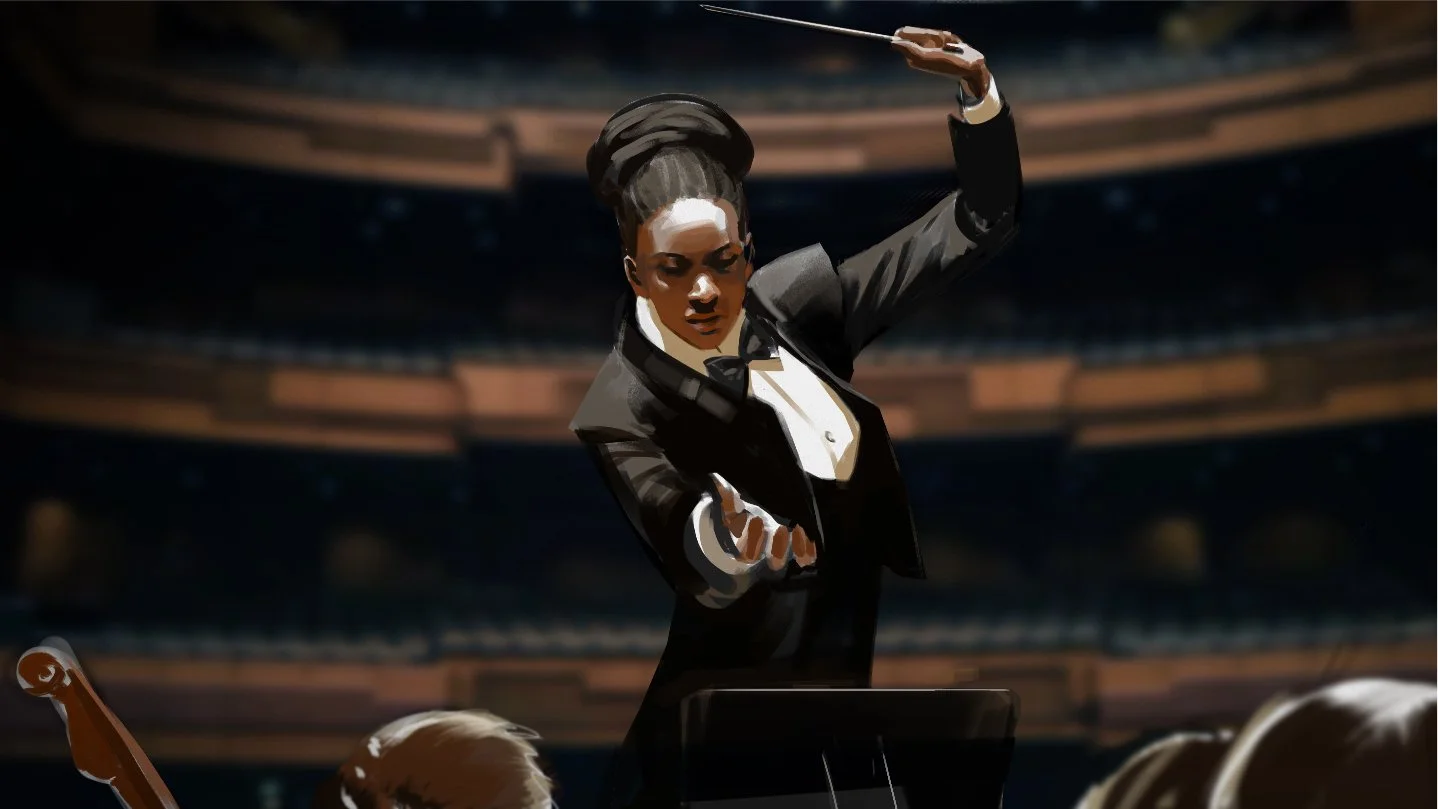
I am currently working with a director who comes from a music background. That collaboration has made me pay closer attention to the overlap between story structure and song structure. The way a soundtrack can rise, fall, and resolve has a lot in common with how a script builds tension and lands its emotional beats. Watching how the director thinks about both has sharpened my own approach to the storyboards. The visuals and the music work together to deliver the narrative.
Storyboard artists deal with structure every day. We translate the written story into a sequence of images that carry rhythm, momentum, and emotional weight. Songwriters do something similar with melody, verse, and chorus. Both crafts rely on setup, development, peak, and resolution. Understanding those shared patterns helps the boards support the film’s overall shape, including how the soundtrack will sit underneath or push against the images.
The Basic Parallel
Most stories and most songs follow a similar arc. They start by establishing a world or a mood. They introduce tension or movement. They reach a high point or turning moment. Then they release that energy and bring things to a close. The labels differ, but the underlying job is the same: take the audience from one emotional place to another in a way that feels purposeful.
In a script the exposition sets the scene and introduces the characters. In a song the intro and first verse do comparable work. They establish the key, the tempo, and the basic idea. Rising action in a story deepens the conflict and raises the stakes. The second verse and pre-chorus in a song often serve the same purpose, adding detail and building anticipation toward the main hook.
The climax or major turning point in a narrative is the moment of highest intensity or change. In music that role frequently falls to the bridge or the final chorus. The bridge can break the established pattern with a new melody or perspective, creating a pivot before the biggest payoff. Falling action and resolution in a story release the remaining tension and bring the arc to rest. An outro or coda does the same in a song, wrapping up the thematic material and signaling closure.
Not all of these are one for one. Songs and stories both allow for variation, but the shared architecture is useful. When I board a sequence I can think about where we are in the larger arc the same way a composer thinks about where the song is in its structure. That awareness helps the images land with the right weight and timing.
How This Shows Up in Storyboards
The boards need to leave room for the soundtrack to do its job while still carrying the visual storytelling. A quiet establishing shot can function like a sparse intro, setting mood without crowding the frame. A series of tighter, more intense panels can build like a pre-chorus, increasing pressure before a bigger visual or emotional release.
Continuity and pacing become clearer when you view the sequence as a kind of musical phrase. Where does the energy need to rise? Where does it need space to breathe? How does one panel set up the next the way one musical bar leads into another? These questions keep the boards from becoming a flat list of shots. They turn them into a rhythmic visual plan that can work with the score instead of competing with it.
The director’s music background has also highlighted the value of repetition and variation. Songs rely on recurring elements that change slightly each time they return. Stories do something similar with motifs, visual echoes, and character beats. In the boards those echoes can be planned deliberately so the images reinforce the same ideas the music will later amplify or contrast.
Practical Benefits for Filmmakers
Directors and producers benefit when the storyboards already think in terms of larger structure. The boards become a clearer guide for how the film will feel from start to finish. They help the editor, the composer, and the cinematographer see the intended rises and falls early. Potential mismatches between visual pacing and musical pacing surface while changes are still inexpensive.
Independent filmmakers especially gain from this kind of awareness. With limited resources, every choice has to carry more weight. Boards that understand the shared architecture of story and song help protect the emotional through-line of the project. They give the director a stronger foundation for conversations about tone, tempo, and payoff.
I have found that keeping the musical parallel in mind makes my own decisions more deliberate. When a sequence feels flat, checking it against the expected arc often reveals where the energy is missing or where a quieter moment needs more space. The result is work that supports both the script and the eventual soundtrack.
Why an Artist Who Sees These Connections Adds Value
Hiring a storyboard artist who pays attention to structure, including the overlap with music, gives directors a collaborator who can help shape the film’s overall rhythm. The boards are not just illustrations of the action. They become a practical tool for testing how the narrative will move and how the images will interact with sound.
That kind of thinking comes from experience and from staying curious about related crafts. Working with a music-background director has been a useful reminder of how much the different elements of a film can reinforce one another when they are planned with the same structural awareness.
Wrapping It Up
Story structure and song structure share more than surface similarities. Both rely on setup, development, peak, and resolution to move an audience. Understanding that overlap helps storyboard artists create sequences that carry clear rhythm and emotional weight. It also helps the visuals work in partnership with the soundtrack rather than against it.
If you are directing a project and want cinematic storyboards that respect the larger narrative arc and leave room for the music to do its job, I would be glad to talk through your script. We can build boards that support the story’s structure and help the entire team see how the images and the score can deliver the film together.
📩 Reach out: paul@paultemplestudios.com
🎨 Explore more: www.paultemplestudios.com
Want more blog posts on this topic?
1. Using Screenwriting Structure in Storyboards for Better Films
2. Building the Perfect Reveal in Storyboards
3. Why Great Artists Need Interests Outside Their Main Medium