
Directors and producers often come to me when their project feels stuck. The script is solid, but the visuals fall flat. They need storyboards that bring fresh energy, something that surprises even them. In my experience as a storyboard artist, the best way out of that rut is through metaphor and non-linear jumps. It is about shaking up what you think you know and letting the drawing lead to unexpected places.
I have seen it time and again on indie films and commercial pitches. You start with a clear idea, like a character in a helmet for a sci-fi sequence, but the designs keep coming out generic. So instead of forcing another helmet sketch, I ask: what if that helmet was a big floppy glove instead? That switch pulls you away from bias and opens doors to ideas you never saw coming. Suddenly, the glove's folds inspire new textures for the helmet, or its looseness suggests vulnerability in the character. The point is not the glove. It is the detour that refreshes your thinking.
Why Preconceptions Block the Best Ideas
We all carry biases into our work. As artists, we draw from what we have seen before: movies, ads, other designs. That familiarity can trap you. In visual development for film, those preconceptions make every frame predictable. A hero's entrance looks like every other hero's entrance. A chase scene follows the same beats.
Non-linear thinking breaks that cycle. It means stepping sideways instead of forward. If I am boarding a tense confrontation, I might imagine the characters as animals first. What if the antagonist is a coiled snake and the protagonist a cornered bird? That metaphor shifts the blocking: the snake circles low, the bird perches high but trapped. When I translate it back to humans, the scene gains new tension without changing the script.
The Power of Unexpected Switches in Drawing
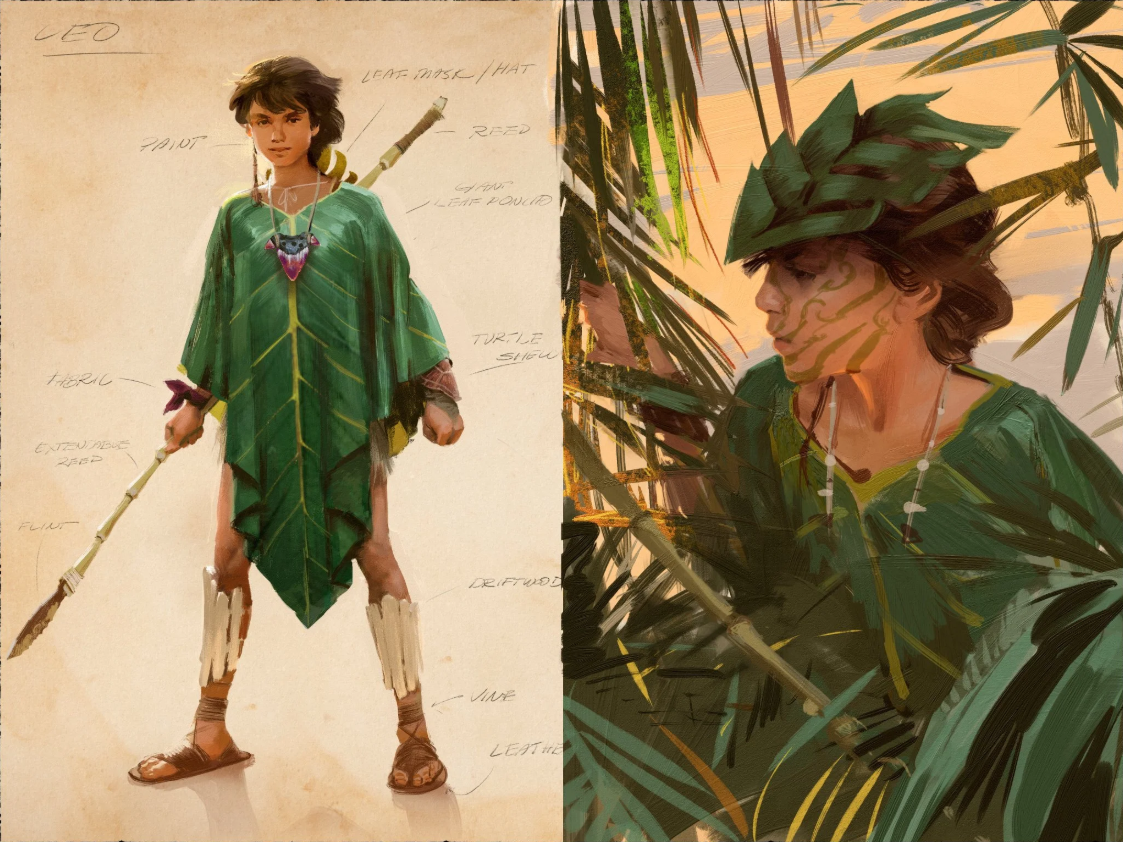
Getting out of a rut often starts right on the page. You are stuck on a detail, say a character's outfit for a fantasy film. Instead of refining the same armor over and over, do something else within the drawing. Swap it out for the absurd. Put a teapot on the warrior's shoulders or turn the sword into a feather. It sounds silly, but that playfulness exposes what is not working.
The unexpected element forces you to question assumptions. Why does the armor need to be heavy and metallic? Maybe it could borrow the teapot's curves for better flow in action scenes. Or the feather's lightness inspires a redesign focused on speed over strength. This process pulls you from linear iteration, where you tweak the same idea endlessly, to leaps that reveal better paths.
In storyboard work, this matters because directors need options that feel authentic to the story. On one indie thriller, the villain's mask was coming out too cliché. I switched it to a crumpled paper bag in a quick sketch. The bag's fragility added irony and menace, like the villain was hiding behind something disposable. We did not keep the bag, but it led to a mask with torn, uneven edges that fit the character's instability perfectly.
How Metaphor Reveals What You Did Not Know You Needed
You might not know what your project needs until you try these detours. Linear thinking assumes you have the full picture from the start. But creativity does not work that way. Metaphors act as bridges to hidden ideas. They let you borrow from one world to enrich another.
Think about world-building in pre-production. For a post-apocalyptic film, the environment might start as ruined cities. Apply a metaphor: what if the ruins were overgrown gardens? That shift brings in themes of rebirth amid decay. Suddenly, your storyboards show vines twisting around concrete, light filtering through leaves. The visuals gain depth, and the director sees emotional layers they did not plan.
I use this in my own process constantly. If a scene feels off, I reframe it through a different lens. A dialogue exchange becomes a dance: characters circle each other, advance and retreat. That metaphor informs the blocking and camera angles, making the tension visual before words hit. Producers appreciate it because it turns abstract script notes into concrete, filmable moments.
The Limits of AI in Creative Exploration
Tools like AI can generate designs fast, but they stick to what you ask for. Tell it "give me a helmet design," and you get helmets. Variations on the same theme, pulled from existing data. It will never surprise you with a floppy glove on the head because it follows patterns, not intuition.
That is the problem with automating this process. AI lacks the human spark for non-linear jumps. It cannot question its own biases or play with absurdity to find truth. In visual development, those surprises are where breakthroughs happen. You end up with generic output if you rely on it alone, because it mirrors back your preconceptions without challenging them.
I have experimented with AI for initial ideas, but it always needs the human touch. On a recent pitch, AI spat out standard spaceship interiors. Boring corridors and consoles. I took those and applied metaphors: what if the ship was a beating heart? Chambers pulsing, wires like veins. That human twist made the boards unique and sold the concept to the agency.
Directors who hire storyboard artists are not just buying drawings. They are buying that ability to detour and discover. AI might speed up rendering, but it cannot automate the insight that comes from trying the unexpected.
Building Non-Linear Habits in Your Workflow
To make this part of your routine, start small. In thumbnail sketches, force one wild variation per idea. If you are designing a prop, replace it with an unrelated object and see what sticks. For storyboards, pick a metaphor from outside the genre: a horror scene as a comedy routine, or a romance as a battle.
Practice helps. I keep a sketchbook for these experiments. No pressure, just play. Over time, it trains your brain to spot biases and leap past them. In pre-production meetings, share these detours with the team. A producer might laugh at the floppy glove, but it sparks discussions that refine the final vision.
On film sets, this thinking saves time too. If a location does not match the boards, improvise with metaphors. What if the room was a cage instead of a home? Adjust angles to emphasize confinement. The crew adapts faster when the core idea is flexible.
Overcoming Resistance to the Unexpected
Some resist this approach because it feels inefficient. Why draw a glove when you need a helmet? But linear paths often lead to dead ends. The detour might take an hour, but it unlocks days of better work. In competitive fields like advertising, that edge matters. Agencies want campaigns that surprise audiences, not recycle tropes.
Indie filmmakers benefit most. With limited budgets, fresh visuals stretch resources. A metaphorical twist turns a simple set into something cinematic. Directors tell me these ideas make their films stand out at festivals.
Tying It Back to Cinematic Truth
At its core, this is about truth in storytelling. Metaphors and non-linear thinking strip away the obvious to reveal what feels real. A character's helmet is not just protection; it is a symbol of their world. By exploring absurd alternatives, you find the design that resonates.
In my boards, every frame aims for that honesty. Whether it is a commercial spot or a feature sequence, the visuals must serve the emotion. Non-linear detours ensure they do, by breaking free of what everyone expects.
Wrapping It Up
Creative ruts happen to everyone in film and visual development. But metaphor and non-linear thinking offer a reliable way out. They challenge biases, spark surprises, and lead to stronger ideas that AI alone cannot touch. When your project needs that fresh perspective, these tools keep the work alive and true.
If you are directing or producing something and want storyboards that go beyond the expected, reach out. We can explore metaphors that fit your story and bring it to life visually.
📩 Reach out: paul@paultemplestudios.com
🎨 Explore more: paultemplestudios.com
Want more blog posts on this topic?
1. Breathing Life Into Your Characters: The Importance of Good Character Design
2. How Classical Painting Shaped Modern Filmmaking
3. Color Theory, Craft, and the Human Eye