
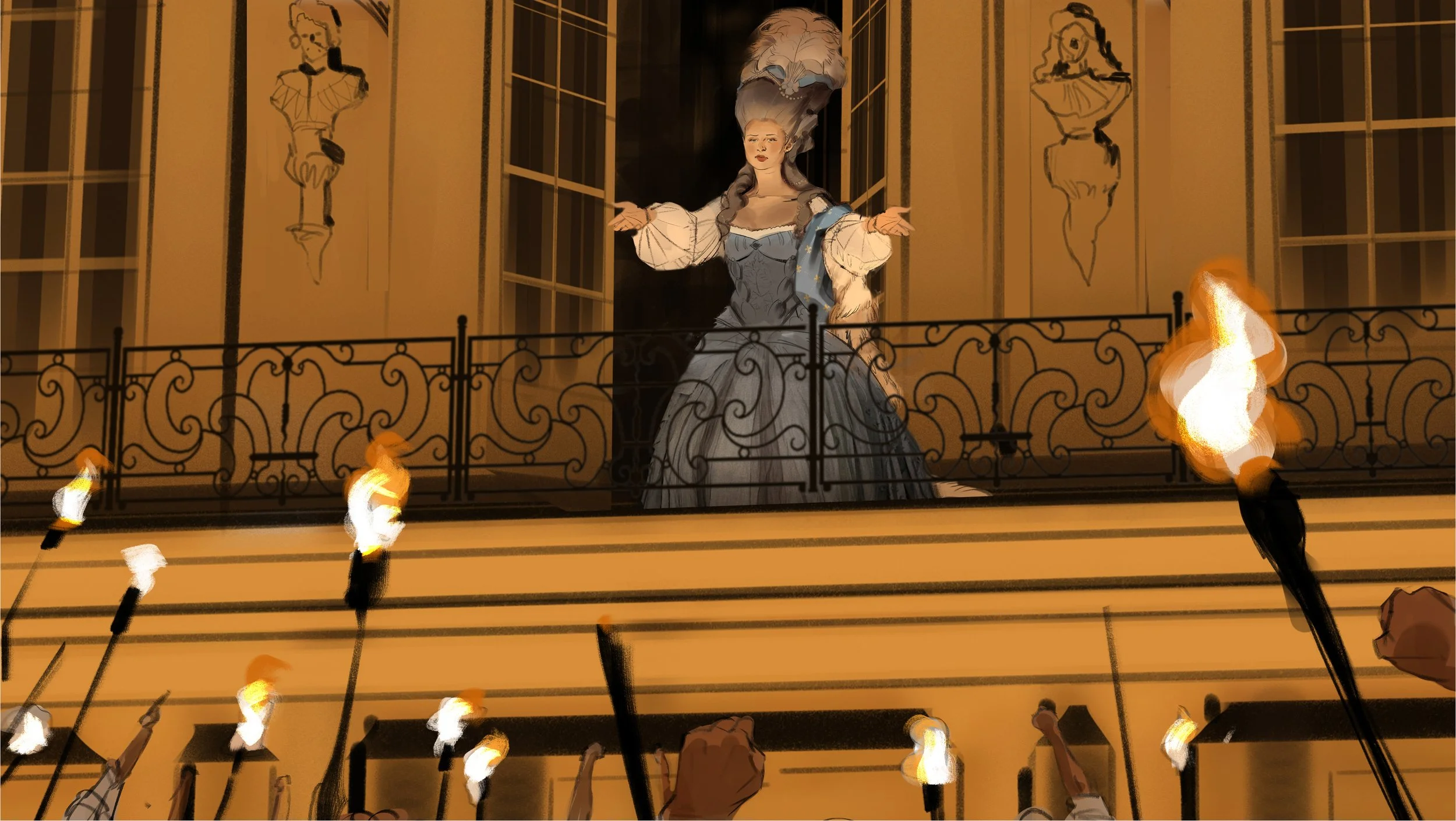
I spend a surprising amount of time thinking about light. When I am not boarding scenes for directors or working on visual development, I am often in my art studio testing light bulbs. I have become a bit obsessive about it. I hunt for bulbs that give the most accurate natural illumination possible so my traditional drawings feel true to life. That habit has taught me how deeply color temperature influences mood, and it carries straight into the work I do for film and advertising.
Color temperature is measured in Kelvin. Lower numbers feel warm, like candlelight or sunset, around 2000K to 3500K. Higher numbers feel cool, like overcast sky or daylight, around 5000K to 6500K and up. Warm light leans golden and orange. Cool light leans blue and crisp. These are not just technical choices. They affect how audiences feel before they consciously register why.
Science shows that warm light tends to promote relaxation and positive emotions. It triggers associations with safety, comfort, and connection. Cool light increases alertness and can create feelings of clarity, distance, or tension. Our brains respond to these wavelengths on a biological level. Warm tones stimulate the parasympathetic nervous system, helping people feel calmer. Cool tones engage the sympathetic system more, sharpening focus but sometimes increasing unease when overused.
In filmmaking and advertising, this becomes a powerful storytelling tool right from pre-production.
How Warm Light Influences Emotion
Warm light generally makes scenes feel inviting and human. It softens shadows, compresses space slightly, and makes skin tones look healthier. Audiences tend to relax into it. In a family scene or a heartfelt commercial, warm light helps viewers feel the emotional connection. A golden hour glow around a couple talking quietly can make the moment feel intimate and nostalgic without a single line of extra dialogue.
I see this often when boarding commercials. A warm practical lamp or soft sunset light can turn an ordinary product shot into something that feels desirable and comforting. People do not just see the product. They feel the emotion the brand wants to associate with it.
How Cool Light Shapes Mood and Tension
Cool light does the opposite in a useful way. It expands the sense of space and sharpens detail. It can feel clean, modern, clinical, or isolating. In thrillers or sci-fi, cool moonlight or harsh office fluorescents create that uneasy edge before anything dramatic happens. In advertising, cool tones work well for technology, finance, or healthcare spots where the goal is to project precision and trust.
The contrast between warm and cool is especially effective. Moving a character from warm interior light into cool exterior night air visually signals emotional change. Warm can represent safety or memory. Cool can represent reality, uncertainty, or growth. I try to show these shifts in the boards so the director can feel the progression early.
Personal Research and Why It Matters
Because I spend so much time studying real light in my studio, I have learned how small changes in temperature make big differences on paper and on screen. I test different bulbs constantly, trying to match natural conditions as closely as I can. That hands-on work helps me understand why a scene feels right or wrong even before I finish the drawing.
In pre-production, this translates into clearer boards. Instead of vague notes, I indicate key light sources and their intended temperature. Warm practicals like table lamps or golden windows versus cool overheads or blue-hour exteriors. This gives the cinematographer and producer something concrete to plan around.
For indie filmmakers working with limited resources, planning color temperature early is especially helpful. You may not have a big lighting package, but choosing the right time of day or adding one practical source can reinforce the emotion without expensive fixes later.
Common Mistakes I See
One frequent issue is using temperature without clear purpose. Blanket warm light makes everything feel the same. Blanket cool light can feel flat or depressing. The strongest work shifts temperature intentionally to support the story arc.
Another mistake is ignoring practical light sources. Boards that assume perfect studio lighting often do not translate well to real locations. I always try to ground the temperature in something believable within the scene, whether it is a window, a lamp, or streetlights.
Directors sometimes default to what looks good in reference images instead of what serves the emotional beat. Showing two quick versions of the same panel, one warm and one cool, usually makes the difference obvious.
Putting It to Work in Storyboards
When I create boards or concept art, I block the main light source and note the temperature. This helps everyone on the team visualize the mood before cameras roll. In commercials, where you have only seconds to connect with viewers, getting the temperature right can make or break the spot. In features, it helps maintain emotional consistency across long sequences.
The science is clear. Our bodies respond to these light wavelengths. Warm light tends to calm and connect. Cool light sharpens and separates. When we plan it deliberately in pre-production, the final film or ad feels more intentional and emotionally honest.
Wrapping It Up
Color temperature is one of the most effective tools we have for shaping how an audience feels. Warm versus cool light changes the emotional tone of a scene in ways that go far beyond simple aesthetics. Doing the research and planning it early through thoughtful storyboards and visual development makes a real difference in the final result.
If you are working on a film or advertising project and want boards or visual development that use light with intention and care, I would be glad to talk it over. We can explore how warm and cool temperatures can best support the story you are trying to tell.
📩 Reach out: paul@paultemplestudios.com
🎨 Explore more: www.paultemplestudios.com
Want more blog posts on this topic?
1. Studying Light: Lessons from the Masters of Painting
2. From Traditional Painting to Preproduction: How Fine Art Roots Shape Visual Storytelling
3. Color Theory, Craft, and the Human Eye