
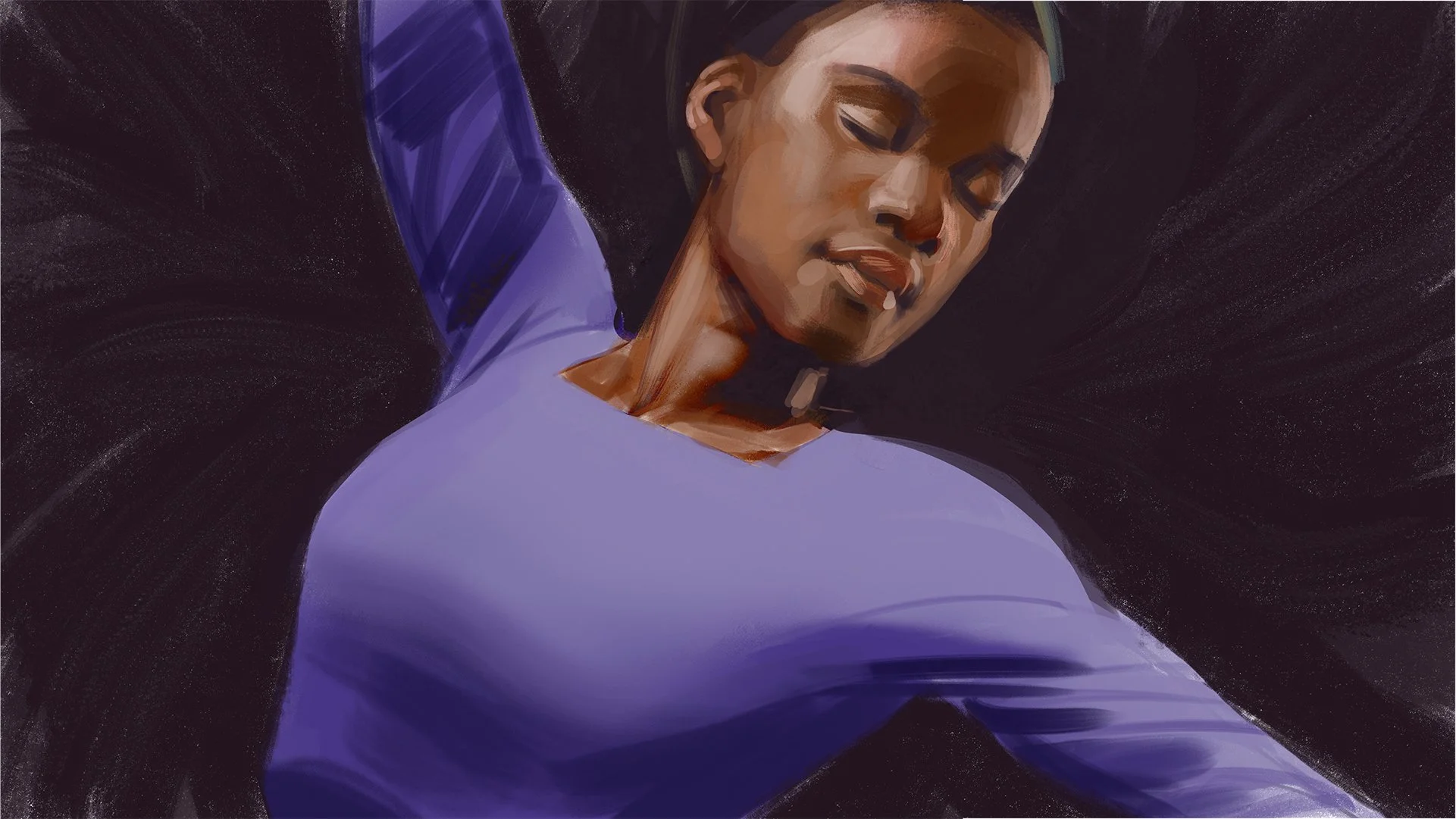
In every project I board, the real challenge is the same: turning a stack of static panels into something that reads with real cinematic energy. Modern pre-production does not always have the budget or time for full animatics, especially on indie features or tight commercial schedules. So the boards have to carry the weight. They need to sell the dolly push, the tracking shot, the handheld tension, or the slow crane reveal using nothing but pencil, perspective, and composition.
The trick is not to fake animation. It is to give the reader, the director, the producer, the DP, the same sense of rhythm and energy they will feel when the camera actually moves. When I get that right, the sequence reads like it is already in motion, even pinned up on a wall or scrolled through on a tablet.
Perspective and Foreshortening: Making Space Feel Like It Is Changing
Camera movement changes how we experience space. A dolly in brings us closer, enlarges the subject, compresses the background. A pull-back opens everything up and makes the character feel smaller in the world. In static boards, we recreate that shift by controlling scale and depth across panels.
For a slow push in on a moment of realization, I will start with a wider frame where the character sits comfortably in the environment. Then, in the next panels, the figure grows larger, filling more of the frame. Foreground elements, a hand reaching out, the edge of a table, get exaggerated in size and foreshortening so they seem to come toward the viewer. Background details drop away or soften, mimicking shallow depth of field. The progression feels like forward motion because our eyes naturally follow the increasing scale and the converging perspective lines.
The reverse works for pull-outs. The character shrinks panel by panel, the environment expands, and perspective lines open outward. I used this approach in an indie drama where a man walks away from a confrontation. By the final panel he was tiny against a wide, empty street, and the director immediately felt the emotional distance without me having to explain it.
Line Flow and Directional Thrust: Guiding the Eye Through Movement
Our eyes follow strong lines and directional forces. That is why aligning key elements along a path can imply a pan or track so convincingly.
If the director wants a left-to-right reveal, maybe a new character stepping into frame during an argument, I draw architecture, shadows, or a road that sweeps across the panel from left to right. The action peaks on the right side so the eye lands there naturally. For faster movement, like someone running, I lean the figure into the direction of travel, push hair or clothing back slightly, and let trailing edges blur just enough to suggest speed. Nothing cartoonish, just confident lines that carry momentum.
Handheld energy is different. I introduce a little instability: tilt the horizon a couple of degrees, offset the subject so they are not perfectly centered, vary line weight to create subtle jitter in the background. In one thriller sequence I boarded, the chase felt urgent because each panel had the character leaning slightly out of frame, as if the operator was scrambling to keep them in shot. The composition felt alive and unsteady, even though every drawing was still.
Dynamic Angles: Using Height and Tilt to Sell Kinetic Force
Angle choices do a lot of heavy lifting. A low angle looking up makes a subject loom and advance, perfect for implying a forward track or a crane rising beneath them. High angles pull us back and make the world feel bigger, which works well for reveals or moments of vulnerability.
For dialogue scenes that need subtle life, I will shift angles gradually across panels, starting eye-level, then dropping a bit lower or arcing slightly higher. It gives the conversation a creeping sense of movement without forcing cuts. Directors pick up on this quickly because it shows the blocking supports the performance instead of fighting it.
Dutch tilts are another tool. A slight lean adds unease or disorientation, suggesting erratic handheld or a character losing balance. I do not overuse them, but when the story calls for tension, even a five-degree cant changes how the frame reads.
Annotations and Arrows: Helpful, But Not the Star
I do use arrows and notes, "slow dolly in," "track right to CU," "handheld follow," but they are there to confirm what the drawing is already saying. If the perspective, line flow, and angles are not selling the motion, no amount of arrows will fix it. The best boards let the director feel the camera move instinctively as they scan the sequence. Notes just make sure everyone is on the same page when it comes time to shoot.
Why This Matters on Indie and Commercial Projects
A lot of the projects I work on do not have room for expensive pre-vis. When that is the case, boards that imply motion become the difference between a clear plan and a shoot full of surprises. They help location scouts understand what space is actually needed, let the DP see lighting continuity across moves, and give producers confidence that the energy will translate to screen.
In commercials especially, clients want to feel the spot's pace before we ever roll camera. A well-drawn tracking reveal around a product or a dolly in on a key emotional beat can seal the deal faster than a mood board or script notes alone.
What to Avoid: The Things That Flatten Energy
Static posing is the biggest killer. If every character stands centered and squared to camera panel after panel, even a dynamic track will feel lifeless. Rotate torsos, shift weight, vary eye lines. Panel-to-panel progression matters too. If each frame feels like its own isolated illustration, the sequence loses rhythm.
Over-rendering is another trap. Tight, polished detail slows the eye down. Rough, confident lines with strong shapes and clear thrust convey speed and life much better. And always tie movement back to purpose: a dolly in is not just cool, it heightens intimacy or forces focus on a revelation. A track follows pursuit or power. Handheld adds realism or anxiety. When the why is clear, the how becomes obvious.
How I Build the Instinct
This comes from years of drawing from life, watching films frame by frame, and sketching thumbnails to test ideas. I will often start a sequence with stick figures and simple arrows just to map the energy, then layer in perspective and gesture. Studying directors like Hitchcock, Fincher, or Cuarón helps too. Their shots are so deliberate that freezing any frame shows exactly how composition implies the next move.
Wrapping It Up
Good storyboards show how it feels to watch the story unfold. When static frames carry dolly, pan, track, handheld, or crane energy through perspective, line, angle, and flow, the whole team begins from the same clear place. The director sees the film they want, the crew understands the plan, and decisions land early so the budget and the schedule stay on track.
If you are working on a project and want boards that bring real cinematic momentum from the first read-through, I would be glad to talk it over. Let us figure out how to make your visuals move before the camera does.
📩 Reach out: paul@paultemplestudios.com
🎨 Explore more: www.paultemplestudios.com
Want more blog posts on this topic?
1. How Shooting Boards Help Indie Filmmakers Compete with Studio Productions
2. Commercials Are Short Films: Why Storyboards Matter Even More in 30 Seconds
3. What Filmmakers Want from Shooting Boards: Save Time, Money and Communicate Clearly