
I keep a few well-worn books on the shelf in my studio that I return to regularly. One of them is George Bridgman’s Constructive Anatomy. The pages are full of notes and dog-ears because Bridgman had a way of explaining the human figure that actually made sense when you were trying to draw it in motion. He was not flashy. He was practical. And that practicality influenced a surprising number of major artists, including Norman Rockwell.
George Bridgman taught at the Art Students League in New York for nearly fifty years. He trained tens of thousands of students, many of whom went on to become working professionals in illustration and fine art. His classes were legendary for their intensity and clarity. He focused on constructive anatomy, teaching students to understand the body as a machine of interlocking forms rather than a collection of surface details. That approach stuck with his students, and it still influences how I think about figure work today.
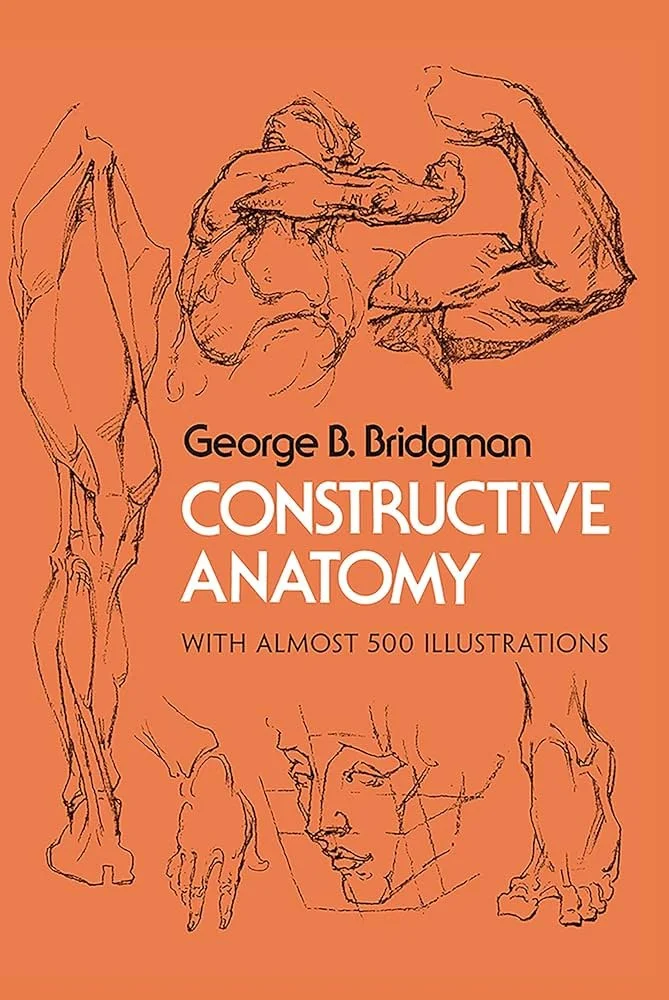
Constructive Anatomy by George Bridgeman.
Bridgman’s Method and Lasting Influence
Bridgman’s books, especially Constructive Anatomy and Bridgman’s Life Drawing, broke the human body down into simple geometric shapes and mechanical principles. He showed how the rib cage wedges into the pelvis, how the shoulder girdle moves independently, and how muscles create visible surface forms when the body twists or bends. He emphasized “wedging” and “passing” forms, ideas that help artists draw convincing figures even from memory or imagination.
Norman Rockwell studied under Bridgman and spoke highly of his teaching. Rockwell credited Bridgman with giving him a rock-solid foundation in anatomy and draftsmanship. You can see that influence in Rockwell’s ability to paint complex, expressive figures that feel completely natural, even in highly narrative scenes. Bridgman gave Rockwell and many others the tools to draw people who looked like they could actually move and breathe.
There is a bit of wit in the fact that Bridgman himself was known as a tough, no-nonsense instructor who sometimes showed up in rumpled suits and kept a skeleton in his locker for dramatic demonstrations. He was not trying to be artistic in the romantic sense. He was trying to teach artists how the body actually works. That straightforward approach produced results that lasted.
Why Bridgman’s Lessons Still Matter in Film Pre-Production
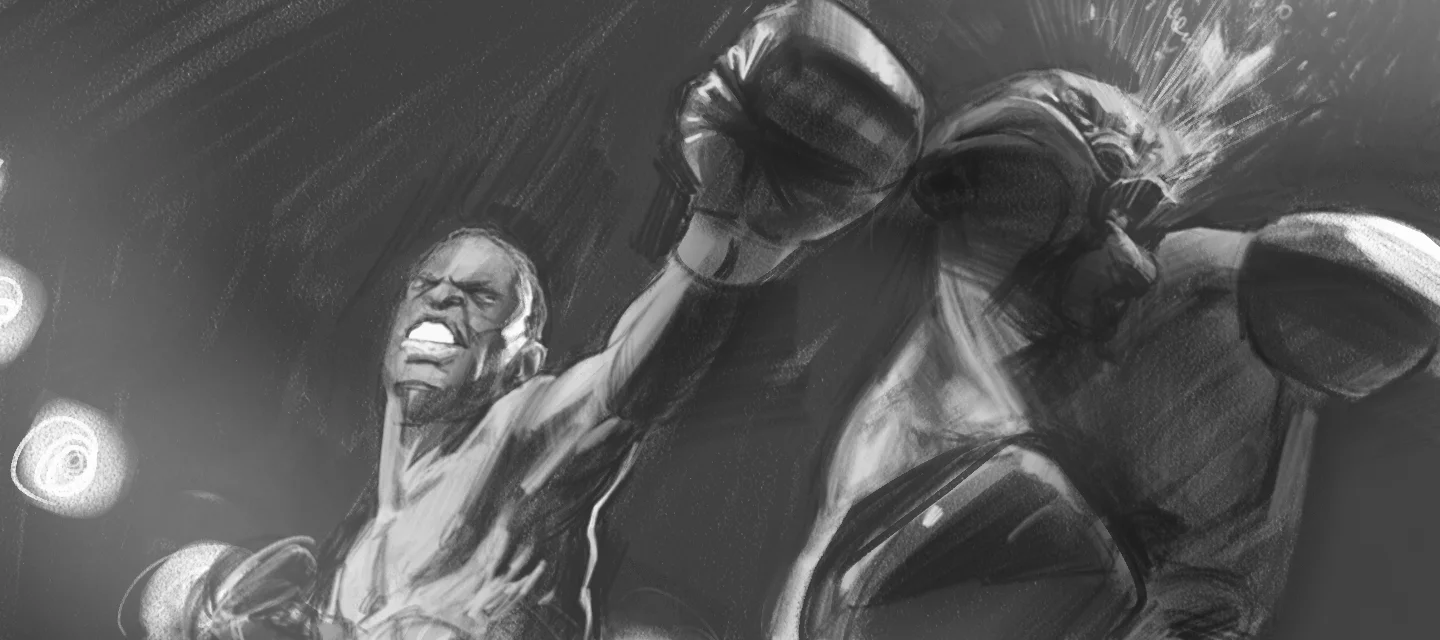
As a storyboard artist and visual development artist working on films, I draw from Bridgman’s ideas almost every day. When you are boarding a scene, you need to understand how a character’s body communicates emotion and intention through posture, weight shift, and gesture. Bridgman’s constructive approach helps me draw figures that feel grounded and alive, even in rough thumbnail form.
Directors often need to see how a performance will read on screen before shooting begins. A character slumping in defeat, leaning forward in anger, or twisting in surprise needs to feel believable. Bridgman’s emphasis on underlying structure lets me show those physical truths quickly and clearly. The boards become more useful to the director because they convey performance, not just poses.
In visual development, the same principles apply when designing characters or environments. Understanding how forms interlock and how the body moves under clothing or armor helps create designs that feel convincing from every angle.
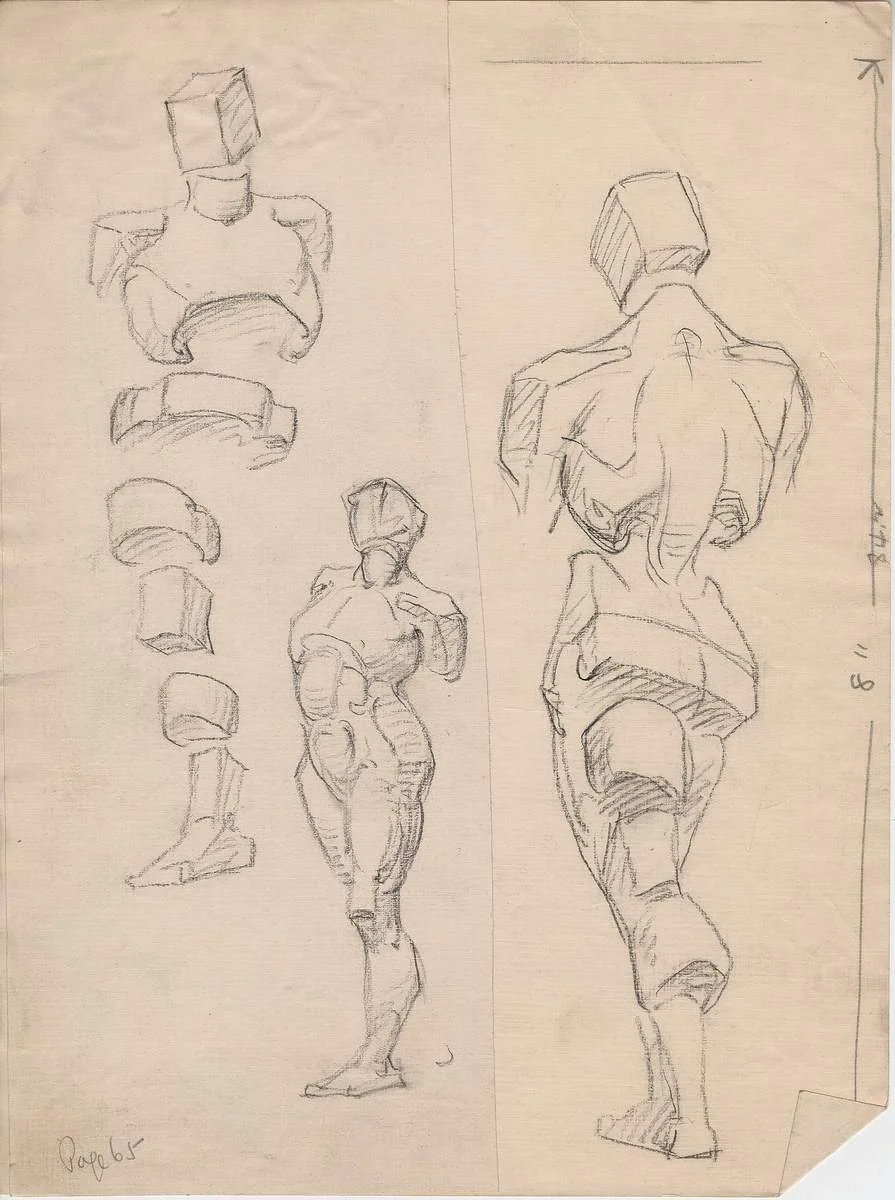
George Bridgeman anatomy sketches.
Practical Application in Storyboarding
When I start boarding a sequence, I often begin with simple Bridgman-style construction. I block in the major forms first (the rib cage, pelvis, and spine) before adding gesture and detail. This keeps the figures consistent across panels and helps maintain clear staging even when the camera angle changes.
It also speeds up revisions. When a director wants to adjust a character’s attitude or blocking, I can make those changes quickly because I understand the underlying mechanics. The structure is already there.
Independent filmmakers especially benefit from this. With limited shooting days, strong boards that show believable performance save time and reduce confusion on set. The crew can see exactly what the director is going for because the anatomy and gesture read clearly.
The Enduring Value of Solid Fundamentals
Bridgman was not interested in artistic trends. He taught fundamentals that have held up for decades. That is why his influence shows up in the work of so many successful artists, including Rockwell, J.C. Leyendecker, and even Jackson Pollock . Solid anatomy and constructive drawing give you freedom. Once you understand the rules, then you can start to break them with purpose.
In film work, that freedom is essential. You need to be able to draw fast, revise fast, and still deliver visuals that feel true. Bridgman’s methods help me do that without sacrificing quality or clarity.
Wrapping It Up
George Bridgman’s teaching and books represent something valuable in an era that sometimes favors speed over substance. His focus on constructive anatomy and clear figure drawing created a foundation that helped artists like Norman Rockwell tell powerful visual stories. That same foundation still serves storyboard artists and visual development professionals working in film today.
If you are directing a film and want storyboards and visual development grounded in strong fundamentals and real understanding of the human figure, I would be glad to talk through your project. We can build boards that support performance, emotion, and story with clarity and efficiency.
📩 Reach out: paul@paultemplestudios.com
🎨 Explore more: www.paultemplestudios.com
Want more blog posts on this topic?
1. From Traditional Painting to Preproduction: How Fine Art Roots Shape Visual Storytelling
2. How Classical Painting Shaped Modern Filmmaking
3. Breathing Life Into Your Characters: The Importance of Good Character Design