
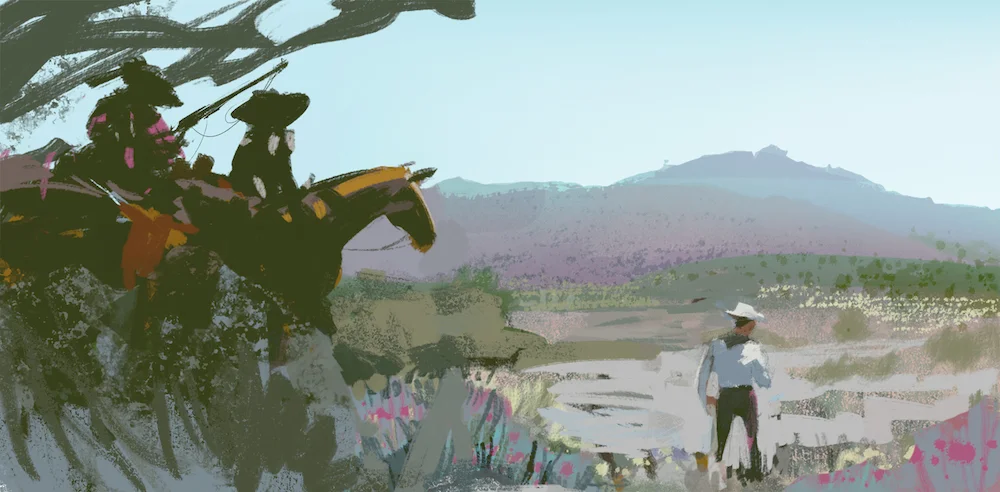
I have a collection of art books in my studio that I pull out regularly. One that I return to often is Edgar Payne’s Composition of Outdoor Painting. It is straightforward, practical, and full of hard-earned wisdom from a working landscape painter. Payne spent years observing nature directly and figuring out how to organize what he saw into strong, harmonious pictures. That kind of thinking translates surprisingly well to storyboarding and visual development for film.
Directors and producers sometimes ask how I make decisions about framing and layout in boards. A big part of the answer comes from principles like the ones Payne laid out. Strong composition guides the viewer’s eye, creates emotional impact, and gives the image a sense of order and purpose. Those skills become extremely valuable when you are trying to help a director visualize a scene during preproduction.
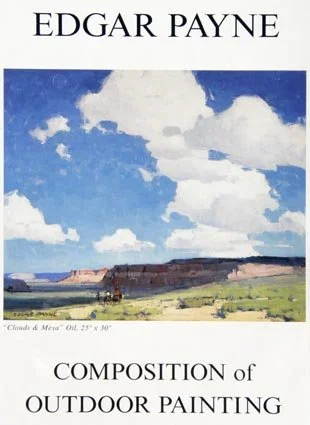
Composition of Outdoor Painting by Edgar Payne
Payne’s Core Ideas on Composition
In Composition of Outdoor Painting, Payne emphasizes that strong paintings start with clear design. He talks about “design stems”, which are basic structural patterns that underlie good compositions. Things like the steelyard (a large mass balanced by smaller ones), the S-curve, the triangle or pyramid, radiating lines, and circular or tunnel arrangements. These are practical tools for organizing visual information so the picture holds together and feels satisfying to look at.
He stresses simplicity and unequal measures. A composition with one dominant area of interest balanced by smaller supporting elements tends to feel more dynamic. Payne also paid close attention to value patterns, the big light and dark masses, because our eyes read value before color or detail. Getting those major value shapes right creates immediate impact and unity.
Another idea I return to often is his thinking on rhythm and repetition. Repeating shapes, lines, or color notes with slight variations creates flow and keeps the eye moving through the picture in a natural way. He warned against placing the main point of interest too close to the edge or right in the center, as both can weaken the overall arrangement.
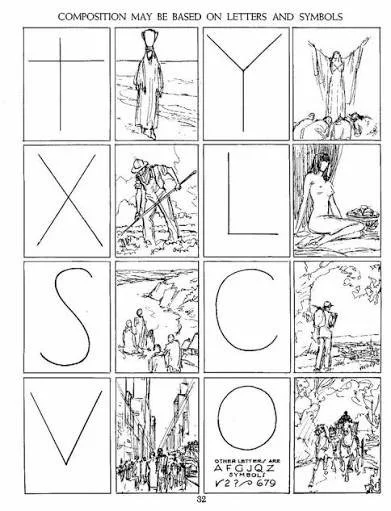
Excerpt from Compositions of Outdoor Painting by Edgar Payne.
How These Principles Apply to Storyboarding
When I am boarding a film sequence, I think about many of these same ideas. A strong establishing shot often benefits from a clear dominant mass and supporting elements. An action sequence might use radiating lines or an S-curve to guide the eye through the movement. A quiet, emotional moment might use a more circular or contained composition to create intimacy and focus.
Payne’s emphasis on value organization is especially useful. In storyboards I block in major light and dark areas early so the emotional tone of the scene reads clearly even in rough form. A dark foreground mass against a lighter background can create depth and drama. A strong value pattern helps the director and cinematographer see the mood before lighting tests begin.
Independent filmmakers benefit greatly from this kind of thinking. With limited shooting days and resources, clear compositional decisions made in pre-production help every department understand the visual plan. The boards become a reliable communication tool instead of just reference drawings.
Practical Use in Visual Development
In visual development, I use Payne’s ideas when designing environments and character placements. A strong triangular composition can give a heroic or stable feeling. A tunnel or circular arrangement can focus attention on a key moment or create a sense of enclosure. Understanding these patterns helps me present options to the director that feel intentional rather than random.
Payne also talked about the importance of motivation, making sure every compositional choice serves the bigger idea of the picture. That thinking keeps me honest when I am working on boards. It is easy to make something look cool in isolation. Payne’s book is a good reminder to keep asking whether the composition supports the moment.
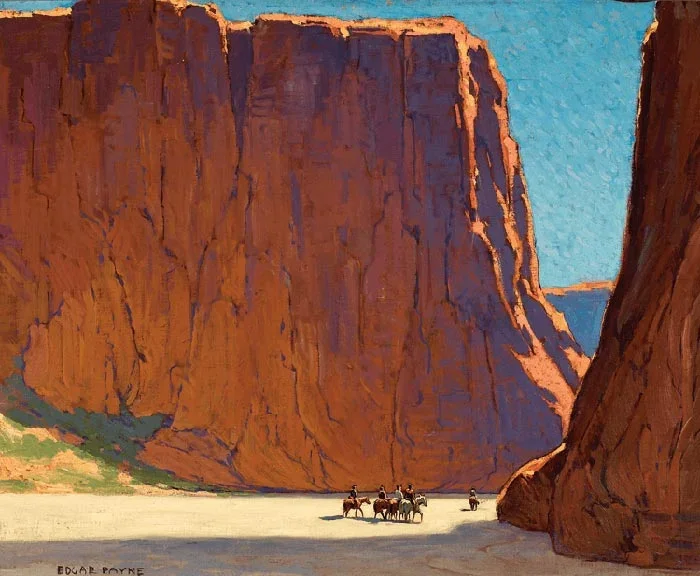
Sunset Canyon - Painting by Edgar Payne
The Enduring Value of These Fundamentals
Edgar Payne was a working artist who painted outdoors extensively. He developed his ideas through years of direct observation and practice. That practical foundation is why his teachings still hold up. They come from someone who had to make paintings work in real conditions with real limitations.
In film work, we face our own limitations, time, budget, locations, actor availability. Having a solid understanding of composition helps me adapt quickly and still deliver visuals that feel purposeful. It is one of the reasons directors find the boards invaluable.
Wrapping It Up
Edgar Payne’s Composition of Outdoor Painting remains one of the clearest books on how to organize visual information effectively. His ideas about design stems, value patterns, balance, and purposeful arrangement continue to influence how I approach storyboarding and visual development for films.
If you are directing a project and want storyboards and visual development grounded in strong compositional thinking, I would be glad to talk through your script. We can apply these practical principles to create clear, emotionally effective visuals that support your story from the earliest stages.
📩 Reach out: paul@paultemplestudios.com
🎨 Explore more: www.paultemplestudios.com
Want more blog posts on this topic?
1. Composition and Control: The Cinematic Science Behind a Great Frame
2. Patterns in Nature: Lessons for Cinematic Composition
3. Concept Art and Storyboards for Indie Film Crowdfunding