• Home
  • Film & Games
  • Advertising
  • Super Bowl LVII
  • Clients
  • Blog
  • Contact
Menu

Paul Temple Studios

  • Home
  • Film & Games
  • Advertising
  • Super Bowl LVII
  • Clients
  • Blog
  • Contact
×

Behind the Boards: A Blog by Artist, Paul Temple

Welcome to the blog! Here you'll find insights into the art of storyboarding, concept development, shooting boards, and visual storytelling for film, television, and advertising. From camera planning techniques to the emotional impact of character design, this is where I’ll share my expertise honed over a decade of working with directors and top brands. Whether you're a creative director, filmmaker, or agency looking to elevate your pitch, this blog reveals how powerful visuals drive unforgettable stories.

Questions? Email me at paul@paultemplestudios.com

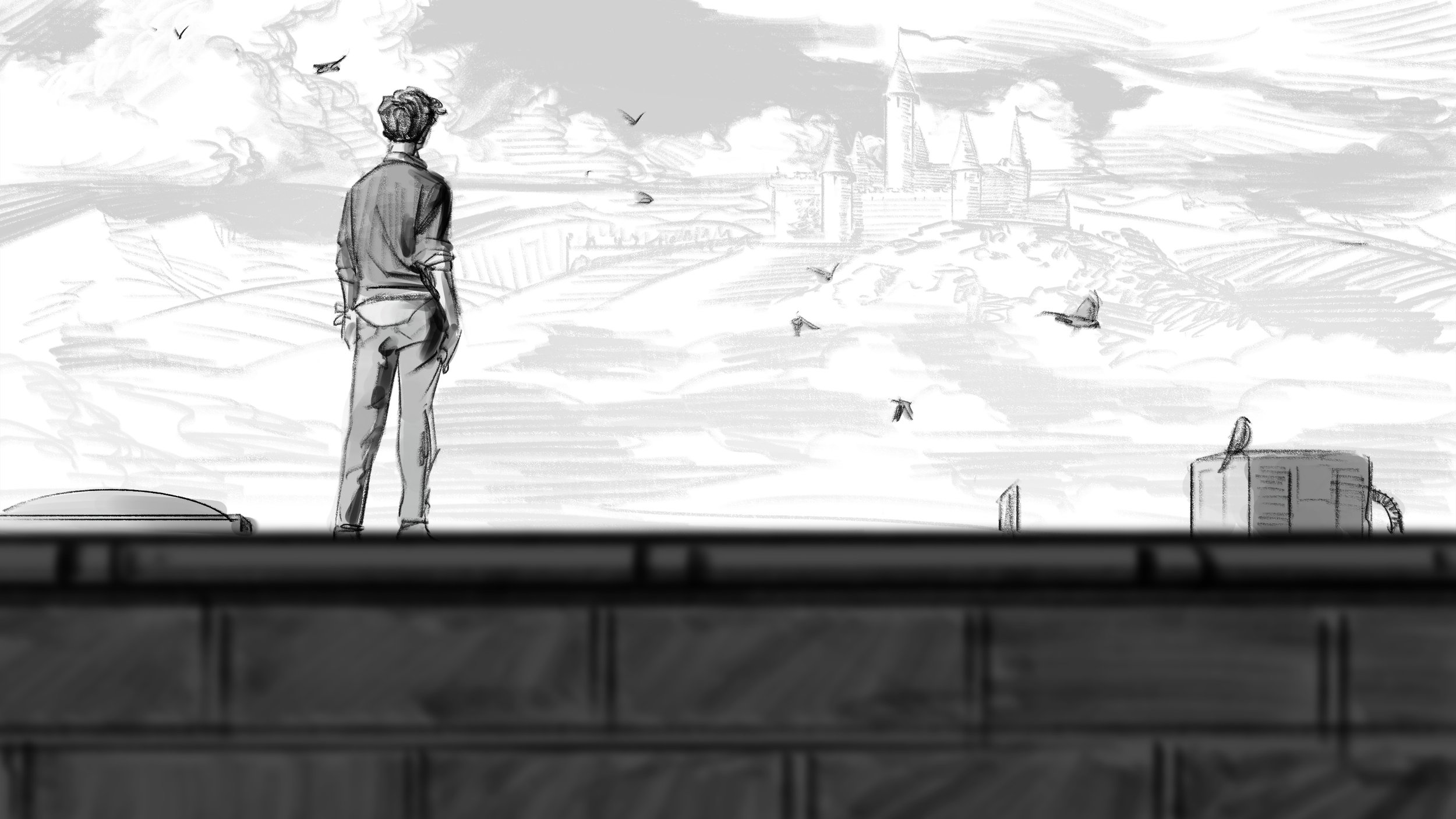
Boy looks into the clouds where he sees a dreamscape castle

The Value of a Story Partner in Visual Storytelling

Paul Temple January 20, 2026

Filmmakers tend to spend a lot of time alone with their ideas. I understand why. When you are responsible for the story, the tone, and the final result, it feels safer to hold everything close and work it out internally. But in my experience, the strongest ideas rarely come from spending more time alone. They come from getting the idea out of your head and into a conversation with someone who can challenge it, shape it, and help you see it more clearly.

This is not just about collaboration (buzzword alert). It is about having a real story partner. Someone who brings their own experiences, instincts, and perspective into the process. Someone who is not just agreeing with you, but actively engaging with the idea and helping it evolve.

Some of the Best Story Decisions Happen Out Loud

A great example of this comes from the development of Indiana Jones and the Last Crusade. During the story conferences, Steven Spielberg, George Lucas, Harrison Ford, and later Sean Connery spent a surprising amount of time talking about their own fathers. They talked about authority, distance, humor, admiration, frustration, and the strange ways fathers and sons misunderstand each other. Those conversations shaped the character of Henry Jones Sr. in a way that no amount of outlining alone could have done. The character works because he is rooted in shared, lived experience, not because he was designed to serve a plot function.

That kind of character does not come from one person working in isolation. It comes from multiple people bringing different parts of themselves into the room and letting those ideas interact. It is unpredictable and sometimes uncomfortable, but it produces work that feels human and specific.

I see this same dynamic play out with directors all the time. A director comes in with a strong concept, but it is still living entirely in their head. They can explain it verbally, and they know how it is supposed to feel, but once we start talking through specific moments, things begin to shift. A gesture that felt right in theory suddenly feels wrong when you try to show it. A camera move turns out to be unnecessary once the emotional beat is clearer. These are not problems. They are signs that the idea is finally becoming tangible.

Letting Someone In Is the Scary Part. That’s Also the Good Part.

Visual collaboration changes the conversation. Once you start sketching and staging a scene, you are forced to make decisions. You have to decide where the camera is, what the audience sees first, and what information actually matters in that moment. Vague ideas do not survive contact with a frame, and that is a good thing. It pushes the story toward clarity.

As a storyboard artist, my role is not to decorate an idea or make it look impressive. My role is to help directors think through the story visually and make confident, purposeful decisions early. I ask questions about intent, motivation, and emotion. I help remove unnecessary detail so the core of the scene comes through cleanly. In many cases, scenes that felt stuck for weeks start to resolve quickly once they are on paper and open to discussion.

There is always some risk involved in this process. Letting someone else into your story means accepting that it may change. You might discover that a moment works better than you expected, or that something you were attached to needs to go. That loss of control can feel uncomfortable, especially when an idea still feels fragile. But that risk is also what allows the work to grow. Ideas that are protected too tightly tend to stagnate. Ideas that are shared with the right partner tend to gain momentum.

A Story Partner, Not Just an Artist

One of the biggest shifts I see in directors is the moment they realize they do not have to carry the entire story alone. Once the idea is externalized and shaped through conversation and visuals, it becomes easier to work with. The story starts moving forward instead of looping. Decisions get simpler. The process feels lighter.

When people talk about collaboration, they often frame it as compromise. I see it differently. The best collaborations are not about meeting in the middle. They are about combining different experiences, tastes, and ways of seeing into something neither person could have created alone. That is how stories gain texture and specificity.

This is the role I play for directors. I am not there to take control of your story or override your vision. I am there to sit alongside you, help you work through ideas visually, and bring clarity to moments that feel uncertain. Think of it as having a story friend who speaks the language of cinema fluently and knows how to turn abstract thoughts into concrete decisions.

If you are developing a project and find yourself circling the same ideas, or if you sense that the story has more potential than what is currently on the page, that is often a sign that it is time to involve someone else. Taking that step can feel risky, but it is usually the moment where the work starts to come alive.

If you want to talk through a project and see how visual collaboration might help, I offer a no-obligation initial call. Tell me about what you are working on, and we can start the conversation.

📩 Reach out: paul@paultemplestudios.com
🎨 Explore more: www.paultemplestudios.com

Want more blog posts on this topic?
1. Hiring a Storyboard and VisDev Artist: A Step by Step Guide
2.
Storyboards and Cinematography: Speaking the Same Language
3.
The Grammar of Storyboards: Thinking Like a Story Consultant

Comment

When Iteration Becomes Overthinking and Hurts Your Story

Paul Temple January 12, 2026

Directors, let’s cut to the bone. Anxious revision screams louder than the story. It shows up when you iterate without clarity. It shows up when you second guess every look, every movement. Audiences feel it. They may not know how many revisions went into the final version, but they know when something in the scene is off or uncertain.

No artist sets out to be indecisive. But iteration can become a habit that eats confidence alive. You test options, tweak, refine, and fiddle. You think you are improving the work. In reality, you are giving anxiety a permanent home in your visuals.

This is not about perfection. This is about commitment and clarity.

Iteration Is a Tool, Not a Crutch

Iteration is essential—but only when it has a purpose. Its job is to explore ideas, camera angles, character gestures, and scene rhythm. Once you’ve tested the options, you stop tweaking and commit. That is how you avoid letting iteration bleed doubt into your visuals.

The goal of iteration is clarity, not complication. It’s a way to find the simplest, strongest solution that communicates story beats clearly and immediately. Everything beyond that is noise.

Decisiveness Is the Director’s Best Friend

Here’s the truth directors need to hear: indecision costs time, clarity, and confidence. One bold choice communicates more than fifty cautious ones. Commitment anchors a scene. It tells actors, cinematographers, and the audience exactly what the story wants them to feel.

When you commit visually, every element of the frame works together. Every gesture, line, and angle supports the narrative. There is no ambiguity. There is no guesswork.

A scene with decisiveness reads immediately. A hesitant scene reads as uncertain. Audiences do not care about the number of tweaks you made—they care about how clearly the story lands.

Every Mark Has a Purpose

This is where a skilled visual artist changes everything. A good artist does not add marks for decoration. Every stroke, gesture, or composition has a reason. Every choice communicates something.

For example, in a character close-up, you don’t need every wrinkle or shadow. You need the tilt, gesture, and expression that communicates hesitation, excitement, or tension instantly. That is how professional storyboards function: they reduce complexity, emphasize clarity, and give the team visuals that solve problems.

When every mark has a purpose, the storyboard is no longer just a reference. It becomes a tool for decision-making for everyone on set. Production moves faster. Actors understand intention. Cinematographers know exactly what the camera needs to do. And the story comes across without question.

Why Hiring the Right Visual Partner Matters

Directors hire artists like me to make these calls confidently. Here’s what that brings to a production:

  • Speed and efficiency: Quick, purposeful iteration followed by strong commitment saves time on revisions.

  • Clarity for your team: Every department knows exactly what to do and why.

  • Confidence in creative decisions: You do not have to worry whether a subtle choice communicates effectively—the visuals already do the work.

  • Problem-solving before production: Anticipated issues in framing, staging, or gesture get solved on paper, not on set.

A strong visual partner prevents anxious overthinking from leaking into the final product. But the real value is making decisions simple, strong, and usable.

Commitment in Action

Here’s how it works in practice. Imagine a tense dialogue scene. A director might iterate endlessly on subtle facial expressions, camera angles, and props. A committed visual approach would test variations fast, identify the strongest visual beat, and lock it in.

This approach has two major benefits:

  1. The team knows what to do immediately. No more debating whether the actor’s gesture is correct.

  2. The story reads instantly for the audience. There is no guesswork. The emotional beat hits exactly as intended.

That is decisiveness. That is why hiring a professional visual artist is an investment, not a luxury.

Clarity Over Completeness

Audiences do not need every fact in a frame. They need the right information in the right place. A single object, gesture, or visual cue can communicate more than a cluttered frame filled with irrelevant detail.

Good visual storytelling is about subtraction as much as addition. Knowing what to leave out is as critical as knowing what to include. A committed visual artist makes that call every time.

Iteration With Purpose, Not Paralyzing Detail

Iteration becomes dangerous when it exists without a goal. A sketch is a tool. A test is a tool. But when iteration turns into endless refinement, it produces hesitation on screen.

Purposeful iteration is structured and constrained. You explore alternatives, you identify the strongest option, then you commit. That is how visuals maintain clarity, authority, and speed.

Audiences feel hesitation immediately. Confidence communicates itself instantly. A director, a cinematographer, and a production designer all feel the difference.

Why Directors Hire Experts

Let’s be clear. You hire a visual partner not for effort or extra detail. You hire us for clarity, decisiveness, and problem-solving.

We:

  • Identify the essential visual beat quickly.

  • Solve problems before production.

  • Make strong choices that the team can act on.

  • Deliver visuals that communicate exactly what the story needs.

This is the value you cannot buy with just more sketches or revisions. It is earned through experience, judgment, and confidence.

The Question Every Mark Must Answer

Every mark, every gesture, every camera decision should answer a single question:

“Does this communicate what the audience needs to know right now?”

If yes, commit. If no, iterate. That simple framework keeps visuals decisive, clear, and actionable. It keeps overthinking from creeping in. And it ensures every frame delivers exactly what the story demands.

Final Takeaways

  • Iteration is a tool. Overthinking is a trap. Keep it purposeful.

  • Commitment is decisive action. It anchors your scene and communicates story clearly.

  • Every mark must have a reason. Nothing else belongs.

  • A strong visual partner makes these calls confidently, giving your team clarity and speed.

  • Audiences respond to decisiveness, not perfection or clutter.

Directors hire visual development experts to solve problems, clarify story intent, and make every frame purposeful. That is how strong visuals support better films. That is how stories hit exactly where they are meant to land.

📩 Reach out: paul@paultemplestudios.com
🎨 Explore more: www.paultemplestudios.com

Want more blog posts on this topic?
1. Setting the Emotional Tempo: How Storyboards Shape the Audience’s Experience
2.
Storyboards and Cinematography: Speaking the Same Language
3.
The Grammar of Storyboards: Thinking Like a Story Consultant
In Cinematography, Film, Storyboards
Comment

Hiring a Storyboard and VisDev Artist: A Step by Step Guide

Paul Temple January 7, 2026

If you have never hired a storyboard artist or visual development artist before, you are not alone. Most directors, producers, and creatives I talk to feel a little unsure the first time. They know they need boards, but they are not always sure what to bring to the table, how detailed things need to be, or what the process actually looks like once the project starts.

This post is meant to take the mystery out of it.

Whether you are developing a feature, a short film, a series, or an independent project, the process of working with me follows a clear structure. My job is to help you translate ideas into visuals that your team and your crew can understand and execute.

Here is what the process typically looks like, from the first conversation to final delivery.

Step One: The Initial Call

Every project starts with a conversation.

This is usually a video call or phone call where we talk through the project at a high level. You do not need everything figured out yet. That is part of what I help with.

During this call, we usually cover:

  • What the project is and where it is in development.

  • The scope of the story or sequence.

  • The type of visual work you think you need.

  • Your timeline and any deadlines that matter.

This conversation sets the foundation. It helps me understand how much guidance you need and where I can add the most value.

Step Two: The Brief

After the initial call, I ask for a brief. This does not need to be overly formal, but it does need to be clear.

A solid brief usually includes:

  • The script or scene breakdown.

  • The number of frames or designs you think you need.

  • Reference images, mood boards, or visual inspiration.

  • Any constraints related to budget, scale, or production realities.

If you do not have all of this yet, that is completely fine. Part of my role is helping you shape the brief into something workable. Many projects begin with loose ideas that need structure before they can move forward visually.

Step Three: Quote and Schedule

Once I understand the scope, I provide a quote and a schedule. This may take a few days depending on the size of the script or material provided.

The quote is based on:

  • Number of frames or designs.

  • Level of finish.

  • Complexity of environments, characters, or action.

  • Timeline expectations.

The schedule outlines:

  • When rough sketches will be delivered.

  • When feedback is due.

  • How many revision rounds are included.

  • When final delivery happens.

This step removes uncertainty. Everyone knows what is being made and when.

Step Four: Rough Sketches

This is where drawing begins.

Rough sketches are not meant to be polished. They exist to solve problems. Composition, staging, camera placement, and story clarity all get worked out here.

At this stage, I am focused on:

  • Readability.

  • Clear visual storytelling.

  • Logical camera flow

  • Making sure the idea works on screen.

This phase moves quickly and is designed to invite discussion. It is far easier to adjust a rough drawing than a finished one.

Step Five: Feedback and Revisions

Feedback is a core part of the process.

Once roughs are delivered, you review them and send notes. These notes may come from a director, producer, or an entire creative team.

I revise based on that feedback, and the process repeats 2 or 3 times until the direction is locked.

This back and forth is where clarity is built. The goal is not perfection. The goal is alignment.

Step Six: Refinement and Finish

Once structure and intent are approved, the work moves into refinement.

This phase takes significantly longer than the rough sketch phase. Whether the boards are black and white or color, refinement is where tone, clarity, and craft come together.

Refinement includes:

  • Cleaning up line work.

  • Clarifying lighting and spatial relationships.

  • Strengthening gesture and silhouette.

  • Ensuring consistency from frame to frame.

For color work, this also includes color harmony, light direction, and mood control.

This is the stage where the drawings become reliable tools for production.

Step Seven: Delivery and Payment

Once refinement is complete, you will receive the final files along with an invoice due within 30 days.

At this stage, ownership of the files is fully transferred to you. You are free to use, adapt, or repurpose the artwork as needed across your production, pitch materials, or internal workflows, with no restrictions on usage.

Ready to Move Forward?

You do not need to have everything solved before reaching out. I promise.

What helps most at the start is a clear sense of what you are trying to make, openness to collaboration, and a willingness to give honest feedback as the work evolves.

If something feels confusing during the process, that is often a good sign. Initial sketches have a way of revealing storytelling problems early, when they are still easy to fix. Visual development and storyboards exist to surface those questions long before production pressure sets in.

I help with:

  • Translating scripts into clear visual plans

  • Clarifying tone and visual intent

  • Identifying storytelling problems before production

  • Creating visuals that serve the final film, not just the development stage

You do not need to speak in artistic or technical terms to begin. That is my responsibility. The work starts with understanding your story and shaping visuals that support it.

Art Services Available at Paul Temple Studios

Visual development services may include:

  • Character and creature design

  • Costume and prop exploration

  • Environment studies

  • World building and tonal exploration

These designs help define the visual language of a project early. They give directors and producers something concrete to respond to, refine, and build from as the project takes shape.

Storyboards and shooting boards are used to:

  • Plan sequences

  • Break down action scenes

  • Define blocking and camera movement

  • Give production teams clear visual direction

Shooting boards focus less on polish and more on function. They are designed to communicate how a scene is meant to be captured, helping directors, cinematographers, and crew stay aligned during production.

In both cases, the goal is the same: clarity. When everyone understands the visual intent, production runs more smoothly and creative decisions hold together on screen.

Why This Process Matters

Hiring a storyboard or visual development artist is about removing guesswork. Clear visuals reduce confusion, prevent costly mistakes, and allow teams to communicate efficiently. They shift problem-solving to the page instead of the set, where time and resources are limited.

If you have never hired an artist before, the process should feel collaborative. My role is not to impose a style, but to help strengthen the story and make the path forward clearer for everyone involved. That is the value of thoughtful visual development and storyboards.

If you are developing a film, television project, or pitch and want to talk through how visuals can support your story, let’s set up an initial call! I am always happy to discuss your project and see if working together makes sense.

📩 Reach out: paul@paultemplestudios.com
🎨 Explore more: www.paultemplestudios.com

Other blog posts you might be interested in:
1. Concept Art and Storyboards for Indie Film Crowdfunding
2.
How Shooting Boards Help Indie Filmmakers Compete with Studio Productions
3.
Composition and Control: The Cinematic Science Behind a Great Frame

In Film, Storyboards, Advertising, Shooting Boards
Comment
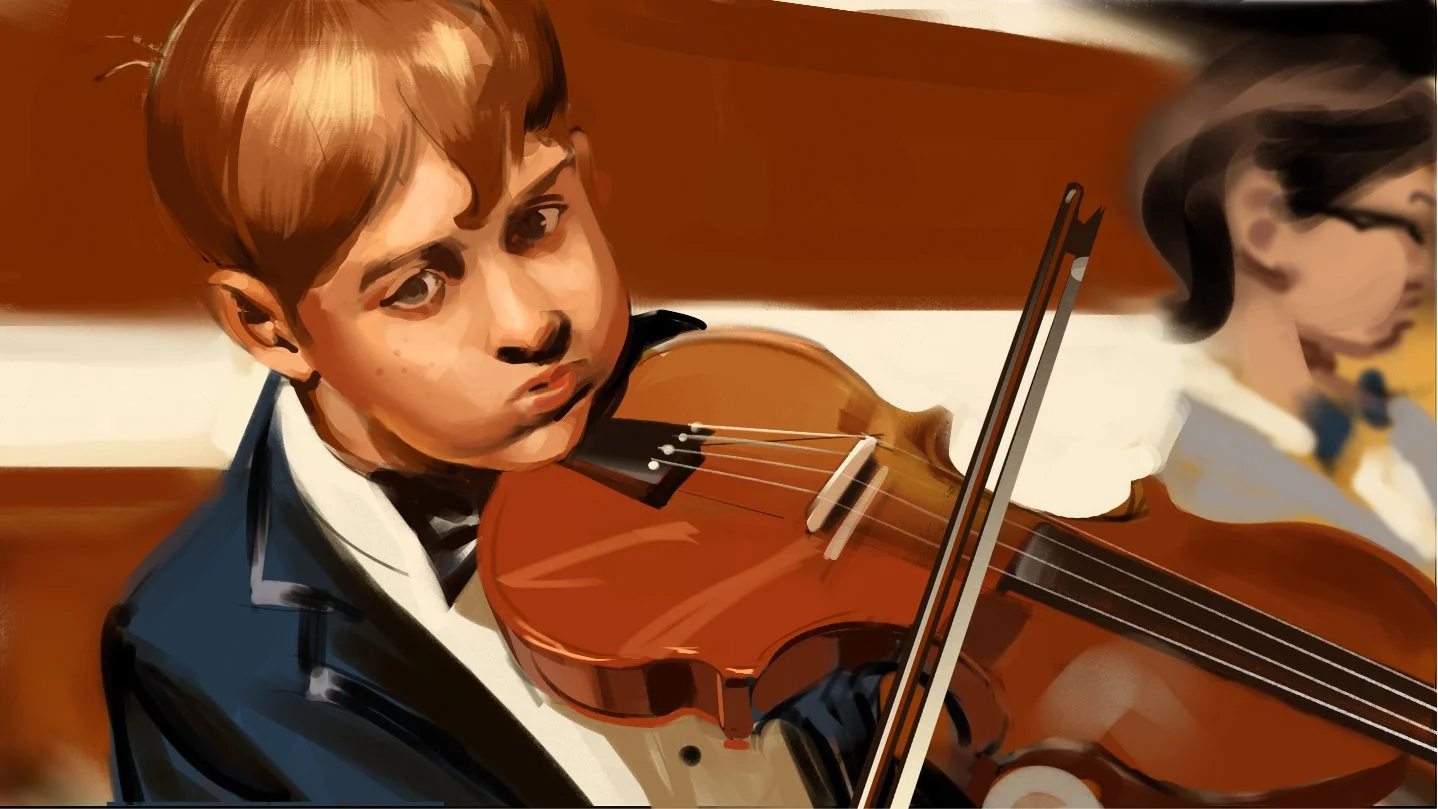
“Beautiful Mess” ad pitch for Infiniti. Art by Paul Temple.

Color Theory, Craft, and the Human Eye

Paul Temple January 6, 2026

Color theory gets quoted constantly. Know the rules before you break the rules. It is good advice, but it often gets misunderstood. Some people treat color theory like a rigid system you must obey at all times. Others dismiss it entirely and rely on instinct alone. Both approaches miss the point.

Color theory is a foundation. It is there to support decisions, not replace them. The moment it becomes a formula you blindly follow, it stops being useful. The moment you ignore it entirely, your work starts to fall apart. The balance lives in understanding why the rules exist, where they came from, and when they no longer serve the story you are trying to tell.

That balance only comes from experience.

Learning Color Through Paint, Not Presets

My understanding of color did not begin in software. It began with paint. Real pigment. Mixing on a palette. Watching colors change as they combine, dry, and sit next to one another over time. Traditional paint teaches you very quickly that color is not theoretical. It is physical.

When you mix pigments, you are dealing with chemistry. Some colors overpower others. Some combinations dull instantly. Some produce harmony you did not expect. You learn restraint because there is no undo button. Every decision carries weight.

That physical process creates an intuitive understanding of color relationships that is hard to fake digitally. Traditional mixing forces cohesion. Pigments contaminate one another in subtle ways. Shadows carry hints of surrounding colors. Highlights are rarely pure. That natural imperfection creates harmony.

Digital color does not behave that way by default.

Digital Color Is Clean, But Not Always Alive

Digital color is based on light, not pigment. RGB values stack neatly. Saturation stays intact. Everything can be isolated and controlled. This is incredibly powerful, but it also removes friction. When friction disappears, so does consequence.

It becomes very easy to create images that are technically correct but emotionally hollow. Clean palettes. Perfect contrast. No sense of atmosphere. No visual memory.

This is why so much digital work relies on film emulation. Grain. Color roll off. Subtle shifts in contrast. These are attempts to bring back the organic behavior that traditional processes naturally create.

For decades, filmmakers and painters have asked the same question. How do I distinguish myself visually. Early on, the answer was simple. Skill. Could you draw. Could you paint. Could you control light and anatomy. That was enough.

As skill became more widespread, distinction shifted to interpretation. Color became a voice. Not just what you painted, but how you saw.

Color Harmony Is Not a Formula

Color harmony is not something you apply at the end of a process. It is something you build from the beginning. It comes from relationships, not rules.

Warm and cool. Saturation and restraint. Value doing most of the work while color supports it quietly. Painters have known this for centuries. Many of the strongest paintings use limited palettes. Not because the artist lacked options, but because they understood control.

Harmony happens when colors feel like they belong to the same world. Traditional paint naturally pushes you in that direction. Digital tools require you to do it consciously.

This is where experience matters. Anyone can pull a palette from an image. Very few people can build one that supports story, mood, and production realities all at once.

Film, Color, and Visual Language

Film inherited its color language from painting. Early cinematography leaned heavily on painters for reference because film stock behaved more like pigment than modern sensors. Exposure mattered. Lighting mattered. Chemistry mattered.

Even today, digital productions chase the look of film. Not because it is nostalgic, but because it feels human. Film responds imperfectly. It compresses highlights. It softens shadows. It introduces variation.

Those imperfections communicate something audiences feel instinctively. Perfect color often feels artificial. Controlled imperfection feels believable.

Color in film is never just about beauty. It is about clarity, tone, and emotional direction. Color tells the viewer how to feel before dialogue ever does.

Knowing When to Break the Rules

This is where the phrase know the rules before you break the rules actually applies. Breaking color theory is not rebellion. It is decision making.

When I push a palette too far warm or too far cold, it is not accidental. I know what realism I am giving up. I know what emotional weight I am adding. That tradeoff is intentional.

A less experienced artist might copy a look. A seasoned artist understands why that look works and when it will fail. That understanding comes from years of observation, painting, correction, and study.

Color theory gives you a language. Experience gives you judgment.

Automation Changes the Landscape, Not the Value

We are in a new shift now. Automation can generate color instantly. Algorithms can analyze palettes, apply grades, and replicate styles. Speed has never been higher.

What automation cannot do is care.

It cannot understand why one scene should feel slightly uncomfortable. It cannot know when clarity matters more than beauty. It cannot weigh emotional context against technical correctness.

A real person brings perspective shaped by taste, memory, and lived experience. When I make color decisions, I am thinking about story flow, production constraints, and audience response at the same time.

That kind of thinking does not come from data. It comes from doing the work.

Color in Visual Development and Storyboarding

In visual development and storyboarding, color is not decoration. It is communication. It helps directors, cinematographers, and crews understand tone quickly. It signals emphasis. It establishes mood and rhythm across sequences.

Good color choices prevent confusion later. They reduce misinterpretation. They save time on set and in post. A well designed palette supports lighting decisions, costume choices, and production design.

This is where hiring the right artist matters.

You are not paying for someone who knows color theory. You are paying for someone who knows when to use it and when to step outside it. Someone who understands how color behaves across mediums, pipelines, and real world conditions.

Why the Human Perspective Is the Value

For a long time, artists distinguished themselves through skill alone. Today, skill is assumed. The real value is perspective.

A human artist brings intention. They bring restraint. They bring judgment shaped by years of studying painting, film, and visual storytelling. That perspective cannot be automated.

Color theory is a tool. Traditional pigments teach harmony. Digital tools offer speed. Film emulation reminds us what imperfection feels like. None of it matters without a person making decisions with purpose.

That is why hiring a good artist still matters.

Not because they follow rules, but because they know when the rules stop serving the story.

That is how I approach color. Not as a system to obey, but as a language to speak clearly, honestly, and with intent.

📩 Contact: paul@paultemplestudios.com
🎨 Explore more: www.paultemplestudios.com

Want more blog posts on this topic?
1. Studying Light: Lessons from the Masters of Painting
2.
From Traditional Painting to Preproduction: How Fine Art Roots Shape Visual Storytelling
3.
How Classical Painting Shaped Modern Filmmaking

Comment
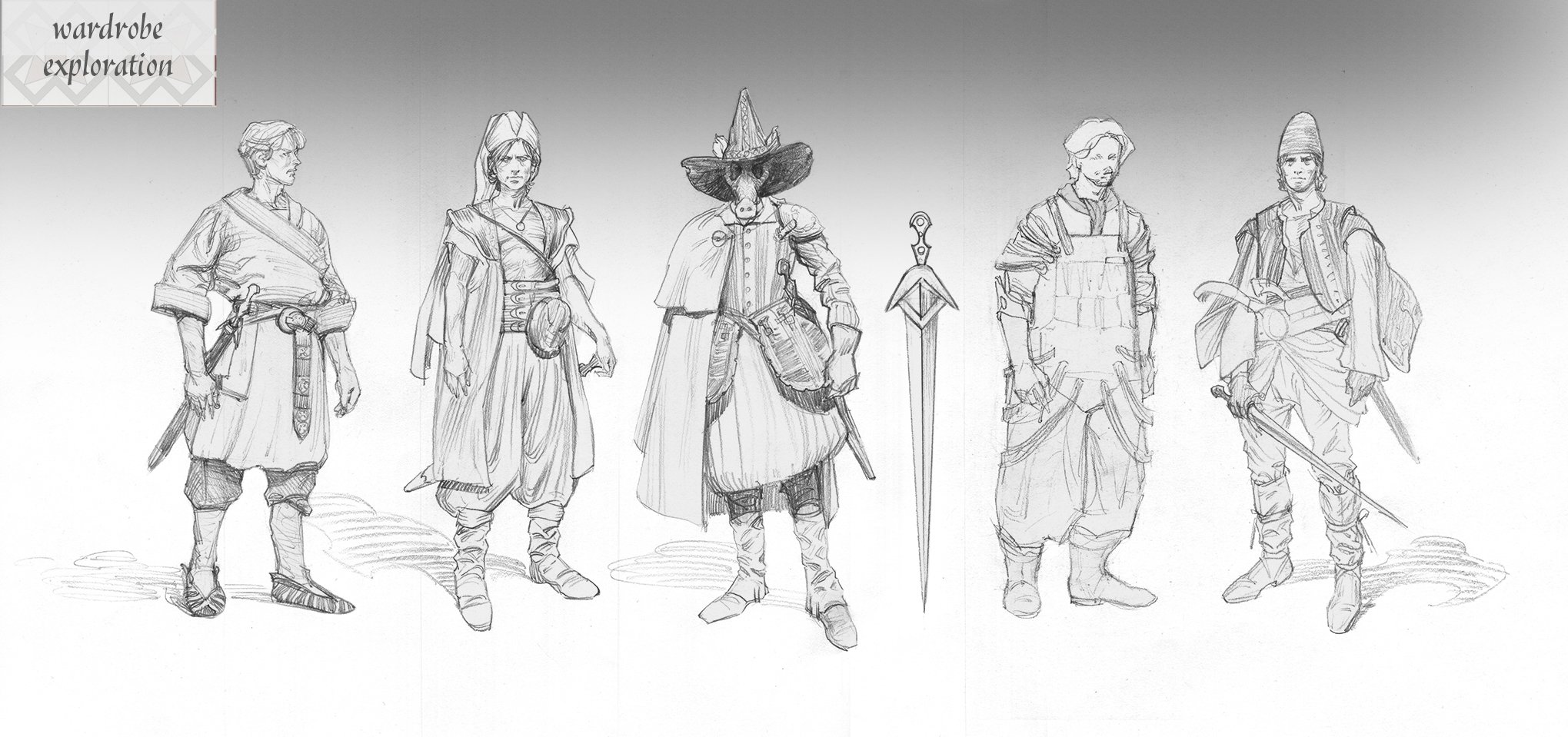
Character design for unannounced fantasy film project. Art by Paul Temple.

Character and clothing design for unannounced fantasy film project. Art by Paul Temple.

The Silhouette Test: Why Character Design Starts with Simple Shapes

Paul Temple December 8, 2025

In my work as a storyboard visdev artist, the first thing I judge in a character design is the silhouette. Before color, before texture, before expression, before costume choices, there is the outline. If a character or an object cannot communicate its identity in a single flat shape, the design is not ready. A strong silhouette is the foundation of visual communication. Everything else is built on top of it.

Filmmakers and artists are often tempted to start decorating too early. Detail feels like craftsmanship. It feels like personality. It feels like labor. But detail does not save a weak design. You can engrave an armor plate with every symbol ever invented and it still will not read as clearly as a shape with a strong, unmistakable outline. A character with a simple but powerful silhouette will stand out every time.

I revisit this principle constantly, not because I enjoy repeating myself, but because it protects productions from confusion later. I was working recently on a fantasy project that required the design of ceremonial masks for an ancient warrior order. The team wanted them to feel powerful, sacred, and visually distinct. I explored various historical influences and sketched detailed versions. When I stepped back and filled them in as solid shapes, many of them looked nearly identical. The attractive details had distracted me from the fact that the core shapes were not pulling their weight.

It did not ruin my week. It was not a dramatic life lesson. It was simply a practical reminder that silhouette always catches the truth. Once I simplified each mask and adjusted the major shapes, everything snapped into place. The masks immediately gained personality and presence. It was a clean example of why I always test silhouette first.

Silhouette works because it is the fastest and clearest way humans read visual information. Our brains identify contrast before texture. We read shapes before faces. We respond to posture before micro expressions. If the silhouette communicates, the viewer understands the scene even before looking at the details.

Here is how I judge a silhouette and why it matters for filmmakers and artists.

Clear Read at a Glance

A silhouette must read instantly. If I blur my eyes, or if I stand back from the frame, the character or action should remain clear. The pose should be readable. The intention should be visible. If the shape is confusing, the pose needs adjustment or the design is overcrowded.

Negative space is one of the best ways to achieve clarity. If a character is holding something, the gap between the arm and the torso must be readable. If a character is walking, you need separation between the limbs so that the stride is obvious. If a character is crouched in fear, their outline should shrink. If a character is confident, their shape should expand.

Even slight adjustments improve the read. Raising an elbow. Angling a shoulder. Leaning the torso forward. Opening the stance. These changes strengthen the silhouette and make the intention obvious.

Unique Identity Through Shape

A strong silhouette helps characters stand apart from one another. If your protagonist, sidekick, mentor, and villain all share roughly the same outline, the visuals lose impact. Good design assigns each character a shape language that belongs to them.

When I develop silhouettes for a lineup, I often render them as pure black cutouts first. If I cannot identify who is who instantly, I refine until I can. The solution may be proportion changes, costume adjustments that change the outline, distinct hair shapes, or stronger posture choices.

The audience should be able to recognize a character even if everything else is removed. That is the standard.

Shape as Storytelling

Silhouette is not just a clarity exercise. It communicates personality on a deeper level.

Round shapes feel friendly. Angular shapes feel dangerous. Tall shapes feel proud. Wide shapes feel grounded. Slanted shapes feel unstable. Small clustered shapes feel anxious. Large open shapes feel confident.

These signals are so intuitive that viewers absorb them without noticing. They feel them instinctively. A good designer takes advantage of that.

The silhouette of the masks from that recent project communicated more about the characters than any embellishment ever could. A tall vertical crest made the warriors feel elevated. A forward tilt made them feel predatory. Carved details helped with worldbuilding but the silhouette carried the meaning.

Silhouette in Motion

A silhouette should hold up not only in still poses but also in action. Motion reveals flaws that static sketches hide. When boarding an action sequence, I test silhouettes throughout the movement. If the outline becomes muddy at any point, the action needs to be rebuilt.

Fight scenes especially rely on clear silhouettes. Good choreography uses readable shapes to guide the viewer through the rhythm of hits, dodges, swings, and impacts. Even in chaotic environments, a clean silhouette lets the audience follow who is doing what and why.

The same applies to quieter motion. A character lifting a cup, slumping into a chair, or turning their head must remain legible. Animation supervisors often say if the silhouette works, the acting works. They are right.

Simplicity First

The fastest way to improve a design is to simplify it. Most artists fall into the trap of decoration. They start adding tiny details long before the big shapes are resolved. That is the equivalent of trying to decide what earrings to wear before choosing a shirt. Details should support design, not compensate for it.

I often start with the simplest version possible. When the silhouette works at a basic level, I add complexity slowly. If a detail breaks the clarity of the outline or distracts from the intention, it does not belong.

This principle is liberating. It frees the designer from clutter. It frees the filmmaker from confusion. It frees the audience from visual noise.

Why Filmmakers Should Care

You do not need to draw professionally to benefit from understanding silhouette. Directors, cinematographers, actors, and production designers all make stronger choices when they think in terms of shape.

Lighting works better with clean silhouettes. Blocking becomes more dynamic. Lens choices become more intentional. A strong silhouette gives the camera something meaningful to work with.

Creature designers, hero designers, and costumers rely on silhouette to define the visual identity of a character long before color swatches or texture samples become relevant. Silhouette is the universal language across the entire pipeline.

Silhouette in Storyboarding

In storyboards, silhouette is often the clearest way to communicate action. I begin many frames with simple shapes. Circles, triangles, rectangles. These give me the gesture before I think about detail. When a frame feels unclear, I reduce it to black and check what is happening.

In quiet scenes, silhouette guides emotional clarity. A lonely character leans into emptiness. A confident character stands tall with broad shape language. A frightened character collapses inward. These choices let the audience understand emotion without dialogue.

In high energy scenes, silhouette is my anchor. Even if the environment explodes, the reader must follow the characters. A strong outline is the fastest solution.

Using Silhouette to Fix Problems

One of the easiest diagnostic tools in visual development is to black out your work. If the silhouette fails, the design needs revision. If the silhouette reads but the details feel off, the design is probably strong but needs refinement. If both read well, the design is complete.

When I used silhouette to refine the fantasy masks, it was a practical correction, not a dramatic revelation. The team liked the final versions because they carried personality even without textures or complexity. That is the power of silhouette. It strips away everything but the truth.

Final Thoughts

Silhouette is the first and most honest test of a design. It reveals clarity, personality, purpose, and identity faster than any other method. It helps directors communicate intent. It helps storyboard artists clarify action. It helps production designers refine characters. It helps the entire pipeline function smoothly.

A character with a strong silhouette will survive any change in lighting, framing, costume, coloring, or detail. They will always read clearly and immediately. They will hold the viewer’s attention.

I always say that detail is the seasoning and silhouette is the meal. You can create a gorgeous design, but if the outline does not say anything, the viewer will forget it the moment the shot changes. If the silhouette is strong, the design will live in the audience’s memory.

Silhouette first. Everything else second. That rule has never failed me, and it keeps my work focused, honest, and clear.

📩 Contact: paul@paultemplestudios.com
🎨 Explore more: www.paultemplestudios.com

Want more blog posts on this topic?
1. Breathing Life Into Your Characters: The Importance of Good Character Design
2.
Carrying the Legacy of Film Illustrators Forward
3.
Concept Art and Storyboards for Indie Film Crowdfunding

In Film, Concept Art
Comment
← NewerOlder →

Search Posts


Featured Blog Posts

Featured
Hiring a Storyboard and VisDev Artist: A Step by Step Guide
Jan 7, 2026
Hiring a Storyboard and VisDev Artist: A Step by Step Guide
Jan 7, 2026
Jan 7, 2026
Composition and Control: The Cinematic Science Behind a Great Frame
Nov 3, 2025
Composition and Control: The Cinematic Science Behind a Great Frame
Nov 3, 2025
Nov 3, 2025
Concept Art and Storyboards for Indie Film Crowdfunding
Sep 18, 2025
Concept Art and Storyboards for Indie Film Crowdfunding
Sep 18, 2025
Sep 18, 2025
Breathing Life Into Your Characters: The Importance of Good Character Design
Aug 21, 2025
Breathing Life Into Your Characters: The Importance of Good Character Design
Aug 21, 2025
Aug 21, 2025
 

Latest Blog Posts

Featured
Patterns in Nature: Lessons for Cinematic Composition
Mar 16, 2026
Patterns in Nature: Lessons for Cinematic Composition
Mar 16, 2026
Mar 16, 2026
Breaking Creative Ruts: Metaphor and Non-Linear Thinking in Visual Development
Mar 9, 2026
Breaking Creative Ruts: Metaphor and Non-Linear Thinking in Visual Development
Mar 9, 2026
Mar 9, 2026
Camera Movement in Static Boards: Conveying Motion and Energy Without Animation
Mar 2, 2026
Camera Movement in Static Boards: Conveying Motion and Energy Without Animation
Mar 2, 2026
Mar 2, 2026
Gesture Drawing: The Action Behind the Emotion
Feb 23, 2026
Gesture Drawing: The Action Behind the Emotion
Feb 23, 2026
Feb 23, 2026
Wisdom In The Work: Bezalel And The Tabernacle
Feb 16, 2026
Wisdom In The Work: Bezalel And The Tabernacle
Feb 16, 2026
Feb 16, 2026
The Value of a Story Partner in Visual Storytelling
Jan 20, 2026
The Value of a Story Partner in Visual Storytelling
Jan 20, 2026
Jan 20, 2026
When Iteration Becomes Overthinking and Hurts Your Story
Jan 12, 2026
When Iteration Becomes Overthinking and Hurts Your Story
Jan 12, 2026
Jan 12, 2026
Hiring a Storyboard and VisDev Artist: A Step by Step Guide
Jan 7, 2026
Hiring a Storyboard and VisDev Artist: A Step by Step Guide
Jan 7, 2026
Jan 7, 2026
Color Theory, Craft, and the Human Eye
Jan 6, 2026
Color Theory, Craft, and the Human Eye
Jan 6, 2026
Jan 6, 2026
The Silhouette Test: Why Character Design Starts with Simple Shapes
Dec 8, 2025
The Silhouette Test: Why Character Design Starts with Simple Shapes
Dec 8, 2025
Dec 8, 2025

© Paul Temple Studios 2012-2025 All Rights Reserved. Unauthorized use of content from this website is prohibited.