• Home
  • Film
  • Stage
  • Advertising
  • Contact
Menu

Paul Temple Studios

  • Home
  • Film
  • Stage
  • Advertising
  • Contact
×
 

Behind the Boards: A Blog by Artist, Paul Temple

Welcome to the blog! Here you'll find insights into the art of storyboarding, concept development, shooting boards, and visual storytelling for film, television, and advertising. From camera planning techniques to the emotional impact of character design, this is where I’ll share my expertise honed over a decade of working with directors and top brands. Whether you're a creative director, filmmaker, or agency looking to elevate your pitch, this blog reveals how powerful visuals drive unforgettable stories.

Questions? Email me at paul@paultemplestudios.com

Camera Movement in Static Boards: Conveying Motion and Energy Without Animation

Paul Temple March 2, 2026

In every project I board, the real challenge is the same: turning a stack of static panels into something that reads with real cinematic energy. Modern pre-production does not always have the budget or time for full animatics, especially on indie features or tight commercial schedules. So the boards have to carry the weight. They need to sell the dolly push, the tracking shot, the handheld tension, or the slow crane reveal using nothing but pencil, perspective, and composition.

The trick is not to fake animation. It is to give the reader, the director, the producer, the DP, the same sense of rhythm and energy they will feel when the camera actually moves. When I get that right, the sequence reads like it is already in motion, even pinned up on a wall or scrolled through on a tablet.

Perspective and Foreshortening: Making Space Feel Like It Is Changing

Camera movement changes how we experience space. A dolly in brings us closer, enlarges the subject, compresses the background. A pull-back opens everything up and makes the character feel smaller in the world. In static boards, we recreate that shift by controlling scale and depth across panels.

For a slow push in on a moment of realization, I will start with a wider frame where the character sits comfortably in the environment. Then, in the next panels, the figure grows larger, filling more of the frame. Foreground elements, a hand reaching out, the edge of a table, get exaggerated in size and foreshortening so they seem to come toward the viewer. Background details drop away or soften, mimicking shallow depth of field. The progression feels like forward motion because our eyes naturally follow the increasing scale and the converging perspective lines.

The reverse works for pull-outs. The character shrinks panel by panel, the environment expands, and perspective lines open outward. I used this approach in an indie drama where a man walks away from a confrontation. By the final panel he was tiny against a wide, empty street, and the director immediately felt the emotional distance without me having to explain it.

Line Flow and Directional Thrust: Guiding the Eye Through Movement

Our eyes follow strong lines and directional forces. That is why aligning key elements along a path can imply a pan or track so convincingly.

If the director wants a left-to-right reveal, maybe a new character stepping into frame during an argument, I draw architecture, shadows, or a road that sweeps across the panel from left to right. The action peaks on the right side so the eye lands there naturally. For faster movement, like someone running, I lean the figure into the direction of travel, push hair or clothing back slightly, and let trailing edges blur just enough to suggest speed. Nothing cartoonish, just confident lines that carry momentum.

Handheld energy is different. I introduce a little instability: tilt the horizon a couple of degrees, offset the subject so they are not perfectly centered, vary line weight to create subtle jitter in the background. In one thriller sequence I boarded, the chase felt urgent because each panel had the character leaning slightly out of frame, as if the operator was scrambling to keep them in shot. The composition felt alive and unsteady, even though every drawing was still.

Dynamic Angles: Using Height and Tilt to Sell Kinetic Force

Angle choices do a lot of heavy lifting. A low angle looking up makes a subject loom and advance, perfect for implying a forward track or a crane rising beneath them. High angles pull us back and make the world feel bigger, which works well for reveals or moments of vulnerability.

For dialogue scenes that need subtle life, I will shift angles gradually across panels, starting eye-level, then dropping a bit lower or arcing slightly higher. It gives the conversation a creeping sense of movement without forcing cuts. Directors pick up on this quickly because it shows the blocking supports the performance instead of fighting it.

Dutch tilts are another tool. A slight lean adds unease or disorientation, suggesting erratic handheld or a character losing balance. I do not overuse them, but when the story calls for tension, even a five-degree cant changes how the frame reads.

Annotations and Arrows: Helpful, But Not the Star

I do use arrows and notes, "slow dolly in," "track right to CU," "handheld follow," but they are there to confirm what the drawing is already saying. If the perspective, line flow, and angles are not selling the motion, no amount of arrows will fix it. The best boards let the director feel the camera move instinctively as they scan the sequence. Notes just make sure everyone is on the same page when it comes time to shoot.

Why This Matters on Indie and Commercial Projects

A lot of the projects I work on do not have room for expensive pre-vis. When that is the case, boards that imply motion become the difference between a clear plan and a shoot full of surprises. They help location scouts understand what space is actually needed, let the DP see lighting continuity across moves, and give producers confidence that the energy will translate to screen.

In commercials especially, clients want to feel the spot's pace before we ever roll camera. A well-drawn tracking reveal around a product or a dolly in on a key emotional beat can seal the deal faster than a mood board or script notes alone.

What to Avoid: The Things That Flatten Energy

Static posing is the biggest killer. If every character stands centered and squared to camera panel after panel, even a dynamic track will feel lifeless. Rotate torsos, shift weight, vary eye lines. Panel-to-panel progression matters too. If each frame feels like its own isolated illustration, the sequence loses rhythm.

Over-rendering is another trap. Tight, polished detail slows the eye down. Rough, confident lines with strong shapes and clear thrust convey speed and life much better. And always tie movement back to purpose: a dolly in is not just cool, it heightens intimacy or forces focus on a revelation. A track follows pursuit or power. Handheld adds realism or anxiety. When the why is clear, the how becomes obvious.

How I Build the Instinct

This comes from years of drawing from life, watching films frame by frame, and sketching thumbnails to test ideas. I will often start a sequence with stick figures and simple arrows just to map the energy, then layer in perspective and gesture. Studying directors like Hitchcock, Fincher, or Cuarón helps too. Their shots are so deliberate that freezing any frame shows exactly how composition implies the next move.

Wrapping It Up

Good storyboards show how it feels to watch the story unfold. When static frames carry dolly, pan, track, handheld, or crane energy through perspective, line, angle, and flow, the whole team begins from the same clear place. The director sees the film they want, the crew understands the plan, and decisions land early so the budget and the schedule stay on track.

If you are working on a project and want boards that bring real cinematic momentum from the first read-through, I would be glad to talk it over. Let us figure out how to make your visuals move before the camera does.

📩 Reach out: paul@paultemplestudios.com
🎨 Explore more: www.paultemplestudios.com

Want more blog posts on this topic?
1. How Shooting Boards Help Indie Filmmakers Compete with Studio Productions
2.
Commercials Are Short Films: Why Storyboards Matter Even More in 30 Seconds
3.
What Filmmakers Want from Shooting Boards: Save Time, Money and Communicate Clearly
Comment

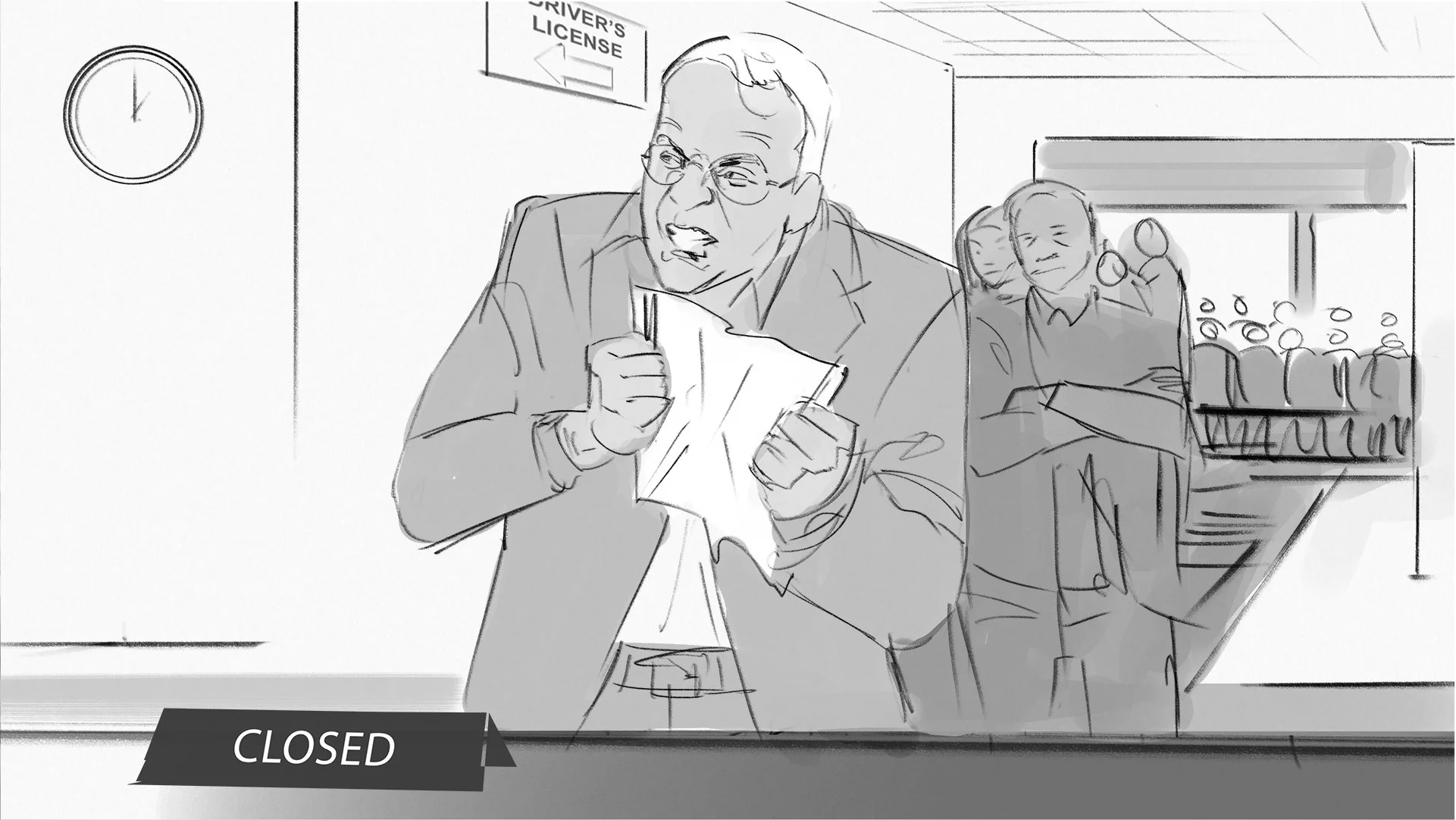
Storyboard from a Pepsi Superbowl ad pitch featuring Steve Martin. Art by Paul Temple.

Gesture Drawing: The Action Behind the Emotion

Paul Temple February 23, 2026

When I first started focusing seriously on gesture drawing, it was because something felt off in my work. The proportions were fine and the anatomy studies were accurate, but the drawings felt posed instead of lived in. That problem shows up quickly in storyboards. You can design a beautiful frame, light it well, and compose it carefully, but if the character’s body does not communicate intention, the scene falls flat. Gesture drawing trains you to see what the body is actually doing, not just what it looks like. At its core, gesture drawing is about capturing the overall action of a pose. Not the muscle groups or costume details or eyelashes, but the action. Every pose has one central movement running through it. A forward drive, a recoil, a twist, a collapse. When you identify that movement first, the drawing holds together. When you ignore it, the figure feels assembled instead of alive. As a professional storyboard artist working in film pre-production, this is something I think about constantly. Before I worry about camera placement or lens choice, I am asking what the character’s body is saying.

The Overall Action Drives the Frame

In figure drawing there is often talk about the line of action. That is not just a technical term. It is the backbone of the pose, a single directional idea that runs through the body and organizes everything else. If a character is grieving, the spine curves forward, the shoulders round, and the head drops as the energy compresses inward. If a character is defiant, the chest opens, the weight settles into the feet, and the head lifts slightly as the energy expands outward. Those physical shifts communicate emotion long before a close-up ever does. When I am boarding a scene for a director, especially in the early stages of visual development, I look for that overall action first. Is the character advancing into the frame or retreating from it? Are they rooted in place or unstable? In cinematic storytelling those decisions shape how an audience feels before dialogue begins. Too often artists approach a pose by outlining parts, building head, torso, arms, and legs like a construction project. Gesture drawing flips that process. You start with movement, then build structure around it. The difference may seem subtle on paper, but on screen it changes everything.

Rhythm, Blocking, and Emotional Weight

Another principle that carries directly from gesture drawing into professional storyboard work is rhythm. If you only trace the outer contour of a body, you might get accuracy, but you lose connection. The human figure is full of opposing curves and counterbalances. One side stretches while the other compresses. The rib cage rotates against the hips. The shoulders tilt in response to weight shifts. When those relationships are understood, the drawing feels cohesive even in a rough state. When they are ignored, the pose feels rigid no matter how polished the rendering is. In storyboard development, especially when collaborating with directors and producers during film pre-production, rhythm keeps frames from feeling static. A well staged scene has visual flow. Characters relate to each other through angle, lean, and direction. If two characters are arguing and both stand upright and squared to camera, the scene reads neutral regardless of what the dialogue says. Shift one character’s weight forward and let the other pull back slightly. Rotate the torso just enough to show tension. Suddenly the emotional dynamic becomes visible. Gesture drawing teaches you to recognize and design those shifts quickly. This is why strong storyboard art does not depend on excessive detail. It depends on confident staging and clear action. Directors looking to hire a storyboard artist are not just looking for someone who can draw. They are looking for someone who understands blocking, performance, and visual storytelling at a structural level.

Emotion is physical before it is verbal. In filmmaking there is often heavy focus on facial performance, subtle eye movement, and micro expressions. Those things matter, but the body usually speaks first. Anxiety raises the shoulders and tightens the neck. Confidence stabilizes the stance and simplifies movement. Grief rounds the back and lowers the head. Even without seeing the face clearly, you can read the emotional truth of a moment if the gesture is honest. This is especially important in wide shots, silhouettes, and action beats where facial nuance disappears. In those situations the storyboard must communicate through posture and weight alone. If the gesture is weak, the emotional beat becomes muddy. If the gesture is committed, the audience understands the moment immediately.

From Gesture Practice to Professional Storyboard Services

Gesture drawing is often practiced in timed sessions, which forces prioritization. You cannot draw everything, so you must decide what matters most. That discipline translates directly into storyboard services during pre-production. Budgets are real and schedules are tight. Endless variation is not helpful. What helps is interpretation and judgment. A professional storyboard artist is not there to generate options without direction, but to interpret the script visually, stage the action, and help the director commit to choices that serve the film. Gesture drawing sharpens that ability because it trains the eye to see the dominant action in a moment and ignore noise. When I am developing storyboards for a feature film, commercial, or pitch, I am constantly reducing complexity to intention. Where is the weight? Who controls the space? Who yields? What is the physical truth of the moment? Those questions matter more than rendering style. Strong gesture leads to strong blocking, and strong blocking supports strong cinematic storytelling.

Blocking is emotional architecture. The physical relationship between characters communicates hierarchy, vulnerability, tension, or intimacy before a single line is delivered. A character who steps confidently into another’s space reads differently than one who hesitates at the edge of the frame. A slight shift in posture can redefine the power dynamic of a scene. In visual development and pre-visualization, these nuances are explored early so that when production begins, the emotional structure is already in place. Gesture drawing strengthens the instinct to see those nuances and to design them intentionally. In an era when images are easy to generate, human judgment still separates frames that feel authentic from those that feel hollow. Software can create polished visuals, but it does not understand weight, hesitation, or resolve in the human body. Gesture drawing builds that understanding over time and keeps the focus where it belongs, on action and meaning rather than surface detail.

If you are directing a project and want to strengthen the physical storytelling in your film, that work starts in development. It starts before cameras roll. It starts with clear, intentional staging built on real human movement. Strong gesture leads to strong boards, and strong boards support stronger films. If you are looking to hire a storyboard artist who approaches visual storytelling through movement, rhythm, and human behavior, I would be glad to talk through your project.

📩 Reach out: paul@paultemplestudios.com
🎨 Explore more: www.paultemplestudios.com

Want more blog posts on this topic?
1. Setting the Emotional Tempo: How Storyboards Shape the Audience’s Experience
2.
Shooting Boards for Action Scenes: Why Every Great Action Scene Starts on Paper
3.
See It Before You Shoot It: The Power of Shooting Boards

In Film, Shooting Boards, Storyboards, Advertising
Comment

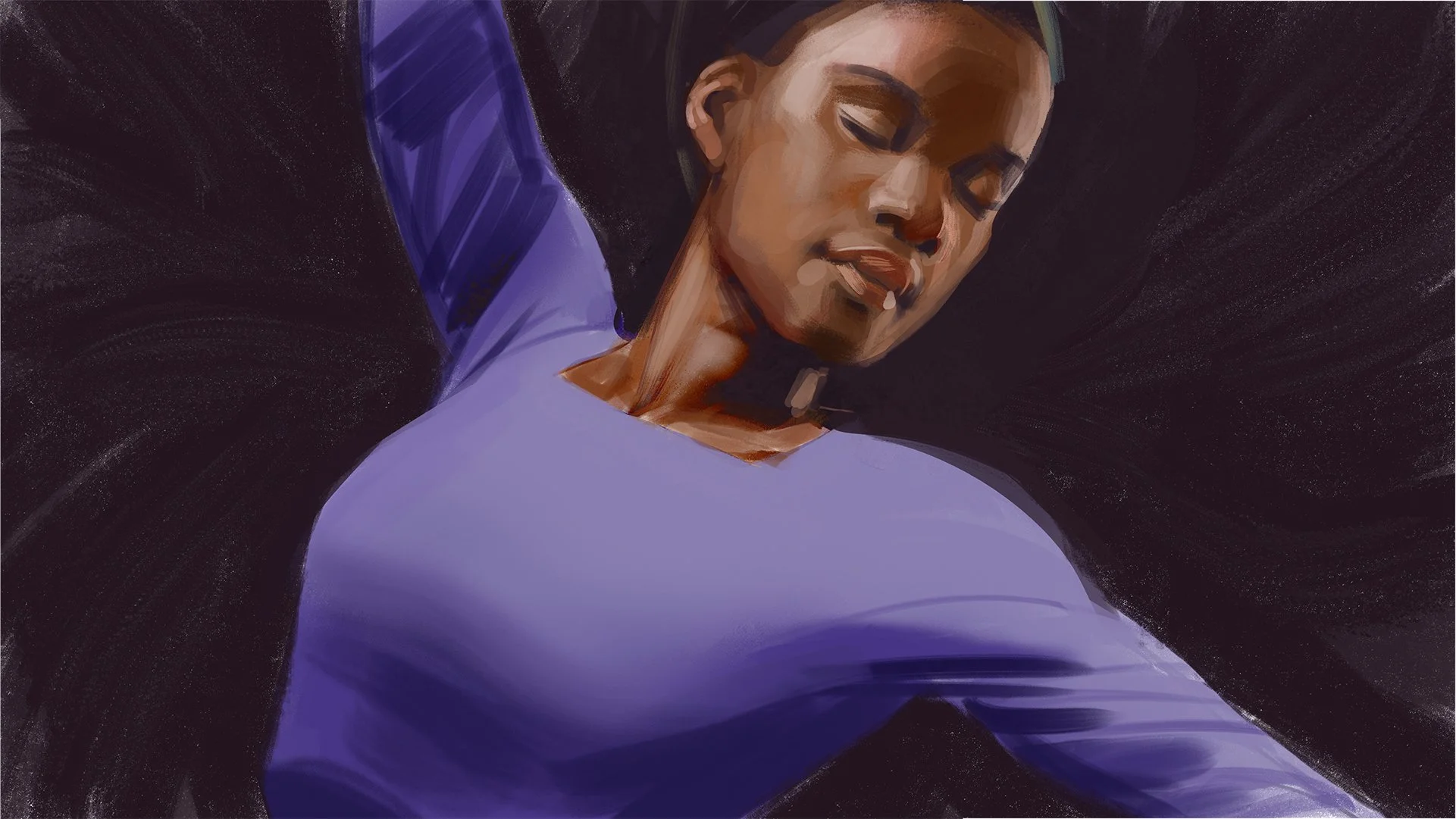
Concept Art for the “Eden’s Twilight” film by Firelight Creative. Art by Paul Temple.

Wisdom In The Work: Bezalel And The Tabernacle

Paul Temple February 16, 2026

Today we’re switching gears. I want to talk about something I’m passionate about, which is God’s calling for artists both in skill and in wisdom. If this is a new subject for you, hang tight. I’ll bring it back around to filmmaking.

In Exodus 31:1-11 in the Bible, God gives detailed instructions for building the Tabernacle, the dwelling place for His presence among the Israelites. This was a real creative undertaking with specific requirements, materials, measurements, and symbolism, all meant to be carried out through physical form.

To carry this out, God does not simply hand the plans to leaders or priests. He calls specific craftsmen by name and equips them with both skill and wisdom to execute the work.

When I first came across the story of Bezalel in Exodus, it stopped me in my tracks. Because it was so specific. Bezalel is called out directly by God to help build the Tabernacle. And God does not say, “Find someone who can get this done quickly,” or “Use whatever tools are available.” He says that Bezalel is filled with the Spirit of God, with wisdom, understanding, knowledge, and skill in all kinds of craftsmanship.

That combination matters. Skill was only PART of the requirement. God wanted a human being who could think, feel, discern, and make decisions. Someone who could weigh proportion, symbolism, beauty, restraint, and purpose. Someone who understood that what they were building was not just functional, but meaningful. Someone who would bring glory to God in the process.

This is the first time in Scripture where someone is described as being filled with the Spirit of God, and that detail matters. It is an artist.

Craftsmanship Needs Wisdom, Not Just Talent

The Tabernacle was not improvised. Every material mattered. Gold, bronze, linen, wood. Every measurement mattered. Every symbol carried weight. Bezalel and Oholiab were not only talented craftsmen, they were entrusted with interpretation. They had to understand what something meant, not just how to assemble it.

Wisdom is not the same thing as experience, although it helps. The Bible describes wisdom as the ability to apply God's truth and knowledge to life, starting with reverence for God and leading to sound judgment, restraint, and obedience in action. Wisdom is knowing what something is for and making decisions that honor that purpose.

That is exactly how this applies to storyboarding and filmmaking.

Anyone can draw a storyboard frame. Anyone can add camera movement, lighting, and detail. The work that actually shapes a film happens in the decisions. What gets emphasized. What gets removed. Where the audience’s attention is guided and where it is not. Restraint is not a lack of ideas. It is evidence of judgment.

As a storyboard artist, this is the work I am hired to do. Not to generate options endlessly, but to help a director commit to choices that hold up. To protect the film from noise, excess, and indecision before it becomes expensive. Bezalel was trusted with sacred space because he could make those calls.

For filmmakers today, the challenge is the same. Tools are everywhere. Visuals are easy to generate. Iteration has no natural stopping point. But wisdom does not come from having more versions. It comes from knowing when a decision is right and standing by it.

That is why craftsmanship still matters. Not as nostalgia, but as disciplined, thoughtful judgment applied to real creative problems.

You do not have to be building a temple for your work to matter, though. For directors who see their work as a calling, not just a career, Bezalel’s story is a reminder that how something is made matters just as much as what is made. The people you involve shape the outcome. The wisdom they bring shapes the honesty of the final work.

Hiring craftsmen who are wise does not mean hiring people who agree with you on everything. It means hiring people who understand story, human behavior, symbolism, and restraint. People who can challenge you when something feels off and explain why. People who know when to simplify a moment instead of decorating it.

For readers who do not consider themselves Bible-believers, the principle still holds. Great art has always come from human judgment. From lived experience. From intuition that cannot be reduced to prompts or presets. You do not need to share Bezalel’s faith to recognize the value of wisdom guiding skill.

Near the end of this conversation, it would be hard not to mention AI. Tools are changing fast. They can generate images, styles, even entire sequences. But tools do not possess wisdom. They do not understand meaning, context, or consequence. They do not know why one choice carries emotional weight and another feels hollow.

Bezalel was not chosen because he could produce the most output. He was chosen because he could be trusted.

That trust is still what separates work that lasts from work that fades.

If you are a director working through a story, a pitch, or a film that matters to you, do not try to carry it alone. Bring in craftsmen who understand the human side of storytelling and make every choice with judgment. That is wisdom in action.

If you want someone to talk through your project with, I would love to have that conversation. There is no obligation. Just a chance to get the idea out of your head and into something clear.

You can reach out to me to set up an initial call and tell me about what you are working on.

📩 Reach out: paul@paultemplestudios.com
🎨 Explore more: www.paultemplestudios.com

Want more blog posts on this topic?
1. Drawing Faith to the Screen: Storyboards and Concept Art for Christian Filmmaking
2.
The Value of a Story Partner in Visual Storytelling

In Christian, Film
Comment
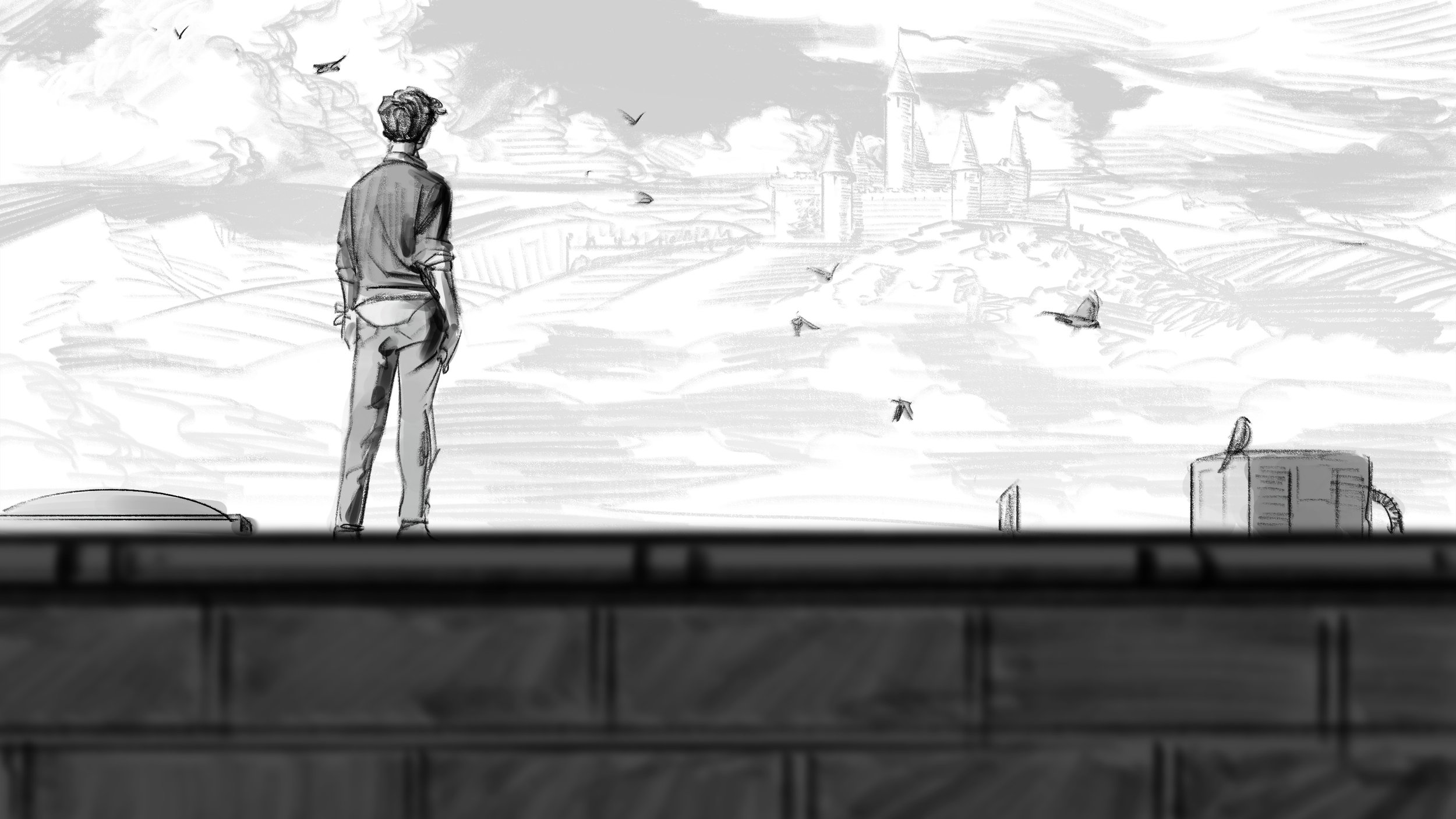
Boy looks into the clouds where he sees a dreamscape castle

The Value of a Story Partner in Visual Storytelling

Paul Temple January 20, 2026

Filmmakers tend to spend a lot of time alone with their ideas. I understand why. When you are responsible for the story, the tone, and the final result, it feels safer to hold everything close and work it out internally. But in my experience, the strongest ideas rarely come from spending more time alone. They come from getting the idea out of your head and into a conversation with someone who can challenge it, shape it, and help you see it more clearly.

This is not just about collaboration (buzzword alert). It is about having a real story partner. Someone who brings their own experiences, instincts, and perspective into the process. Someone who is not just agreeing with you, but actively engaging with the idea and helping it evolve.

Some of the Best Story Decisions Happen Out Loud

A great example of this comes from the development of Indiana Jones and the Last Crusade. During the story conferences, Steven Spielberg, George Lucas, Harrison Ford, and later Sean Connery spent a surprising amount of time talking about their own fathers. They talked about authority, distance, humor, admiration, frustration, and the strange ways fathers and sons misunderstand each other. Those conversations shaped the character of Henry Jones Sr. in a way that no amount of outlining alone could have done. The character works because he is rooted in shared, lived experience, not because he was designed to serve a plot function.

That kind of character does not come from one person working in isolation. It comes from multiple people bringing different parts of themselves into the room and letting those ideas interact. It is unpredictable and sometimes uncomfortable, but it produces work that feels human and specific.

I see this same dynamic play out with directors all the time. A director comes in with a strong concept, but it is still living entirely in their head. They can explain it verbally, and they know how it is supposed to feel, but once we start talking through specific moments, things begin to shift. A gesture that felt right in theory suddenly feels wrong when you try to show it. A camera move turns out to be unnecessary once the emotional beat is clearer. These are not problems. They are signs that the idea is finally becoming tangible.

Letting Someone In Is the Scary Part. That’s Also the Good Part.

Visual collaboration changes the conversation. Once you start sketching and staging a scene, you are forced to make decisions. You have to decide where the camera is, what the audience sees first, and what information actually matters in that moment. Vague ideas do not survive contact with a frame, and that is a good thing. It pushes the story toward clarity.

As a storyboard artist, my role is not to decorate an idea or make it look impressive. My role is to help directors think through the story visually and make confident, purposeful decisions early. I ask questions about intent, motivation, and emotion. I help remove unnecessary detail so the core of the scene comes through cleanly. In many cases, scenes that felt stuck for weeks start to resolve quickly once they are on paper and open to discussion.

There is always some risk involved in this process. Letting someone else into your story means accepting that it may change. You might discover that a moment works better than you expected, or that something you were attached to needs to go. That loss of control can feel uncomfortable, especially when an idea still feels fragile. But that risk is also what allows the work to grow. Ideas that are protected too tightly tend to stagnate. Ideas that are shared with the right partner tend to gain momentum.

A Story Partner, Not Just an Artist

One of the biggest shifts I see in directors is the moment they realize they do not have to carry the entire story alone. Once the idea is externalized and shaped through conversation and visuals, it becomes easier to work with. The story starts moving forward instead of looping. Decisions get simpler. The process feels lighter.

When people talk about collaboration, they often frame it as compromise. I see it differently. The best collaborations are not about meeting in the middle. They are about combining different experiences, tastes, and ways of seeing into something neither person could have created alone. That is how stories gain texture and specificity.

This is the role I play for directors. I am not there to take control of your story or override your vision. I am there to sit alongside you, help you work through ideas visually, and bring clarity to moments that feel uncertain. Think of it as having a story friend who speaks the language of cinema fluently and knows how to turn abstract thoughts into concrete decisions.

If you are developing a project and find yourself circling the same ideas, or if you sense that the story has more potential than what is currently on the page, that is often a sign that it is time to involve someone else. Taking that step can feel risky, but it is usually the moment where the work starts to come alive.

If you want to talk through a project and see how visual collaboration might help, I offer a no-obligation initial call. Tell me about what you are working on, and we can start the conversation.

📩 Reach out: paul@paultemplestudios.com
🎨 Explore more: www.paultemplestudios.com

Want more blog posts on this topic?
1. Hiring a Storyboard and VisDev Artist: A Step by Step Guide
2.
Storyboards and Cinematography: Speaking the Same Language
3.
The Grammar of Storyboards: Thinking Like a Story Consultant

Comment

When Iteration Becomes Overthinking and Hurts Your Story

Paul Temple January 12, 2026

Directors, let’s cut to the bone. Anxious revision screams louder than the story. It shows up when you iterate without clarity. It shows up when you second guess every look, every movement. Audiences feel it. They may not know how many revisions went into the final version, but they know when something in the scene is off or uncertain.

No artist sets out to be indecisive. But iteration can become a habit that eats confidence alive. You test options, tweak, refine, and fiddle. You think you are improving the work. In reality, you are giving anxiety a permanent home in your visuals.

This is not about perfection. This is about commitment and clarity.

Iteration Is a Tool, Not a Crutch

Iteration is essential—but only when it has a purpose. Its job is to explore ideas, camera angles, character gestures, and scene rhythm. Once you’ve tested the options, you stop tweaking and commit. That is how you avoid letting iteration bleed doubt into your visuals.

The goal of iteration is clarity, not complication. It’s a way to find the simplest, strongest solution that communicates story beats clearly and immediately. Everything beyond that is noise.

Decisiveness Is the Director’s Best Friend

Here’s the truth directors need to hear: indecision costs time, clarity, and confidence. One bold choice communicates more than fifty cautious ones. Commitment anchors a scene. It tells actors, cinematographers, and the audience exactly what the story wants them to feel.

When you commit visually, every element of the frame works together. Every gesture, line, and angle supports the narrative. There is no ambiguity. There is no guesswork.

A scene with decisiveness reads immediately. A hesitant scene reads as uncertain. Audiences do not care about the number of tweaks you made—they care about how clearly the story lands.

Every Mark Has a Purpose

This is where a skilled visual artist changes everything. A good artist does not add marks for decoration. Every stroke, gesture, or composition has a reason. Every choice communicates something.

For example, in a character close-up, you don’t need every wrinkle or shadow. You need the tilt, gesture, and expression that communicates hesitation, excitement, or tension instantly. That is how professional storyboards function: they reduce complexity, emphasize clarity, and give the team visuals that solve problems.

When every mark has a purpose, the storyboard is no longer just a reference. It becomes a tool for decision-making for everyone on set. Production moves faster. Actors understand intention. Cinematographers know exactly what the camera needs to do. And the story comes across without question.

Why Hiring the Right Visual Partner Matters

Directors hire artists like me to make these calls confidently. Here’s what that brings to a production:

  • Speed and efficiency: Quick, purposeful iteration followed by strong commitment saves time on revisions.

  • Clarity for your team: Every department knows exactly what to do and why.

  • Confidence in creative decisions: You do not have to worry whether a subtle choice communicates effectively—the visuals already do the work.

  • Problem-solving before production: Anticipated issues in framing, staging, or gesture get solved on paper, not on set.

A strong visual partner prevents anxious overthinking from leaking into the final product. But the real value is making decisions simple, strong, and usable.

Commitment in Action

Here’s how it works in practice. Imagine a tense dialogue scene. A director might iterate endlessly on subtle facial expressions, camera angles, and props. A committed visual approach would test variations fast, identify the strongest visual beat, and lock it in.

This approach has two major benefits:

  1. The team knows what to do immediately. No more debating whether the actor’s gesture is correct.

  2. The story reads instantly for the audience. There is no guesswork. The emotional beat hits exactly as intended.

That is decisiveness. That is why hiring a professional visual artist is an investment, not a luxury.

Clarity Over Completeness

Audiences do not need every fact in a frame. They need the right information in the right place. A single object, gesture, or visual cue can communicate more than a cluttered frame filled with irrelevant detail.

Good visual storytelling is about subtraction as much as addition. Knowing what to leave out is as critical as knowing what to include. A committed visual artist makes that call every time.

Iteration With Purpose, Not Paralyzing Detail

Iteration becomes dangerous when it exists without a goal. A sketch is a tool. A test is a tool. But when iteration turns into endless refinement, it produces hesitation on screen.

Purposeful iteration is structured and constrained. You explore alternatives, you identify the strongest option, then you commit. That is how visuals maintain clarity, authority, and speed.

Audiences feel hesitation immediately. Confidence communicates itself instantly. A director, a cinematographer, and a production designer all feel the difference.

Why Directors Hire Experts

Let’s be clear. You hire a visual partner not for effort or extra detail. You hire us for clarity, decisiveness, and problem-solving.

We:

  • Identify the essential visual beat quickly.

  • Solve problems before production.

  • Make strong choices that the team can act on.

  • Deliver visuals that communicate exactly what the story needs.

This is the value you cannot buy with just more sketches or revisions. It is earned through experience, judgment, and confidence.

The Question Every Mark Must Answer

Every mark, every gesture, every camera decision should answer a single question:

“Does this communicate what the audience needs to know right now?”

If yes, commit. If no, iterate. That simple framework keeps visuals decisive, clear, and actionable. It keeps overthinking from creeping in. And it ensures every frame delivers exactly what the story demands.

Final Takeaways

  • Iteration is a tool. Overthinking is a trap. Keep it purposeful.

  • Commitment is decisive action. It anchors your scene and communicates story clearly.

  • Every mark must have a reason. Nothing else belongs.

  • A strong visual partner makes these calls confidently, giving your team clarity and speed.

  • Audiences respond to decisiveness, not perfection or clutter.

Directors hire visual development experts to solve problems, clarify story intent, and make every frame purposeful. That is how strong visuals support better films. That is how stories hit exactly where they are meant to land.

📩 Reach out: paul@paultemplestudios.com
🎨 Explore more: www.paultemplestudios.com

Want more blog posts on this topic?
1. Setting the Emotional Tempo: How Storyboards Shape the Audience’s Experience
2.
Storyboards and Cinematography: Speaking the Same Language
3.
The Grammar of Storyboards: Thinking Like a Story Consultant

In Cinematography, Film, Storyboards
Comment
← NewerOlder →
 

Search Posts

No results found
 

Featured Blog Posts

Featured
Breaking Creative Ruts: Metaphor and Non-Linear Thinking in Visual Development
March 9, 2026
Breaking Creative Ruts: Metaphor and Non-Linear Thinking in Visual Development
March 9, 2026
Read more →
March 9, 2026
Hiring a Storyboard and VisDev Artist:  A Step by Step Guide for Filmmakers and Directors
January 7, 2026
Hiring a Storyboard and VisDev Artist: A Step by Step Guide for Filmmakers and Directors
January 7, 2026
Read more →
January 7, 2026
Composition and Control: The Cinematic Science Behind a Great Frame
November 3, 2025
Composition and Control: The Cinematic Science Behind a Great Frame
November 3, 2025
Read more →
November 3, 2025
Concept Art and Storyboards for Indie Film Crowdfunding
September 18, 2025
Concept Art and Storyboards for Indie Film Crowdfunding
September 18, 2025
Read more →
September 18, 2025
 

Latest Blog Posts

Featured
Don’t Let Your Film Ideas Stay Babies: Grow Them with Real Artists
August 3, 2026
Don’t Let Your Film Ideas Stay Babies: Grow Them with Real Artists
August 3, 2026
Read more →
August 3, 2026
J.C. Leyendecker: Mastery, Craft, and Timeless Visual Storytelling
July 27, 2026
J.C. Leyendecker: Mastery, Craft, and Timeless Visual Storytelling
July 27, 2026
Read more →
July 27, 2026
A Life Well Lived: Why AI Will Never Replace Art in Storytelling
July 21, 2026
A Life Well Lived: Why AI Will Never Replace Art in Storytelling
July 21, 2026
Read more →
July 21, 2026
HerosFarewell_02s.jpg
July 14, 2026
Edgar Payne on Composition: Lessons for Film Work
July 14, 2026
Read more →
July 14, 2026
Why Great Artists Need Interests Outside Their Main Medium
July 6, 2026
Why Great Artists Need Interests Outside Their Main Medium
July 6, 2026
Read more →
July 6, 2026
George Bridgman: The Anatomy Teacher Behind Generations of Artists
June 29, 2026
George Bridgman: The Anatomy Teacher Behind Generations of Artists
June 29, 2026
Read more →
June 29, 2026
Using Screenwriting Structure in Storyboards for Better Films
June 8, 2026
Using Screenwriting Structure in Storyboards for Better Films
June 8, 2026
Read more →
June 8, 2026
Learning to Pivot in Pre-Production: Lessons for Directors
May 18, 2026
Learning to Pivot in Pre-Production: Lessons for Directors
May 18, 2026
Read more →
May 18, 2026
Diving Into the Color Charts of Richard Schmid
May 12, 2026
Diving Into the Color Charts of Richard Schmid
May 12, 2026
Read more →
May 12, 2026
Negative Space: The Power of What You Leave Out
April 14, 2026
Negative Space: The Power of What You Leave Out
April 14, 2026
Read more →
April 14, 2026
 
Behind the Boards: A Blog by Paul Temple

© Paul Temple Studios 2012-2026. All images on this site may not be reproduced in any form, stored, manipulated or used to train generative AI models of any kind without prior written consent from Paul Temple.