• Home
  • Film
  • Stage
  • Advertising
  • Contact
Menu

Paul Temple Studios

  • Home
  • Film
  • Stage
  • Advertising
  • Contact
×
 

Behind the Boards: A Blog by Artist, Paul Temple

Welcome to the blog! Here you'll find insights into the art of storyboarding, concept development, shooting boards, and visual storytelling for film, television, and advertising. From camera planning techniques to the emotional impact of character design, this is where I’ll share my expertise honed over a decade of working with directors and top brands. Whether you're a creative director, filmmaker, or agency looking to elevate your pitch, this blog reveals how powerful visuals drive unforgettable stories.

Questions? Email me at paul@paultemplestudios.com

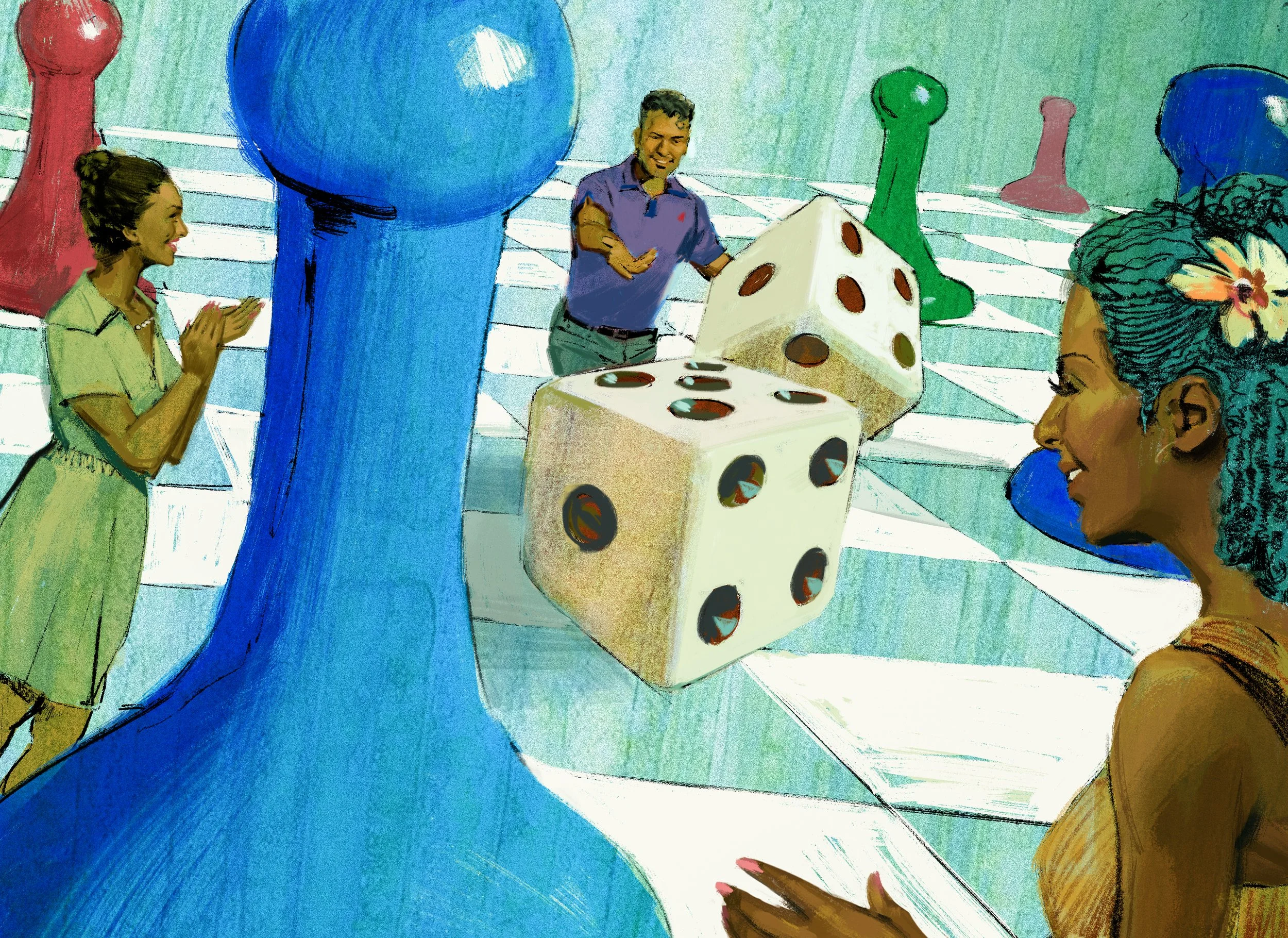
Advertising comp in the style of a Bernie Fuchs 1960’s Magazine illustration. Art by Paul Temple.

Imitation and Originality: Why Your Personal Twist Matters

Paul Temple March 30, 2026

Directors and producers sometimes worry that their visual development will look too much like everything else. They want something fresh that feels specific to their story, but they also want it grounded in what works on screen. The truth is, every strong artistic voice starts with imitation. You study the masters, copy their techniques, and try to match what you see. But perfect imitation never happens, and that is exactly where the value comes from. If every student could copy a master perfectly, art would stay the same for all human history. What you cannot help but change about your work ends up being the most valuable part of it.

I learned this lesson early in my own career as a storyboard artist, and it shows up every time I sit down to develop visuals for a film or commercial. The example I come back to most often is Franklin Booth, an illustrator from Iowa who became one of the great American pen-and-ink artists in the early twentieth century. Booth taught himself to draw by copying illustrations he found in magazines. He thought those images were straightforward pen-and-ink drawings, so he tried to replicate every line exactly. What he did not realize was that he was actually copying wood engravings. Those prints had been carved into wood blocks, inked, and pressed, creating subtle variations in tone through tiny carved lines. Booth reproduced what he saw with thousands of careful pen strokes, building density and shade by placing lines next to one another. The result was a style that looked like fine etching, full of intricate cross-hatching and dramatic scale contrasts. Large buildings or forests loomed over tiny figures, and classic hand lettering framed the scenes. His work appeared in major magazines like Cosmopolitan, Harper's, and Good Housekeeping from around 1905 to 1935. Contemporaries envied it. No one could match it exactly because it was not a pure copy. It was Booth's misunderstanding turned into something original and beautiful.
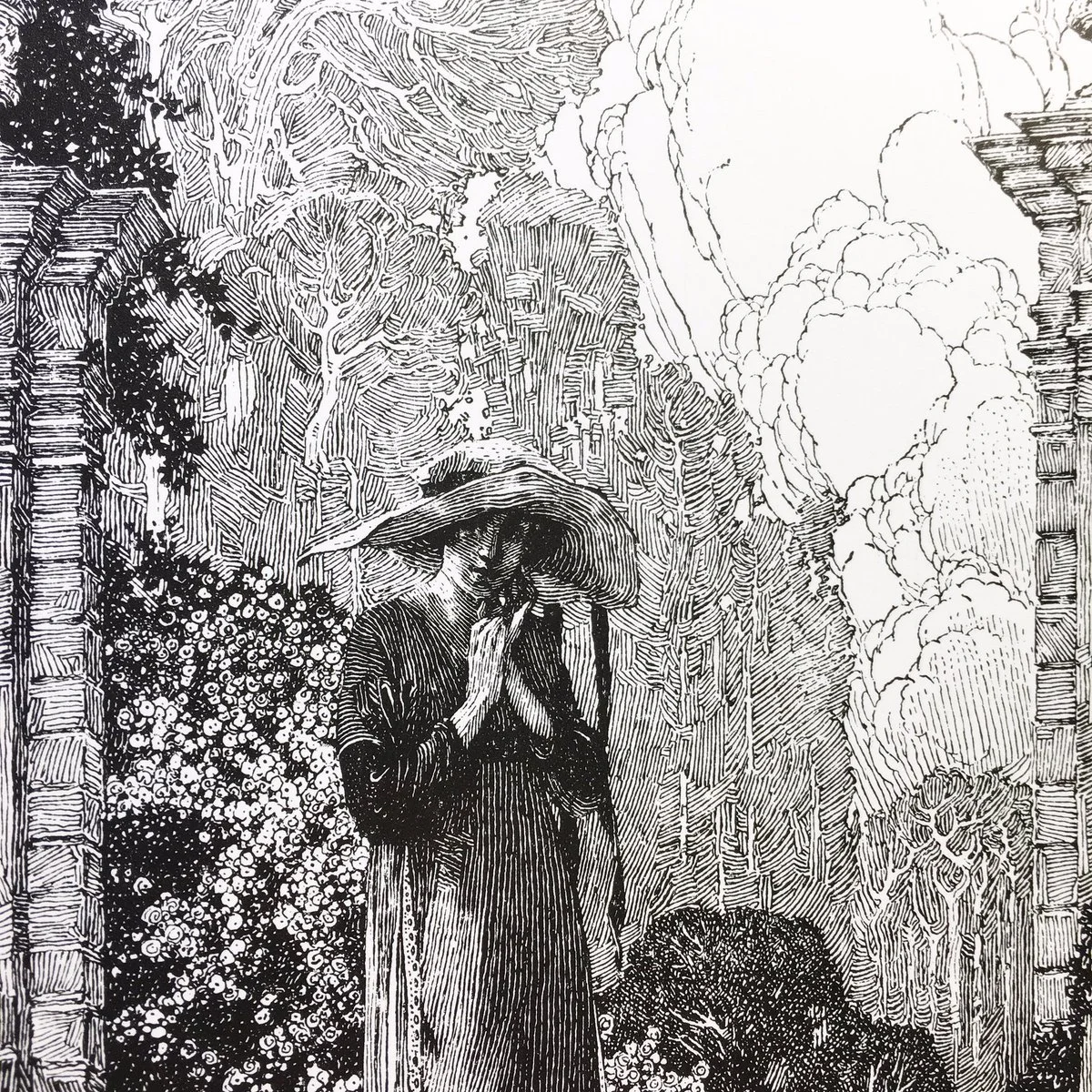
Ink drawing by Franklin Booth.

That story stays with me because it shows how imitation becomes creativity when you add your own hand. Booth did not set out to invent a new technique. He was just trying to get it right. His Iowa background, his limited access to original drawings, and his own way of holding the pen changed the result. Those small, unavoidable differences created beauty that no one else could replicate. The same principle applies directly to visual development and storyboarding for film and TV. When directors hire me, they are not paying for someone who can copy a shot list perfectly. They are paying for the personal twist that makes the boards feel alive and specific to their project.

Why Perfect Imitation Would Kill Creativity

If imitation were flawless, every artist who studied the same master would produce identical work. History would repeat itself in every generation. A student copying Caravaggio would end up with the exact same chiaroscuro lighting. Someone studying Spielberg's storyboards would deliver frames that looked exactly like his. There would be no evolution, no surprises, and no reason for audiences to feel anything new. But that never happens. The human hand, the personal eye, and individual life experience always sneak in. You try to copy the master's line weight or camera angle, but your own sense of rhythm or emotional response shifts it slightly. Those shifts are where originality lives.

Learning from the Masters Without Becoming Them

Every serious artist begins by copying. Copying teaches you to see. You slow down and study how a master handles form, light, or rhythm. But perfect copying is impossible and should not be the goal. The gap between the original and your version is where your own voice emerges.

Franklin Booth's story proves this clearly. Self-taught in rural Iowa with no formal training, he had access only to printed magazines. He copied what he saw, line for line, believing he was learning standard drawing technique. Because he was actually copying wood engravings, his pen could not duplicate the mechanical precision exactly. His thousands of fine lines created tonal variations that felt almost three-dimensional, like etching on metal. His dramatic scale extremes and decorative borders reflected his own sense of wonder at nature and space. The result was a distinctive style that illustrators still study today.

In my own process, I do the same with cinematic references. I might study a sequence from Hitchcock or Fincher, copying the blocking or lighting at first. But when I translate it into storyboards for a new project, my understanding of the script takes over. A low angle that worked for suspense in one film might feel wrong here, so I adjust the height slightly. That adjustment is my input. It turns a generic reference into something that serves this particular story.

Applying Imperfect Imitation to Pre-Production

For directors and cinematographers, this idea has practical value in pre-production. When you hire a storyboard artist, share your references as starting points, then trust the artist to interpret. I start by imitating the composition or lighting the director shows me. But as I draw, the specifics of the script and characters force changes. The frame that looked perfect in the reference now needs a different weight shift or light source to match the emotional beat. Those unavoidable changes are what give the boards their real value.

This matters especially for indie filmmakers working with tight budgets. You cannot afford to shoot endless coverage and fix problems in post. Strong pre-production boards that carry a unique voice help everyone see the film clearly from the start. The director gets visuals that feel specific instead of generic. The cinematographer sees lighting and movement ideas that fit the actual locations. The producer knows the plan is efficient because the artist has already solved problems through personal interpretation rather than blind copying.

AI tools try to shortcut this process by blending millions of existing images. But perfect imitation from AI produces work that has no personal twist. It looks like everything else because it copies without the human element that changes things. A storyboard artist brings lived experience and instinct. Those things guarantee the work will differ from the references in valuable ways.

The Value for Filmmakers

Directors who understand this principle get better results. They do not demand exact copies. They share references and trust the artist to bring their own perspective. The boards that come back carry the DNA of great cinema but feel tailored to this project. That is what makes pre-production efficient and helps the final film stand out.

Wrapping It Up

Imitation is the foundation of every artist's training. It teaches you to see and understand light, form, and rhythm. But perfect imitation would mean the end of creativity. What you cannot help but change… the small shifts that come from your own hand and your own life … those are the parts that matter most. Franklin Booth's story proves it. His mistaken copying of wood engravings gave the world a pen-and-ink style that no one else could match. The same truth holds for visual development and storyboards. The most valuable work comes when an artist imitates the masters but cannot help adding their own perspective.

If you are directing or producing a project and want storyboards or visual development that start with proven techniques but end with something original and specific to your story, reach out. We can explore the references together and let the personal interpretation bring the film to life.

📩 Reach out: paul@paultemplestudios.com
🎨 Explore more: www.paultemplestudios.com

Want more blog posts on this topic?
1. The Fake Perfect Trap and Why Lived In Art Wins Every Time
2.
Color Theory, Craft, and the Human Eye
3.
Wisdom In The Work: Bezalel And The Tabernacle
In Film, Storyboards, Traditional Painting, AI, Advertising
Comment

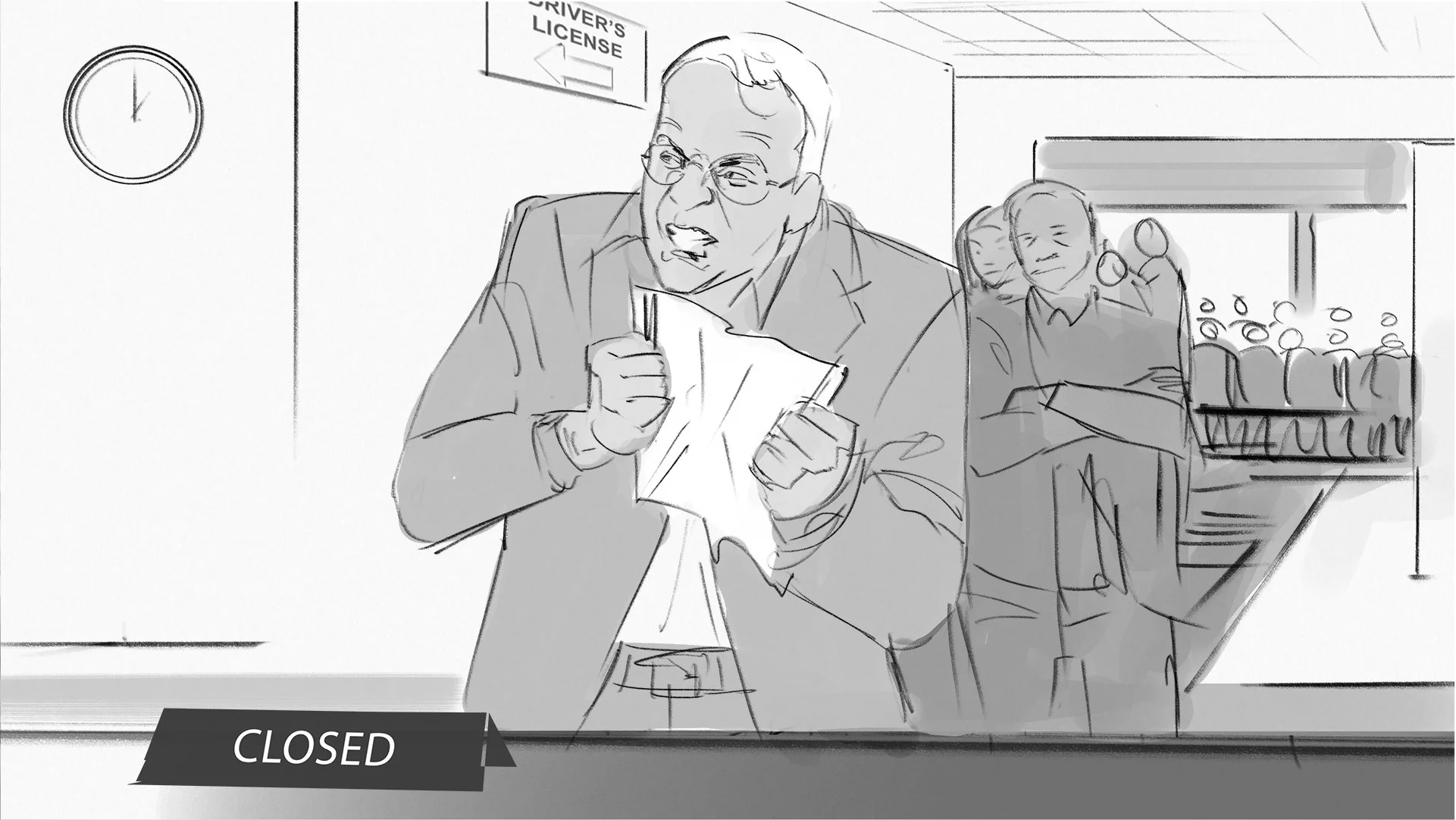
Storyboard from a Pepsi Superbowl ad pitch featuring Steve Martin. Art by Paul Temple.

Gesture Drawing: The Action Behind the Emotion

Paul Temple February 23, 2026

When I first started focusing seriously on gesture drawing, it was because something felt off in my work. The proportions were fine and the anatomy studies were accurate, but the drawings felt posed instead of lived in. That problem shows up quickly in storyboards. You can design a beautiful frame, light it well, and compose it carefully, but if the character’s body does not communicate intention, the scene falls flat. Gesture drawing trains you to see what the body is actually doing, not just what it looks like. At its core, gesture drawing is about capturing the overall action of a pose. Not the muscle groups or costume details or eyelashes, but the action. Every pose has one central movement running through it. A forward drive, a recoil, a twist, a collapse. When you identify that movement first, the drawing holds together. When you ignore it, the figure feels assembled instead of alive. As a professional storyboard artist working in film pre-production, this is something I think about constantly. Before I worry about camera placement or lens choice, I am asking what the character’s body is saying.

The Overall Action Drives the Frame

In figure drawing there is often talk about the line of action. That is not just a technical term. It is the backbone of the pose, a single directional idea that runs through the body and organizes everything else. If a character is grieving, the spine curves forward, the shoulders round, and the head drops as the energy compresses inward. If a character is defiant, the chest opens, the weight settles into the feet, and the head lifts slightly as the energy expands outward. Those physical shifts communicate emotion long before a close-up ever does. When I am boarding a scene for a director, especially in the early stages of visual development, I look for that overall action first. Is the character advancing into the frame or retreating from it? Are they rooted in place or unstable? In cinematic storytelling those decisions shape how an audience feels before dialogue begins. Too often artists approach a pose by outlining parts, building head, torso, arms, and legs like a construction project. Gesture drawing flips that process. You start with movement, then build structure around it. The difference may seem subtle on paper, but on screen it changes everything.

Rhythm, Blocking, and Emotional Weight

Another principle that carries directly from gesture drawing into professional storyboard work is rhythm. If you only trace the outer contour of a body, you might get accuracy, but you lose connection. The human figure is full of opposing curves and counterbalances. One side stretches while the other compresses. The rib cage rotates against the hips. The shoulders tilt in response to weight shifts. When those relationships are understood, the drawing feels cohesive even in a rough state. When they are ignored, the pose feels rigid no matter how polished the rendering is. In storyboard development, especially when collaborating with directors and producers during film pre-production, rhythm keeps frames from feeling static. A well staged scene has visual flow. Characters relate to each other through angle, lean, and direction. If two characters are arguing and both stand upright and squared to camera, the scene reads neutral regardless of what the dialogue says. Shift one character’s weight forward and let the other pull back slightly. Rotate the torso just enough to show tension. Suddenly the emotional dynamic becomes visible. Gesture drawing teaches you to recognize and design those shifts quickly. This is why strong storyboard art does not depend on excessive detail. It depends on confident staging and clear action. Directors looking to hire a storyboard artist are not just looking for someone who can draw. They are looking for someone who understands blocking, performance, and visual storytelling at a structural level.

Emotion is physical before it is verbal. In filmmaking there is often heavy focus on facial performance, subtle eye movement, and micro expressions. Those things matter, but the body usually speaks first. Anxiety raises the shoulders and tightens the neck. Confidence stabilizes the stance and simplifies movement. Grief rounds the back and lowers the head. Even without seeing the face clearly, you can read the emotional truth of a moment if the gesture is honest. This is especially important in wide shots, silhouettes, and action beats where facial nuance disappears. In those situations the storyboard must communicate through posture and weight alone. If the gesture is weak, the emotional beat becomes muddy. If the gesture is committed, the audience understands the moment immediately.

From Gesture Practice to Professional Storyboard Services

Gesture drawing is often practiced in timed sessions, which forces prioritization. You cannot draw everything, so you must decide what matters most. That discipline translates directly into storyboard services during pre-production. Budgets are real and schedules are tight. Endless variation is not helpful. What helps is interpretation and judgment. A professional storyboard artist is not there to generate options without direction, but to interpret the script visually, stage the action, and help the director commit to choices that serve the film. Gesture drawing sharpens that ability because it trains the eye to see the dominant action in a moment and ignore noise. When I am developing storyboards for a feature film, commercial, or pitch, I am constantly reducing complexity to intention. Where is the weight? Who controls the space? Who yields? What is the physical truth of the moment? Those questions matter more than rendering style. Strong gesture leads to strong blocking, and strong blocking supports strong cinematic storytelling.

Blocking is emotional architecture. The physical relationship between characters communicates hierarchy, vulnerability, tension, or intimacy before a single line is delivered. A character who steps confidently into another’s space reads differently than one who hesitates at the edge of the frame. A slight shift in posture can redefine the power dynamic of a scene. In visual development and pre-visualization, these nuances are explored early so that when production begins, the emotional structure is already in place. Gesture drawing strengthens the instinct to see those nuances and to design them intentionally. In an era when images are easy to generate, human judgment still separates frames that feel authentic from those that feel hollow. Software can create polished visuals, but it does not understand weight, hesitation, or resolve in the human body. Gesture drawing builds that understanding over time and keeps the focus where it belongs, on action and meaning rather than surface detail.

If you are directing a project and want to strengthen the physical storytelling in your film, that work starts in development. It starts before cameras roll. It starts with clear, intentional staging built on real human movement. Strong gesture leads to strong boards, and strong boards support stronger films. If you are looking to hire a storyboard artist who approaches visual storytelling through movement, rhythm, and human behavior, I would be glad to talk through your project.

📩 Reach out: paul@paultemplestudios.com
🎨 Explore more: www.paultemplestudios.com

Want more blog posts on this topic?
1. Setting the Emotional Tempo: How Storyboards Shape the Audience’s Experience
2.
Shooting Boards for Action Scenes: Why Every Great Action Scene Starts on Paper
3.
See It Before You Shoot It: The Power of Shooting Boards

In Film, Shooting Boards, Storyboards, Advertising
Comment

Hiring a Storyboard and VisDev Artist: A Step by Step Guide for Filmmakers and Directors

Paul Temple January 7, 2026

If you have never hired a storyboard artist or visual development artist before, you are not alone. Most directors, producers, and creatives I talk to feel a little unsure the first time. They know they need boards, but they are not always sure what to bring to the table, how detailed things need to be, or what the process actually looks like once the project starts.

This post is meant to take the mystery out of it.

Whether you are developing a feature, a short film, a series, or an independent project, the process of working with me follows a clear structure. My job is to help you translate ideas into visuals that your team and your crew can understand and execute.

Here is what the process typically looks like, from the first conversation to final delivery.

Step One: The Initial Call

Every project starts with a conversation.

This is usually a video call or phone call where we talk through the project at a high level. You do not need everything figured out yet. That is part of what I help with.

During this call, we usually cover:

  • What the project is and where it is in development.

  • The scope of the story or sequence.

  • The type of visual work you think you need.

  • Your timeline and any deadlines that matter.

This conversation sets the foundation. It helps me understand how much guidance you need and where I can add the most value.

Step Two: The Brief

After the initial call, I ask for a brief. This does not need to be overly formal, but it does need to be clear.

A solid brief usually includes:

  • The script or scene breakdown.

  • The number of frames or designs you think you need.

  • Reference images, mood boards, or visual inspiration.

  • Any constraints related to budget, scale, or production realities.

If you do not have all of this yet, that is completely fine. Part of my role is helping you shape the brief into something workable. Many projects begin with loose ideas that need structure before they can move forward visually.

Step Three: Quote and Schedule

Once I understand the scope, I provide a quote and a schedule. This may take a few days depending on the size of the script or material provided.

The quote is based on:

  • Number of frames or designs.

  • Level of finish.

  • Complexity of environments, characters, or action.

  • Timeline expectations.

The schedule outlines:

  • When rough sketches will be delivered.

  • When feedback is due.

  • How many revision rounds are included.

  • When final delivery happens.

This step removes uncertainty. Everyone knows what is being made and when.

Step Four: Rough Sketches

This is where drawing begins.

Rough sketches are not meant to be polished. They exist to solve problems. Composition, staging, camera placement, and story clarity all get worked out here.

At this stage, I am focused on:

  • Readability.

  • Clear visual storytelling.

  • Logical camera flow

  • Making sure the idea works on screen.

This phase moves quickly and is designed to invite discussion. It is far easier to adjust a rough drawing than a finished one.

Step Five: Feedback and Revisions

Feedback is a core part of the process.

Once roughs are delivered, you review them and send notes. These notes may come from a director, producer, or an entire creative team.

I revise based on that feedback, and the process repeats 2 or 3 times until the direction is locked.

This back and forth is where you and I align our visions. The goal isn’t perfection at this point.

Step Six: Refinement and Finish

Once structure and intent are approved, the work moves into refinement.

This phase takes significantly longer than the rough sketch phase. Whether the boards are black and white or color, refinement is where tone, clarity, and craft come together.

Refinement includes:

  • Cleaning up line work.

  • Clarifying lighting and spatial relationships.

  • Strengthening gesture and silhouette.

  • Ensuring consistency from frame to frame.

For color work, this also includes color harmony, light direction, and mood control.

This is the stage where the drawings become reliable tools for production.

Step Seven: Delivery and Payment

Once refinement is complete, you will receive the final files along with an invoice due within 30 days.

At this stage, ownership of the files is fully transferred to you. You are free to use, adapt, or repurpose the artwork as needed across your production, pitch materials, or internal workflows, with no restrictions on usage.

Ready to Move Forward?

You do not need to have everything solved before reaching out. I promise.

What helps most at the start is a clear sense of what you are trying to make, openness to collaboration, and a willingness to give honest feedback as the work evolves.

If something feels confusing during the process, that is often a good sign. Initial sketches have a way of revealing storytelling problems early, when they are still easy to fix. Visual development and storyboards exist to surface those questions long before production pressure sets in.

I help with:

  • Translating scripts into clear visual plans

  • Clarifying tone and visual intent

  • Identifying storytelling problems before production

  • Creating visuals that serve the final film, not just the development stage

You do not need to speak in artistic or technical terms to begin. That is my responsibility. The work starts with understanding your story and shaping visuals that support it.

Art Services Available at Paul Temple Studios

Visual development services may include:

  • Character and creature design

  • Costume and prop exploration

  • Environment studies

  • World building and tonal exploration

These designs help define the visual language of a project early. They give directors and producers something concrete to respond to, refine, and build from as the project takes shape.

Storyboards and shooting boards are used to:

  • Plan sequences

  • Break down action scenes

  • Define blocking and camera movement

  • Give production teams clear visual direction

Shooting boards focus less on polish and more on function. They are designed to communicate how a scene is meant to be captured, helping directors, cinematographers, and crew stay aligned during production.

In both cases, the goal is the same: clarity. When everyone understands the visual intent, production runs more smoothly and creative decisions hold together on screen.

Why This Process Matters

Hiring a storyboard or visual development artist is about removing guesswork. Clear visuals reduce confusion, prevent costly mistakes, and allow teams to communicate efficiently. They shift problem-solving to the page instead of the set, where time and resources are limited.

If you have never hired an artist before, the process should feel collaborative. My role is not to impose a style, but to help strengthen the story and make the path forward clearer for everyone involved. That is the value of thoughtful visual development and storyboards.

If you are developing a film, television project, or pitch and want to talk through how visuals can support your story, let’s set up an initial call! I am always happy to discuss your project and see if working together makes sense.

📩 Reach out: paul@paultemplestudios.com
🎨 Explore more: www.paultemplestudios.com

Other blog posts you might be interested in:
1. Concept Art and Storyboards for Indie Film Crowdfunding
2.
How Shooting Boards Help Indie Filmmakers Compete with Studio Productions
3.
Composition and Control: The Cinematic Science Behind a Great Frame

In Film, Storyboards, Advertising, Shooting Boards
Comment

Storyboards from an Irish Spring ad pitch. Art by Paul Temple

From Pitch to Production: Winning Clients with Storyboards

Paul Temple October 2, 2025

Walk into a pitch room and you can feel the temperature shift. It is not nerves, not quite. It is more like standing in the wings before a play begins. The agency team has rehearsed their lines, polished their deck, and synced their timing. But none of it matters until the client buys in.

Advertising pitches are battles disguised as meetings. Everyone is smiling, but the stakes are enormous. Agencies are competing for millions of dollars in business, and the client has been courted by five other shops that all claim to understand their brand better than anyone else. In that environment, words only get you so far.

That is where storyboards become the secret weapon.

A Visual Shortcut to Trust

A script is a promise. A storyboard is proof. When an agency puts illustrated frames in front of a client, it transforms a fragile idea into something with weight. Suddenly the concept is not hypothetical. It looks like a finished spot waiting for cameras to roll.

Clients do not want to gamble on a hunch. They want certainty. They want to know that the agency is not asking them to imagine a vague future but showing them exactly what the audience will see. Storyboards do that in seconds. They take the leap of faith out of the equation.

In pitch rooms, that certainty is priceless. Everyone has insights. Everyone has taglines. Everyone has strategy decks printed on heavy paper stock. The agency that shows the story already breathing on the wall is the one that earns the nod.

Pitch Rooms Are Theater, Not Boardrooms

Think of an agency pitch as a Broadway audition. You have a short window to convince the casting director that you belong on stage. The lights are bright, the room is tense, and you cannot afford to stumble.

Agencies know this, which is why they choreograph every move. There is the warm opening, the clever slide transitions, the obligatory nod to consumer research. Then comes the creative reveal, the moment that either lands or dies in the room.

When storyboards are part of that reveal, the odds shift. Instead of handing the client a script and saying “imagine this,” the agency shows them a storyboard where the shots are already framed, the pacing is clear, and the tone is unmistakable. It is no longer theory. It is a vision ready to shoot.

That is the difference between getting polite nods and getting the account.

Clients Are Not Just Buying Ideas

A common mistake in pitches is assuming that clients are buying ideas. They are not. They are buying confidence. They want to walk out of the room believing that the team they choose will not just think creatively but execute flawlessly.

This is why storyboards carry so much weight. They are visual evidence that the agency can deliver. They shrink the distance between concept and execution. A clever script might make clients smile, but a storyboard makes them picture their brand already on television, on streaming platforms, or going viral online.

It is one thing to say, “Imagine the hero walking through the chaos while the product saves the day.” It is another to lay down six frames that capture the camera angle, the expression, and the payoff in crystal detail. The second version feels real. And real is what wins pitches.

The Tempo of Modern Pitches

The clock is never on the agency’s side. In many cases, a pitch brief drops and the team has less than a week to respond. Strategy must be written, scripts drafted, decks designed, and creative pulled together at breakneck speed.

That compressed timeline is brutal, but it also explains why storyboards are indispensable. They condense the entire production pipeline into something you can show on paper. They tell the client: this idea is more than words, it already lives in images.

It is a shortcut that saves agencies from drowning in explanation. Instead of spending twenty minutes describing tone and pacing, you flip through frames and let the client feel it immediately.

Storyboards as Deciders

Every pitch is competitive. Agencies walk in knowing the client has seen variations of the same insight from four other shops. Everyone knows that trust, chemistry, and price will all factor into the decision. But when ideas are neck and neck, storyboards often tip the scales.

They act as tie-breakers. They transform “interesting” into “convincing.” If a client leaves the room still thinking about specific frames instead of abstract phrases, that agency has an advantage that survives long after the meeting ends.

Why Agencies Keep Coming Back to Boards

It would be tempting to believe that storyboards are just window dressing, a pretty way to decorate a pitch. The reality is more practical. Agencies know that boards streamline internal alignment before the client ever sees them.

When creative directors, producers, and account teams sit down with storyboards, they are forced to confront how the script actually plays. Gaps appear. Awkward transitions reveal themselves. Strong moments shine brighter. The boards refine the pitch as much as they sell it.

By the time they reach the client, the storyboards have already been pressure-tested inside the agency. They are battle-ready, which makes them even more persuasive when they hit the table.

Beyond Winning the Pitch

The value of storyboards does not end once the client signs. In fact, that is when their second life begins.

Winning a pitch is one thing. Producing the campaign is another. Storyboards bridge that gap. They become reference points for directors, cinematographers, and editors. The same frames that sold the client become guides that shape the shoot.

This continuity is part of why clients trust them. The storyboard is not just a sales tool. It is the first step in production, proof that the agency can carry an idea from pitch to screen without losing the thread.

The Human Element

AI-generated images are fast, cheap, and tempting for agencies on a tight budget. But speed comes at a cost. AI struggles with continuity, often changing character features from frame to frame. Emotional nuance gets flattened, and subtle gestures or expressions can read as stiff or off. It cannot anticipate camera angles, lens choices, or how shots will cut together to tell a story.

Clients may not name it, but they feel it. A human-drawn storyboard captures the rhythm between frames, the tilt of a camera, and the emotional beats that make a story land. It signals care, craft, and intentionality. That precision is why human boards remain essential, even in an age of instant AI visuals.

Final Frames

Advertising pitches are high-wire acts. Agencies juggle strategy, creativity, and performance under the pressure of limited time and stiff competition. Words and slides will always be part of the process, but storyboards are what turn fragile ideas into persuasive visions.

They cut through the haze of promises and make the campaign real before a camera rolls. They give clients confidence, they sharpen creative teams, and they bridge the gap from pitch to production.

In a pitch room where the difference between winning and losing often comes down to a single spark of belief, storyboards are the match.

📩 Reach out: paul@paultemplestudios.com
🎨 Explore more: www.paultemplestudios.com

Want more blog posts on this topic?
1. The Art of the Pitch Starts with the Right Visuals
2.
Why Animatics Aren't Just for Animation

In Advertising, Storyboards
Comment

Storyboards for Twizzler ad pitch. Art by Paul Temple.

Commercials Are Short Films: Why Storyboards Matter Even More in 30 Seconds

Paul Temple September 29, 2025

When people talk about storyboards, they often imagine them in the context of a feature film or a big episodic production. But I have always believed that commercials are short films in disguise. The same rules of cinema apply. The only difference is that instead of two hours or six episodes, you get thirty seconds. Sometimes fifteen. And in that sliver of time, every frame has to pull its weight. That is where storyboards become essential, not optional.

The Compression Problem

A commercial is about compression. You have to take a brand message, build a story, introduce characters, set a tone, land an emotion, and close with a call to action. All in less time than it takes to make a cup of coffee. Storyboards make this possible because they let you see how the message survives once you start cutting away everything that is not absolutely necessary.

In film, you can let a moment breathe. In commercials, you have no such luxury. The timing of a reaction shot, the framing of a logo, or the pause before a laugh can make or break the effectiveness of the spot. The boards map out those beats. Without them, directors and agencies are working blind, hoping that all the puzzle pieces will magically align.

Timing Is the Punchline

I have worked on plenty of commercials where the difference between funny and flat came down to a fraction of a second. Storyboards allow you to lock that rhythm early. For example, when I worked on comedic ad campaigns, the timing of the reaction shot was everything. Cut too soon, and the joke feels rushed. Hold too long, and the gag dies on screen. The board establishes that rhythm before a single actor steps onto set.

The same goes for emotional ads. Think about a heartfelt commercial that tries to squeeze a tear out of you in under a minute. If the moment of connection is not perfectly staged and paced, the emotion feels fake. Storyboards give directors a way to measure those beats, making sure the audience feels something real in the time they have.

Clarity Under Pressure

Another reason boards are indispensable for commercials is clarity. On a film set, you have time to debate how a scene plays. In commercial production, time is money at a much higher rate. Every crew member, from the cinematographer to the client standing at video village, needs to understand the plan immediately.

A storyboard turns abstract concepts into shared language. Everyone can point at the same frame and know exactly how the shot is supposed to look. It avoids confusion, saves hours, and prevents costly mistakes. If the brand logo is supposed to be center frame at the exact moment a character smiles, the board makes that expectation visible long before the cameras roll.

Selling the Idea

Boards are not just for production. They are also for selling the idea in the first place. Agencies rely on storyboards to pitch campaigns to clients. The client needs to see the joke, the emotion, or the dramatic turn in order to trust that it will work. A script alone cannot always do that.

When I create boards for ad pitches, my job is not only to draw what is described in the script. It is to elevate it. To add the nuances of performance, camera movement, and staging that make the idea come alive. A client is not going to buy into a pitch if they cannot visualize it. Storyboards bridge that gap.

Commercials as Short Films

When I say commercials are short films, I mean it literally. Every tool of cinematic language applies. You still have establishing shots, close-ups, inserts, reaction shots, transitions, and reveals. The only difference is scale. Instead of multiple acts, you are dealing with a single arc that has to land with force and clarity.

This is why commercial directors often come from film backgrounds. They understand that even a lighthearted thirty-second comedy spot requires the same attention to visual storytelling as a feature. And they know that without boards, the production risks wandering off-message or wasting precious shooting time.

Avoiding the Trap of “More is More”

One of the traps I have seen in commercial storyboarding is the temptation to make the boards portfolio-ready illustrations. Clients and agencies sometimes push for over-rendered boards because they look impressive. But there is a danger in this. If the boards look too polished, clients may assume that the final commercial will look identical. And when real-world limitations enter the picture, disappointment follows.

The trick is balance. I aim to deliver boards that capture performance, timing, and cinematic language without pretending to be the final product. They are tools, not fine art pieces. Their purpose is to serve the production, not hang on a gallery wall.

Storyboards vs. Shooting Boards

It is worth distinguishing between general storyboards and shooting boards. Storyboards often capture the broad strokes of an idea for a pitch or internal alignment. Shooting boards drill down into the technical execution. They anticipate lenses, blocking, and camera movement.

In commercial work, both are often needed. Storyboards sell the idea to the client. Shooting boards keep the production on track. Together, they make sure that a thirty-second spot comes together without wasted effort.

Real-World Stakes

The stakes in commercial production are high. A single day on set can cost as much as an independent short film. Clients are often standing just a few feet away, watching every detail. Agencies are juggling multiple voices. Directors are trying to execute under immense pressure. Storyboards are the thing that keeps everyone aligned and focused.

I have seen productions without boards descend into chaos. Shots get missed. Timings get confused. Clients start to panic because they cannot see how the spot will come together. Storyboards prevent that. They provide a map that everyone trusts.

Why Thirty Seconds Demands More Discipline

Ironically, it is the brevity of commercials that makes storyboarding so important. In a feature film, you can recover from a weak moment because the audience has invested in the story. In a commercial, if one shot falls flat, you have lost your chance.

That is why I approach every commercial storyboard with the seriousness of a short film. The message, the beats, the performances, and the brand all have to align. There is no room for improvisation or hoping it will work out on set.

Closing Thoughts

Commercials are not lesser forms of storytelling. They are concentrated ones. They demand discipline, clarity, and precision. Storyboards are the tool that makes that discipline possible. Without them, thirty seconds of screen time can feel like thirty seconds of confusion. With them, a commercial becomes a perfectly crafted short film that entertains, convinces, and sticks with the audience.

📩 Reach out: paul@paultemplestudios.com
🎨 Explore more: www.paultemplestudios.com

Want more blog posts on this topic?
1. The Art of the Pitch Starts with the Right Visuals
2.
Why Animatics Aren't Just for Animation
3.
From Pitch to Production: Winning Clients with Storyboards

In Advertising, Storyboards
Comment
← NewerOlder →
 

Search Posts

No results found
 

Featured Blog Posts

Featured
Breaking Creative Ruts: Metaphor and Non-Linear Thinking in Visual Development
March 9, 2026
Breaking Creative Ruts: Metaphor and Non-Linear Thinking in Visual Development
March 9, 2026
Read more →
March 9, 2026
Hiring a Storyboard and VisDev Artist:  A Step by Step Guide for Filmmakers and Directors
January 7, 2026
Hiring a Storyboard and VisDev Artist: A Step by Step Guide for Filmmakers and Directors
January 7, 2026
Read more →
January 7, 2026
Composition and Control: The Cinematic Science Behind a Great Frame
November 3, 2025
Composition and Control: The Cinematic Science Behind a Great Frame
November 3, 2025
Read more →
November 3, 2025
Concept Art and Storyboards for Indie Film Crowdfunding
September 18, 2025
Concept Art and Storyboards for Indie Film Crowdfunding
September 18, 2025
Read more →
September 18, 2025
 

Latest Blog Posts

Featured
Don’t Let Your Film Ideas Stay Babies: Grow Them with Real Artists
August 3, 2026
Don’t Let Your Film Ideas Stay Babies: Grow Them with Real Artists
August 3, 2026
Read more →
August 3, 2026
J.C. Leyendecker: Mastery, Craft, and Timeless Visual Storytelling
July 27, 2026
J.C. Leyendecker: Mastery, Craft, and Timeless Visual Storytelling
July 27, 2026
Read more →
July 27, 2026
A Life Well Lived: Why AI Will Never Replace Art in Storytelling
July 21, 2026
A Life Well Lived: Why AI Will Never Replace Art in Storytelling
July 21, 2026
Read more →
July 21, 2026
HerosFarewell_02s.jpg
July 14, 2026
Edgar Payne on Composition: Lessons for Film Work
July 14, 2026
Read more →
July 14, 2026
Why Great Artists Need Interests Outside Their Main Medium
July 6, 2026
Why Great Artists Need Interests Outside Their Main Medium
July 6, 2026
Read more →
July 6, 2026
George Bridgman: The Anatomy Teacher Behind Generations of Artists
June 29, 2026
George Bridgman: The Anatomy Teacher Behind Generations of Artists
June 29, 2026
Read more →
June 29, 2026
Using Screenwriting Structure in Storyboards for Better Films
June 8, 2026
Using Screenwriting Structure in Storyboards for Better Films
June 8, 2026
Read more →
June 8, 2026
Learning to Pivot in Pre-Production: Lessons for Directors
May 18, 2026
Learning to Pivot in Pre-Production: Lessons for Directors
May 18, 2026
Read more →
May 18, 2026
Diving Into the Color Charts of Richard Schmid
May 12, 2026
Diving Into the Color Charts of Richard Schmid
May 12, 2026
Read more →
May 12, 2026
Negative Space: The Power of What You Leave Out
April 14, 2026
Negative Space: The Power of What You Leave Out
April 14, 2026
Read more →
April 14, 2026
 
Behind the Boards: A Blog by Paul Temple

© Paul Temple Studios 2012-2026. All images on this site may not be reproduced in any form, stored, manipulated or used to train generative AI models of any kind without prior written consent from Paul Temple.